
Updates from Around the Region
Editor’s Note: Before joining the editorial team at From the Ground Up, I never had much of a reason to pay attention to legislatures outside of my home state of Maine. As I started exploring what other New England states were taking on and how their governments functioned, I found it surprisingly hard to keep the structural differences between each state’s legislature straight—all six states have different calendars, formats, session rules and norms, and more. In this springtime edition of the Policy Chronicle, when all six states in New England are in the midst of their legislative sessions, we present both a brief primer on when and how each state goes about its legislative work, and a glimpse into what conservation advocates and lawmakers have on their upcoming dockets. – Alex Redfield
Jump to page sections:
Connecticut
Connecticut’s General Assembly is considered a part-time legislature, like most others in New England. Composed of a 36-member Senate and a 151-member House of Representatives, both houses in Connecticut have strong Democratic majorities. In odd-numbered years, the General Assembly meets for a “long session” that runs from January through June, giving lawmakers additional time to craft a biennial state budget. In even-numbered years, shorter sessions more typically focus on adjustments to larger bills and priorities introduced the year prior. This year’s short session was convened on February 4 and will run until May 6.
This year, the Connecticut Land Conservation Council (CLCC) has identified six key policy priorities for targeted advocacy. Many of the themes identified in CLCC’s policy priorities will resonate across the region: Organizers are focused on protecting existing pools of conservation funding from being reallocated toward other needs, expanding state agency capacity for administration of existing programs and public resources, and maximizing the access and availability of state funding for land protection projects. One unique priority for CLCC and other conservation advocates this session is to monitor the implementation of two bills passed last year (PA 25-125 and PA 25-33) that direct the administration of Governor Ned Lamont to prioritize nature-based solutions (like land conservation and restoration or riparian buffer protection) in state-funded policies, goals, and climate mitigation projects, potentially replacing costly and “overbuilt” alternatives. As an example, state agencies tasked to manage stormwater runoff may be encouraged to invest in watershed conservation instead of (or in addition to) traditional drainage infrastructure. Advocates are hopeful that prioritizing nature-based solutions will lead to more public investment in ecosystem protection and restoration efforts statewide.
Maine
Maine’s Climate Action Plan included a goal of protecting 30 percent of Maine’s landscape by 2030. Without additional funding for the Land for Maine’s Future program, Maine will have limited tools available to meet that target on time. Image courtesy of the Maine Climate Council
On January 7, 2026, Speaker of the House Ryan Fecteau convened the 132nd session of the Maine House of Representatives. Maine’s State House is home to a 35-member Senate and a 151-member House of Representatives, plus three non-voting tribal representatives, all elected for two-year terms. The second session in Maine’s biennial cycle is short and will focus primarily on budgetary matters, legislation submitted by the governor, bills held over from the first session, and items deemed to be “emergencies.” Democrats control both branches of the legislature, though with only a two-seat majority in the House of Representatives.
Despite the limitations of a short session, conservation advocates are hoping to take advantage of the Democratic majority as Gov. Janet Mills (D) wraps up her final year in office. Mills has long been viewed as a supporter of land protection and conservation programming and has supported significant investments in the Land for Maine’s Future (LMF) program throughout her two terms. At our publication deadline, advocates were working to marshal support for a recent amendment from the Governor that would adjust how interest earned from Maine’s “Budget Stabilization Fund,” commonly referred to as the state’s “Rainy Day Fund,” is distributed. This change would allocate funds directly to LMF at a rate of approximately $1 million per year for every $100 million held in the Stabilization Fund. If enacted, the change would mark a major victory for Maine’s conservation community, which has worked to identify dedicated funding for LMF over the last three decades.
Massachusetts
Serving New England’s most populated and wealthiest state, the Massachusetts legislature (technically called the “The General Court of the Commonwealth of Massachusetts”) stands apart in New England as the region’s only full-time legislative body. Whereas other New England states convene their legislatures for the first five or six months of each year, the Massachusetts legislature essentially runs year-round, with the exception that the formal session, which begins in January, concludes in late July of all even-numbered years to allow members to focus on elections and emergency legislative needs in less formal meetings. Budgets are introduced and approved annually, with much of the legislative debate focused on spending and budget development for the first several months of each year. Democrats currently have a supermajority in both the House and Senate, and Democratic Governor Maura Healey has announced her plans to run for reelection in 2027.
At our publication deadline, the conservation community had not yet had a chance to publicly respond to Governor Healey’s FY 2027 budget and its proposed cuts to the state’s Executive Office of Energy and Environmental Affairs (EEA). The reduction of approximately $20 million would leave EEA with its lowest funding levels since 2023. This is not entirely unexpected, with rising costs and sharp cuts in federal funding. However the continued cuts to EEA would certainly hamper progress toward the commonwealth’s climate goals. EEA released its 2025 Climate Report Card on February 13 with mixed results to report: targets set for land protection, forest loss, clean energy acquisition, and other key metrics are falling behind projected benchmarks en route to 2030 goals. The remainder of this year’s formal legislative session will almost certainly focus on lawmakers’ deliberations over the continued funding for climate and environmental protection projects moving forward.
New Hampshire
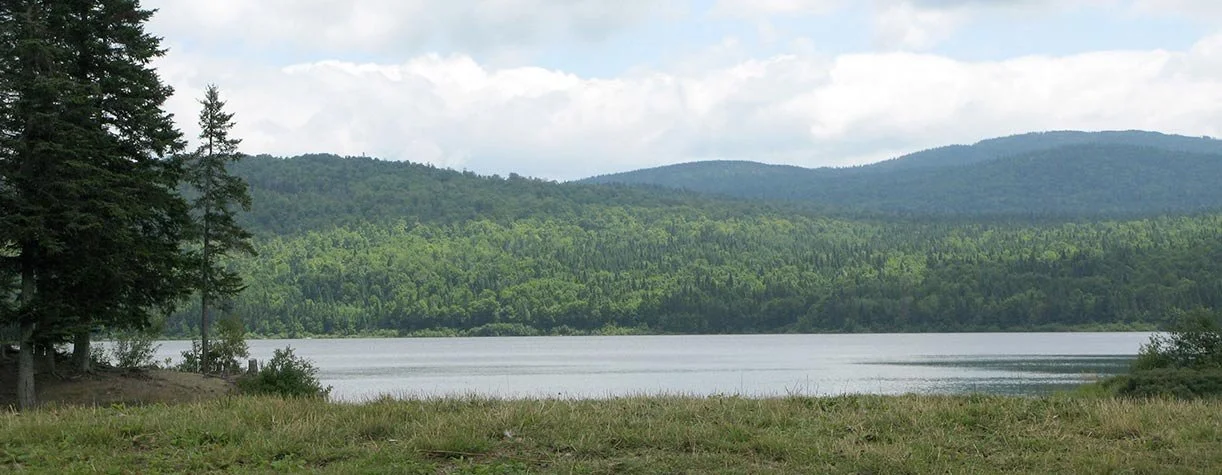
New Hampshire lawmakers have introduced a number of bills that would limit how public lands and forests protected by state-funded conservation easements, like the Connecticut Lakes Headwaters Forest in northern New Hampshire, could participate in carbon markets. Photo © New Hampshire State Parks
The New Hampshire legislature is unique in the region, the country, and even internationally, for its size. With 424 members across both houses, New Hampshire’s state legislature is thought to be the fourth-largest English-speaking governing body in the world! The Granite State also uses a biennial schedule for their annual legislative convenings. Budgets are developed in the first year of the session (odd-numbered years) and other policy discussions typically fall to the second session. Both houses of the legislature are controlled by Republicans.
The Society for the Protection of New Hampshire Forests publishes a comprehensive list of conservation-related policy priorities annually, and this year’s priorities center largely on defending existing programs from proposals that could jeopardize the integrity of protections or funding sources. This year, lawmakers will consider two bills that might redefine the interaction between conserved lands (both public and private) and carbon markets, which has been a cause of considerable debate and controversy, particularly related to the Connecticut Lakes Headwaters Forest.
Rhode Island
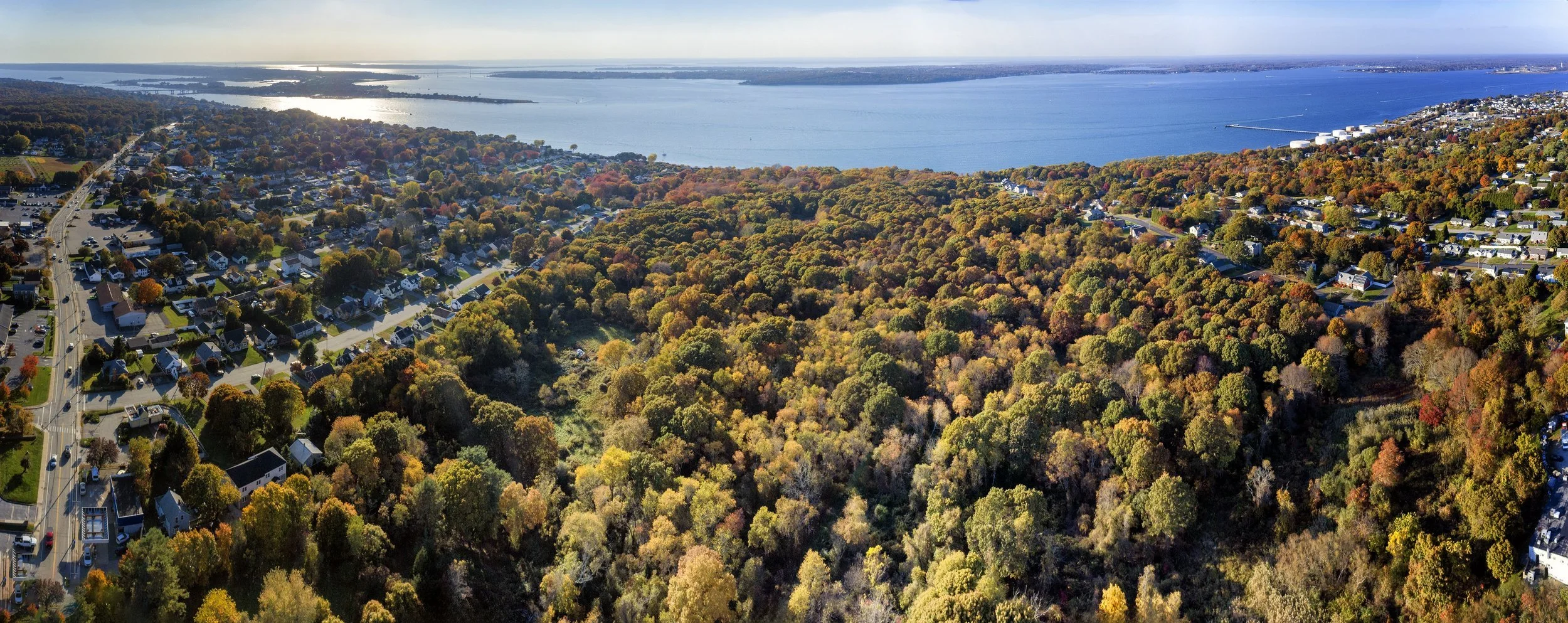
In early February, the Rhode Island Department of Environmental Management announced $1.3 million in awards through the Local Open Space Acquisition Grant Program, including a $500,000 award to protect the Hicks Farm in Tiverton, Rhode Island. This grant program, along with nearly all other state funding for conservation, was excluded from next year’s budget proposal presented by Governor Dan McKee. Photo courtesy of Clint Clemens
Rhode Island’s General Assembly typically meets from January to June and operates on an annual cycle as opposed to the biennial system seen elsewhere in the region. Each session largely focuses on the introduction and review of the governor’s annual budget proposal, and is typically completed by the summer of each year. In this final year of Governor Dan McKee’s first term, Democrats have majorities in both houses of the Rhode Island legislature.
Typically in Rhode Island, the State authorizes a “Green Bond” every two years to pay for local restoration, recreation, and land conservation projects. When Governor McKee released this year’s budget and details on the 2026 borrowing package, conservation organizations were disappointed to see that no funding was allocated to either open space acquisition or farmland protection programs administered by the state. This is the second consecutive attempt by the McKee administration to zero out conservation funding in the Green Bond. In 2024, legislators responded to the funding cuts by introducing a legislative fix to add $16 million in land protection funding back to the Green Bond. Advocates and lawmakers may have to take a similar tactic this year to ensure Rhode Island’s forest and farmland protection projects can continue.
Vermont
The Vermont legislature also operates on a biennial cycle, typically with legislative sessions that start in January and conclude in late spring. Budgets are presented and adopted annually, with no specific focus or limitations on either year of the two-year cycle. Republican Phil Scott will be concluding his fifth two-year term as governor in 2026 and plans to run again in 2027. Both houses of the Vermont Legislature are Democratically controlled, though the Democrats no longer enjoy the supermajority that led to significant policy wins in 2023–2024.
For conservation-oriented policymakers and advocates, the 2026 session will again be largely focused on changes to the state’s land use and development law (Act 250) passed in 2024. See our archive for additional context on Act 250 and its impact on Vermont’s landscape. Beyond monitoring developments with Act 250 reforms, conservation advocates are also pushing for the legislature to fully fund programs at the state’s Agency of Natural Resources that support expedited processing and review of development applications. They are also advocating for full funding of the Vermont Housing and Conservation Board (VHCB) and the Land Access and Opportunity Board. Both are semi-public agencies. VHCB offers funding for land protection and housing development for all Vermonters. The newer Land Access and Opportunity Board operates under the umbrella of VHCB and specifically seeks opportunities to improve access to woodlands, farmland, and land and home ownership for Vermonters from historically marginalized communities.
Alex Redfield is the Policy Director for Wildlands, Woodlands, Farmlands & Communities. On the farm, in state government, and in conservation policy circles, his work for the past 20 years has centered on supporting a just transition of New England’s landscape toward an equitable future. He lives in South Portland, Maine.