
Coastal Habitat Restoration in Massachusetts
Editor’s Note: I met Wayne Castonguay years ago when he was leading the Trustees’ effort to revive Appleton Farm in Ipswich. From there, Wayne spent over a decade leading the Ipswich River Watershed Association, before returning to the Massachusetts Division of Marine Fisheries (DMF), where he had begun his career. But all this work was rooted in the rivers, marshes, and shores of Ipswich, where Wayne grew up digging clams. Here, he recounts a coastal restoration effort that integrates not only several key ecosystems, but a slew of state and federal agencies and nonprofit organizations. – Brian Donahue
Strengthening the resilience of natural systems is one of the most effective actions we can take in the face of climate change. Nature-based solutions, as these activities are collectively known, provide many co-benefits and offer the most cost-effective way to protect people and nature in our rapidly changing world.
Unfortunately, many of the natural systems upon which we depend have become degraded by human activity and have lost much of their capacity to buffer communities and ecosystems. Coastal habitats are not only among the most degraded, they may also be the most at risk from climate impacts such as sea level rise, warming waters, ocean acidification, invasive species, and more frequent and intense storms.
While habitat restoration efforts in upland and freshwater systems have proven to be successful for decades, restoring coastal habitats has been more challenging. The marine environment is vast and difficult to work in, and effective methods that work at scale have been fleeting. Now, these hurdles are being overcome through the development of new techniques and the power of community-based restoration. Encouraged by these developments, Massachusetts’ new Statewide Biodiversity Initiative adopted ambitious goals to restore coastal habitats—including salt marsh, eelgrass meadows, and oyster reefs—three of the most productive and biodiverse habitats in the world.
New England’s iconic salt marshes are critical nursery areas for some of our most important fisheries, provide one of the largest natural carbon sinks, and are considered the most effective barrier to protect communities from sea level rise and wave energy. Unfortunately, virtually all of our remaining salt marshes have been so altered that they’ve lost their natural ability to withstand climate impacts such as sea level rise and increased wave energy, threatening their survival. These alterations, including centuries of digging drainage ditches and building artificial berms, reduce the growth rate of marsh vegetation and disrupt the natural anaerobic process that forms peat, the foundation of the marsh. This causes the high marsh platform to subside and degrade, eventually turning into low marsh, mud flat, or open water.
In the 20,000-acre Great Marsh—which extends from Cape Ann in Massachusetts to southern New Hampshire—researchers and landowners (primarily the Trustees of Reservations, Essex County Greenbelt, U.S. Fish & Wildlife Service, MassAudubon, and Massachusetts Division of Fisheries and Wildlife) have long been investigating ways to restore the natural peat-building process. In recent years, simple but highly effective techniques have been pioneered that can finally be deployed at scale at a reasonable cost. These methods include harvesting hay alongside the man-made ditches, then inserting the hay into the ditches and holding it in place with biodegradable twine and wooden stakes. The harvested vegetation helps to trap naturally occurring sediment, which can fill in the ditches within a few short years. When coupled with strategically placed superficial ditches (runnels) dug with a mini-excavator to recreate natural drainage patterns, this practice can help restore the hydrology and peat building process of the marsh.
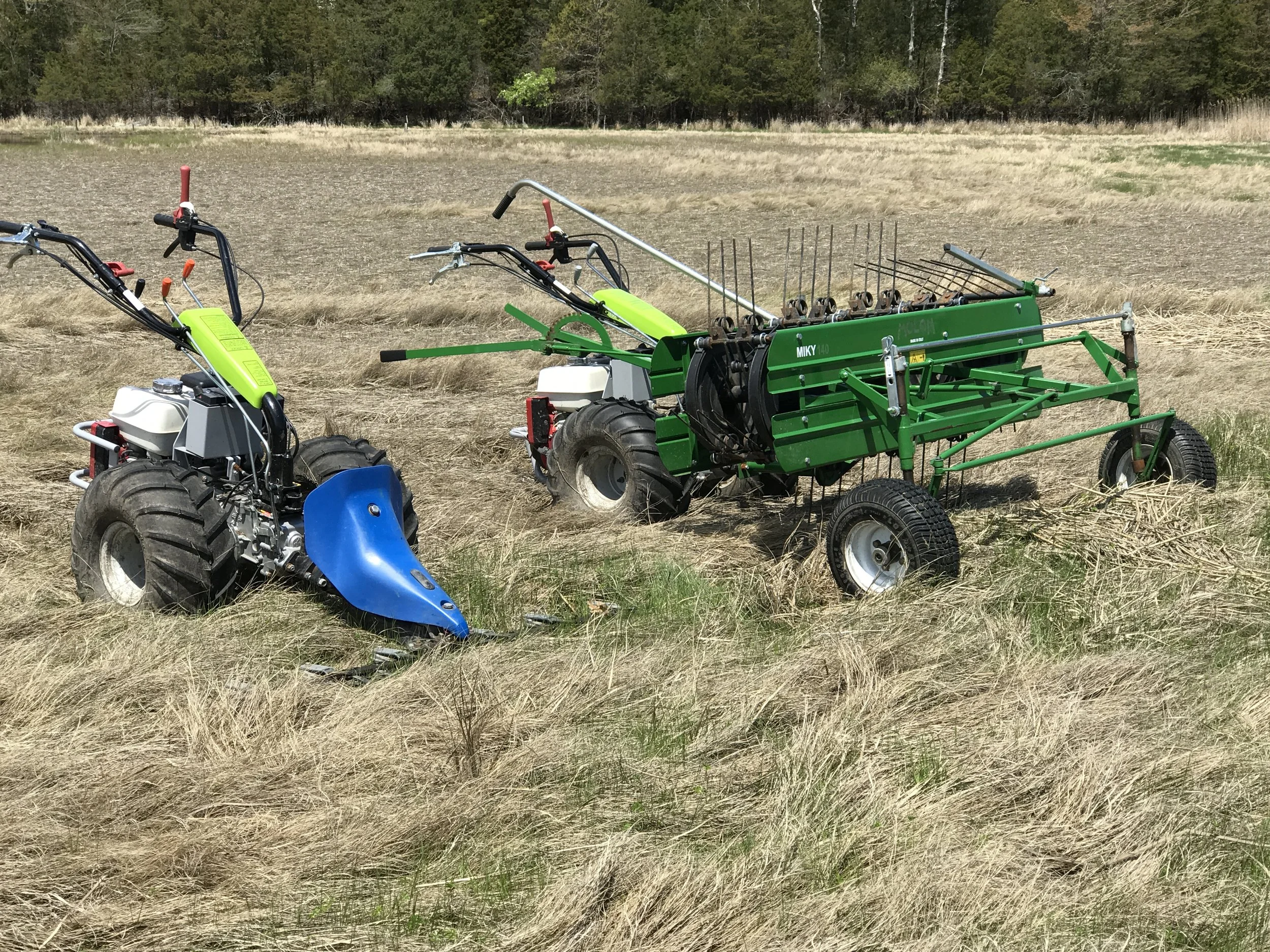
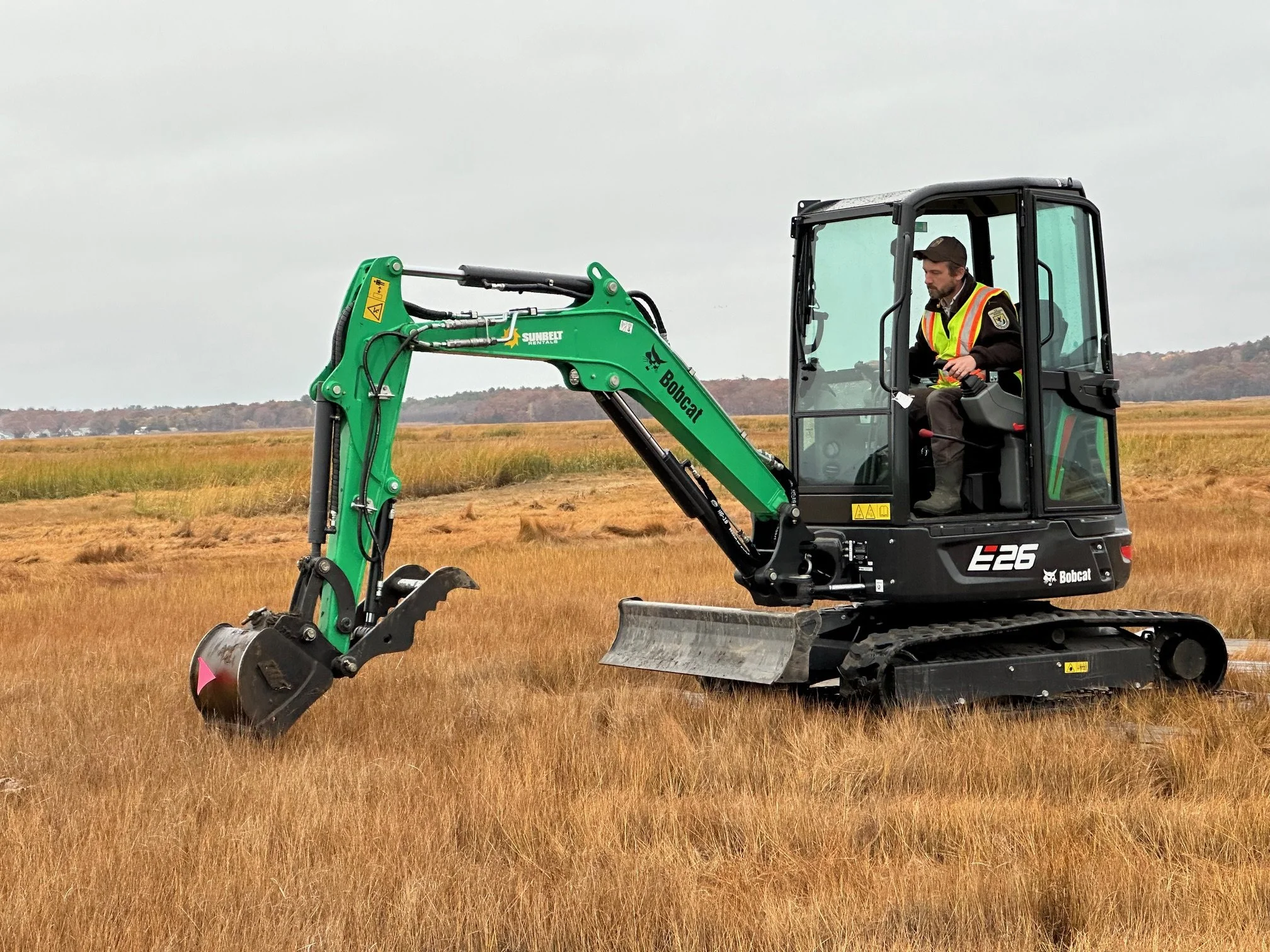
Unfortunately, time is running out to save our remaining salt marshes. Led by Ecology Program Manager Russ Hopping, the Trustees have adopted these techniques with the goal of restoring the thousands of acres of salt marsh they manage across the state. According to Russ, “because of the rapid rate that marsh drowning is occurring, we have maybe a decade left to repair the hydrology that will allow Mother Nature to begin healing the marshes so they can keep up with sea level rise before it becomes too late.”
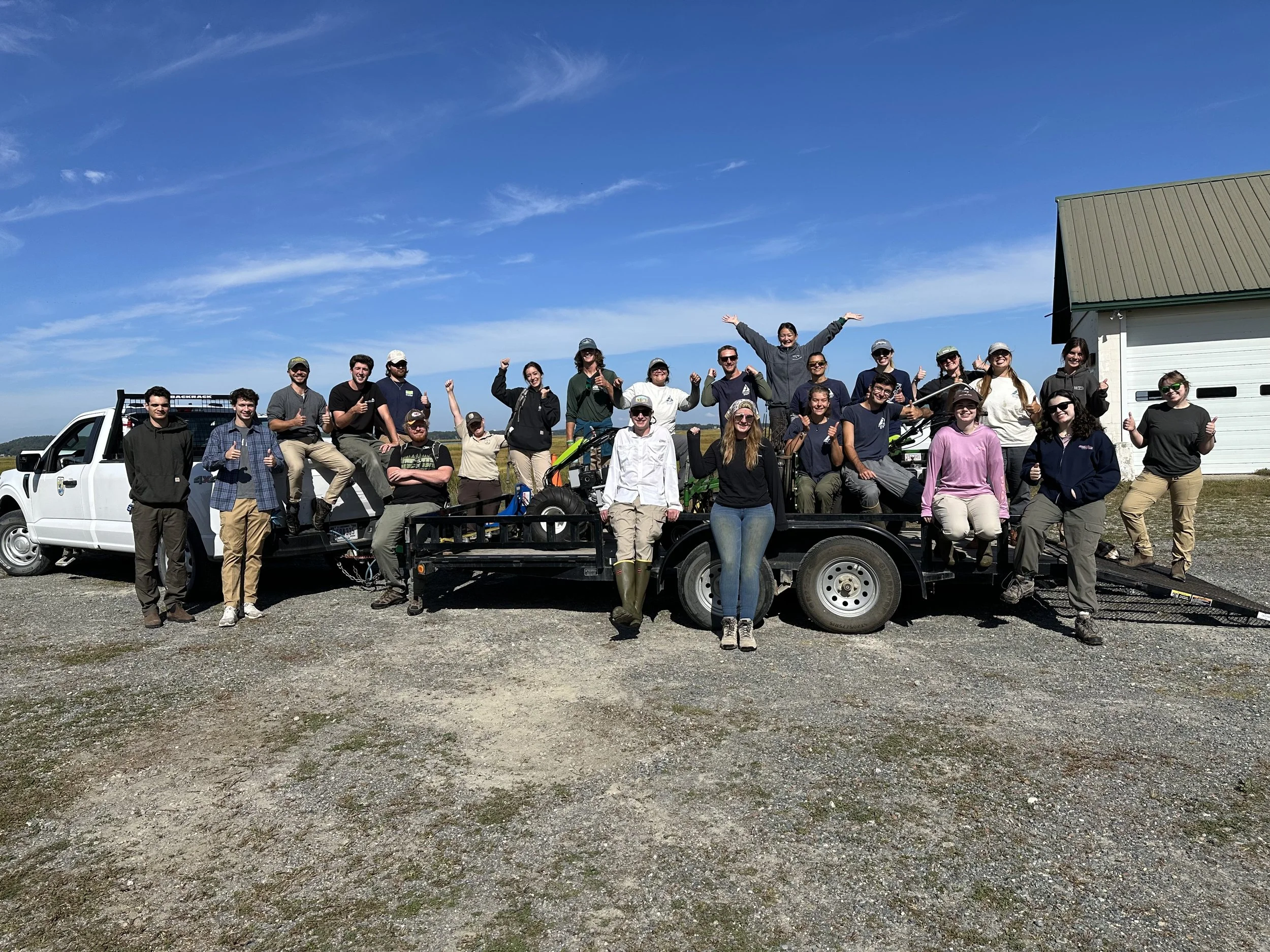
The Parker River National Wildlife Refuge and its partners Mass Audubon and Ducks Unlimited have devised a highly successful workforce development program with recent college students to implement their restoration projects. Says Refuge Lead Biologist Nancy Pau, “Without the commitment of these young people, it would be nearly impossible to implement the work on a cost-effective basis. Through this win-win program, we can employ these ambitious young people and provide workforce skills that will not only restore the marsh, but will also help build the skilled workforce necessary to implement community-based climate resiliency projects elsewhere.” Photo courtesy of the Parker River National Wildlife Refuge
Buoyed by the on-the-ground successes of the Parker River National Wildlife Refuge, the Trustees, Mass Audubon, and others, The Massachusetts Division of Fisheries and Wildlife (DFW) has developed a plan not only to restore the thousands of acres of salt marsh they own, but to help restore all of the 45,000 acres of salt marsh remaining in Massachusetts. To achieve this vision, DFW facilitated the Salt Marsh Adaptation Restoration Team (SMART) Academy in 2025, which brought together virtually every salt marsh restoration practitioner in the state to an intensive eight-day training program. First developed by Susan Adamowicz of the U.S. Fish & Wildlife Service, SMART is designed to provide consistency and remove barriers to facilitate and accelerate restoration projects on a landscape scale. Says DFW Regional Supervisor Patricia Huckery, “Our strategy is to help to fill gaps and be a resource to build the collective capacity to restore these special places given the extremely limited window we have to save one of Massachusetts’ most imperiled habitats.”
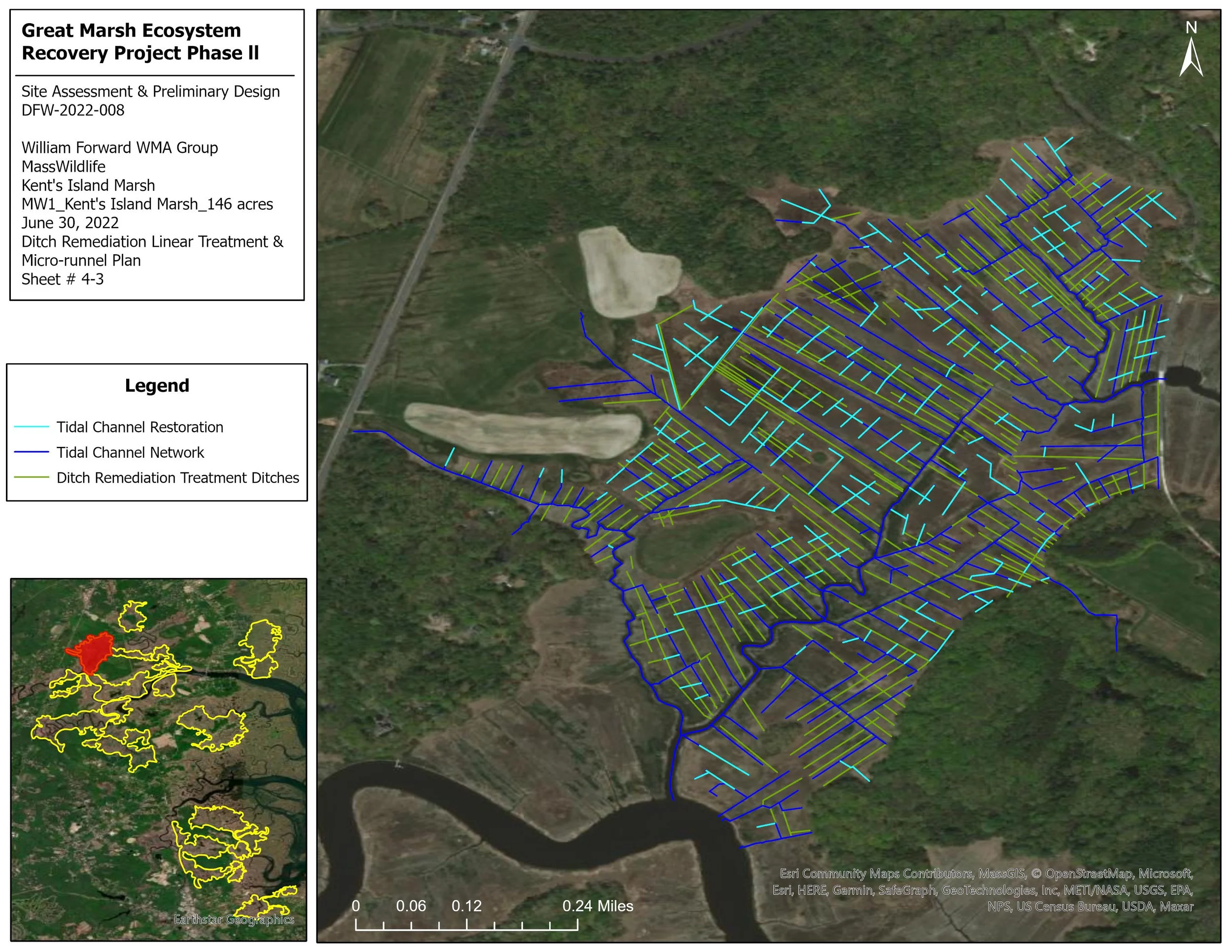
Through the use of land survey and remote sensing technologies to identify hard-to-see historic alterations made by early farmers, DFW is able to map and create restoration implementation plans on behalf of marsh owners across the state. Photo courtesy of Massachusetts Division of Fisheries and Wildlife
Located just seaward of many salt marshes and other coastal landforms, eelgrass meadows are among the most important coastal habitats on earth—and unfortunately one of the most endangered. Like salt marshes, they create habitat for numerous marine species, store carbon, filter water, and buffer the coastline and seafloor from wave energy and erosion. Alarmingly, in just the past 30 years, roughly 50 percent of the roughly 40,000 acres of eelgrass habitat in Massachusetts has disappeared, largely due to excessive nutrient pollution. Unfortunately, once the source of the pollution is abated, eelgrass seldom comes back on its own because it reproduces vegetatively or via seeds, requiring healthy plants to exist nearby. While eelgrass plants can be transplanted to areas where they have been lost, this is extremely labor-intensive and can be damaging to the host site, making restoration on the scale that is needed unrealistic. In recent years, a new method of harvesting wild eelgrass seeds and then maturing them in a wet lab offers a new approach to restore our lost eelgrass meadows.
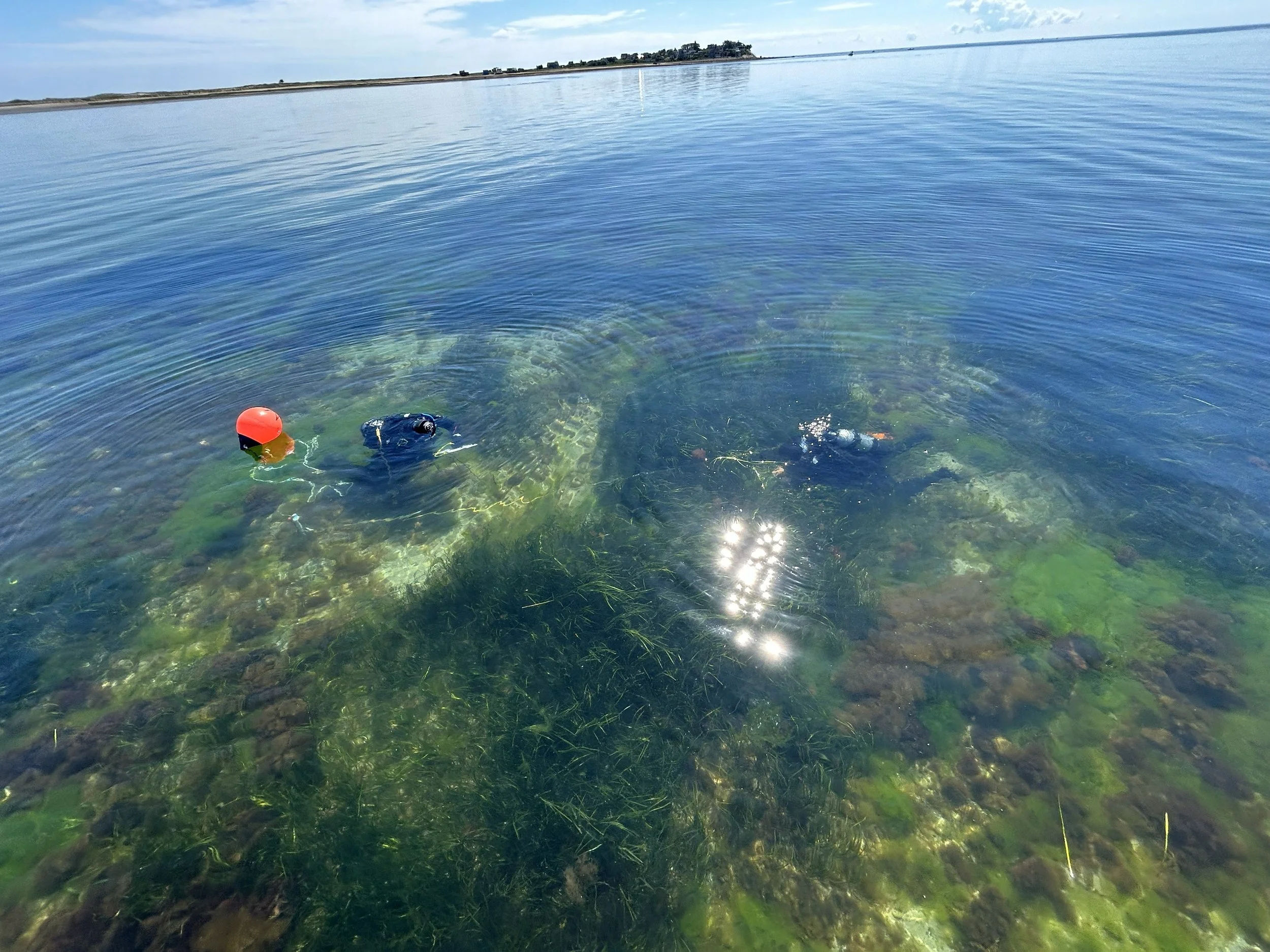
Divers collect shoots containing eelgrass seeds (called “repros”) in Salem Sound. Says DMF Eelgrass Restoration Project Manager Dr. Forest Schenck, “Even if repro harvest were limited to our goal of 10 percent to protect the donor meadow, it is conceivable that enough seed can be harvested in this way to restore all the meadows that have been lost in Massachusetts.” Photo courtesy of Massachusetts Department of Marine Fisheries
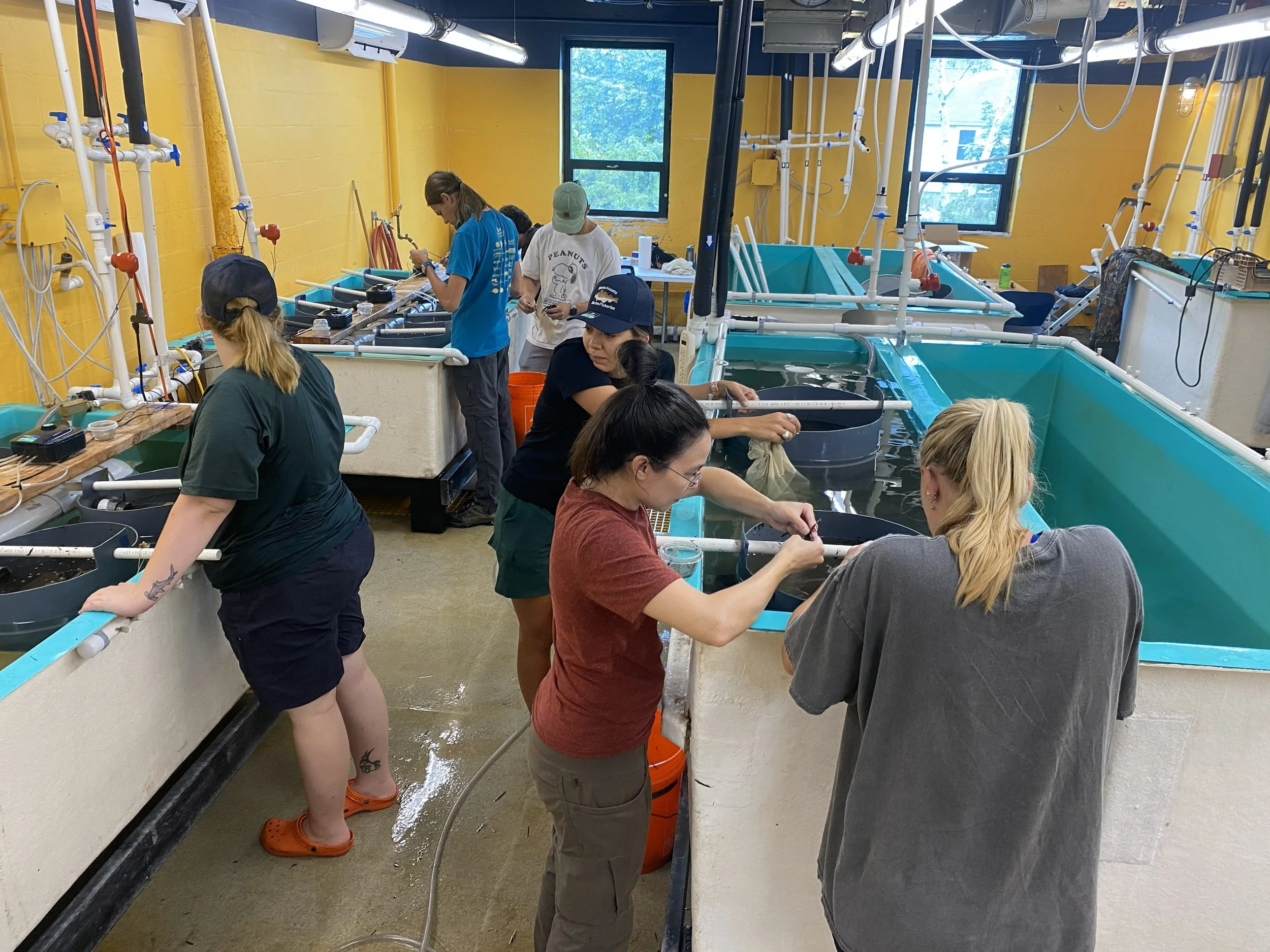
Community volunteers and interns nurture eelgrass repros to maturity at DMF’s Cat Cove Marine Laboratory in Salem for subsequent seed harvest and planting. Photo courtesy of Massachusetts Division of Marine Fisheries
Propelled by the Biodiversity Initiative, the newest effort focuses on the reestablishment of oyster reefs across Massachusetts. Standing alongside salt marshes and eelgrass meadows, these natural structures serve to attenuate wave energy and can be more effective than man-made barriers in reducing coastal erosion and protecting communities. Once extensive, oyster reefs have been nearly extirpated in Massachusetts due to pollution, overfishing, and disease. Unfortunately, once these stressors are remediated, like eelgrass, oyster reefs need help to become reestablished. To implement the ambitious oyster restoration goals in the Biodiversity Plan, DMF recently partnered with The Nature Conservancy (TNC) and the USDA’s Natural Resources Conservation Service to build upon their successful Supporting Oyster Aquaculture and Restoration program. This program, which began in 2020 and operates in nine other states, partners with shellfish farmers to grow seed and adult oysters which are then transplanted to reestablish oyster reefs that can be left alone or contribute to sustainable fisheries. Says Steve Kirk, Coastal Program Director for TNC, “Farmers building reefs is a win-win. This is a new way to help support coastal businesses that grow healthy food, that create local jobs, and improve the marine environment around their farms, while rebuilding oyster populations that provide habitat and filter water. What could be better than that?”
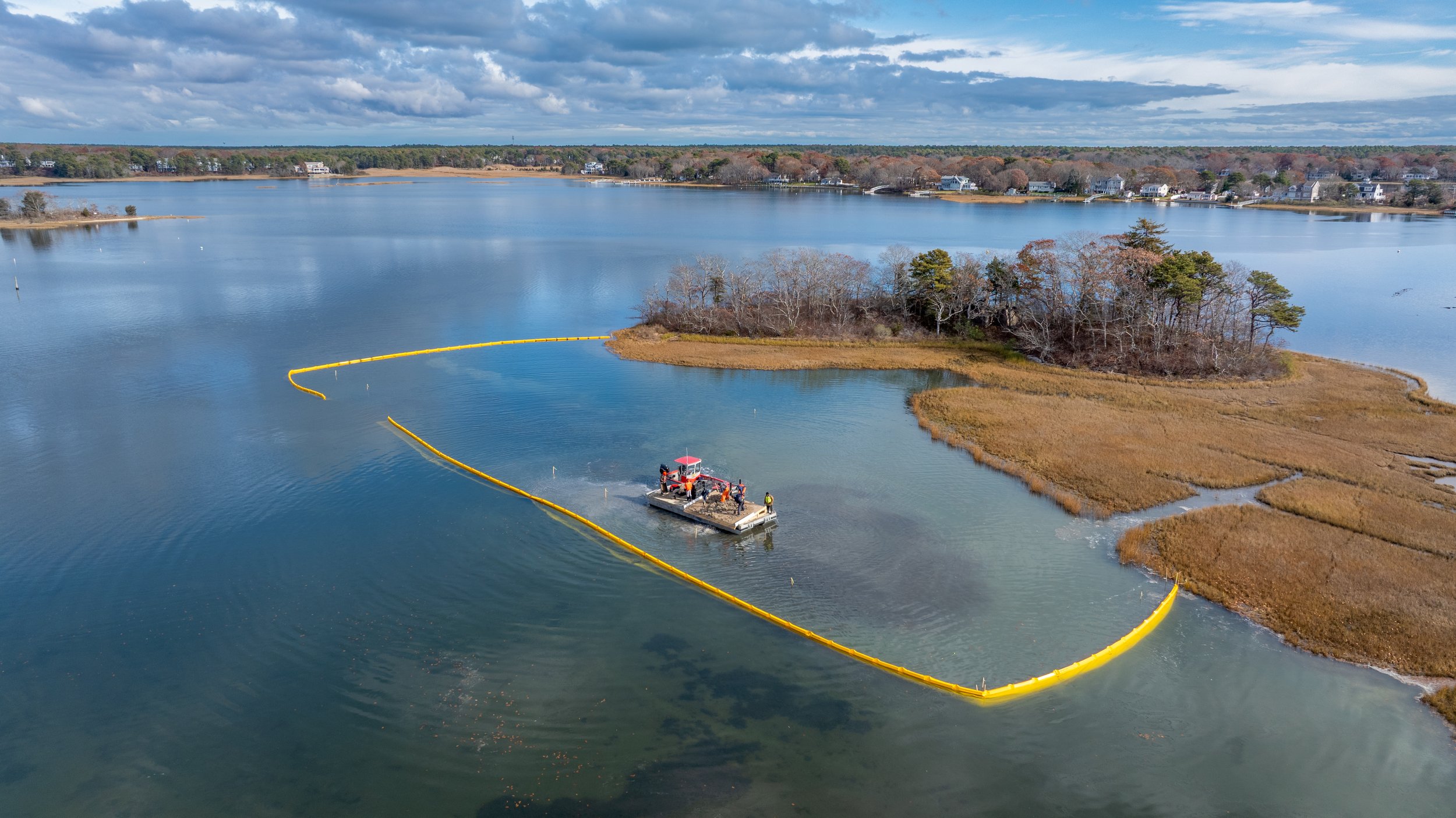
DMF and TNC biologists create new oyster reefs by depositing aged shell on the bottom, which can then be planted with oyster seed and adult oysters to reestablish self-sustaining oyster populations. According to DMF’s Shellfish Habitat Restoration Specialist Sean Terrill, “We’ve mapped suitable oyster restoration sites across Massachusetts, and through this new community-based model, it is conceivable that we can restore these reefs throughout their historic range in Massachusetts.” Photo courtesy of Massachusetts Division of Marine Fisheries
The work of these restoration trailblazers provided the confidence to include the ambitious goals of restoring all salt marsh, sea grass, and oyster beds in Massachusetts by 2050 as part of the Biodiversity Initiative. Their vision and demonstrated success show us that through the power of nature-based solutions, we have a fighting chance to avoid the worst impacts of climate change while strengthening our communities and increasing the biodiversity upon which all life depends.
Wayne Castonguay is the Regional Shellfish Program leader for the Massachusetts Division of Marine Fisheries. Prior to this role, he was Executive Director of the Ipswich River Watershed Association and the Ecologist and Agriculture Program Manager for the Trustees of Reservations, where he managed a number of ecological restoration and management projects and programs. He is a lifelong resident of Ipswich, Massachusetts, and has been working to protect the Great Marsh and its watershed since childhood.