
The Nature of Weeds and Invasive Plants
Context Is Everything
Editor’s Note: Walking with Peter Del Tredici—in the woods, through a formal garden, or down a city street—inevitably yields a revelatory experience. Few people can match his understanding of the complexities of plant life and form. With that eye and knowledge, Peter often shares insights that upend established dogma. Nowhere has he generated more discussion, and altered the thinking of others, than in his recognition of the value of all plants and the surprising importance of species often considered nuisance. As we consider the world of biodiversity, we were delighted to tap Peter for an appreciation and explanation of the nature of weeds and invasive species. – David Foster
What Is a Weed?
When reviewing the many definitions of the word “weed” in the horticultural literature, the one concept that clearly stands out is that it is a cultural rather than a biological construct. Simply put, a weed is a plant that people don’t like because it grows where they don’t want it to grow. In other words, it is the context in which a plant is growing—not the plant itself—that makes a weed.
A weed-related term whose meaning is also determined by its ecological context is “invasive species,” which refers to a non-native plant that has been transported—intentionally or unintentionally—by humans and has established itself in “natural” landscapes, spreading quickly and disrupting ecosystems. Essentially, a weed is any plant that grows in human-dominated landscapes where people do not want it, while an invasive is a non-native plant growing spontaneously in natural landscapes and causing ecological harm.
In eastern North America, many native species like ragweed (Ambrosia artemisiifolia), horseweed (Erigeron canadensis), and evening primrose (Oenothera biennis) are considered weeds because of their capacity to grow spontaneously in disturbed habitats. In contrast, many once widely planted, non-native “ornamentals” such as Japanese honeysuckle (Lonicera japonica), Norway maple (Acer platanoides), and Japanese knotweed (Reynoutria japonica) were reclassified as “invasive species” in the 1990s, having escaped from cultivated landscapes into minimally managed natural habitats.
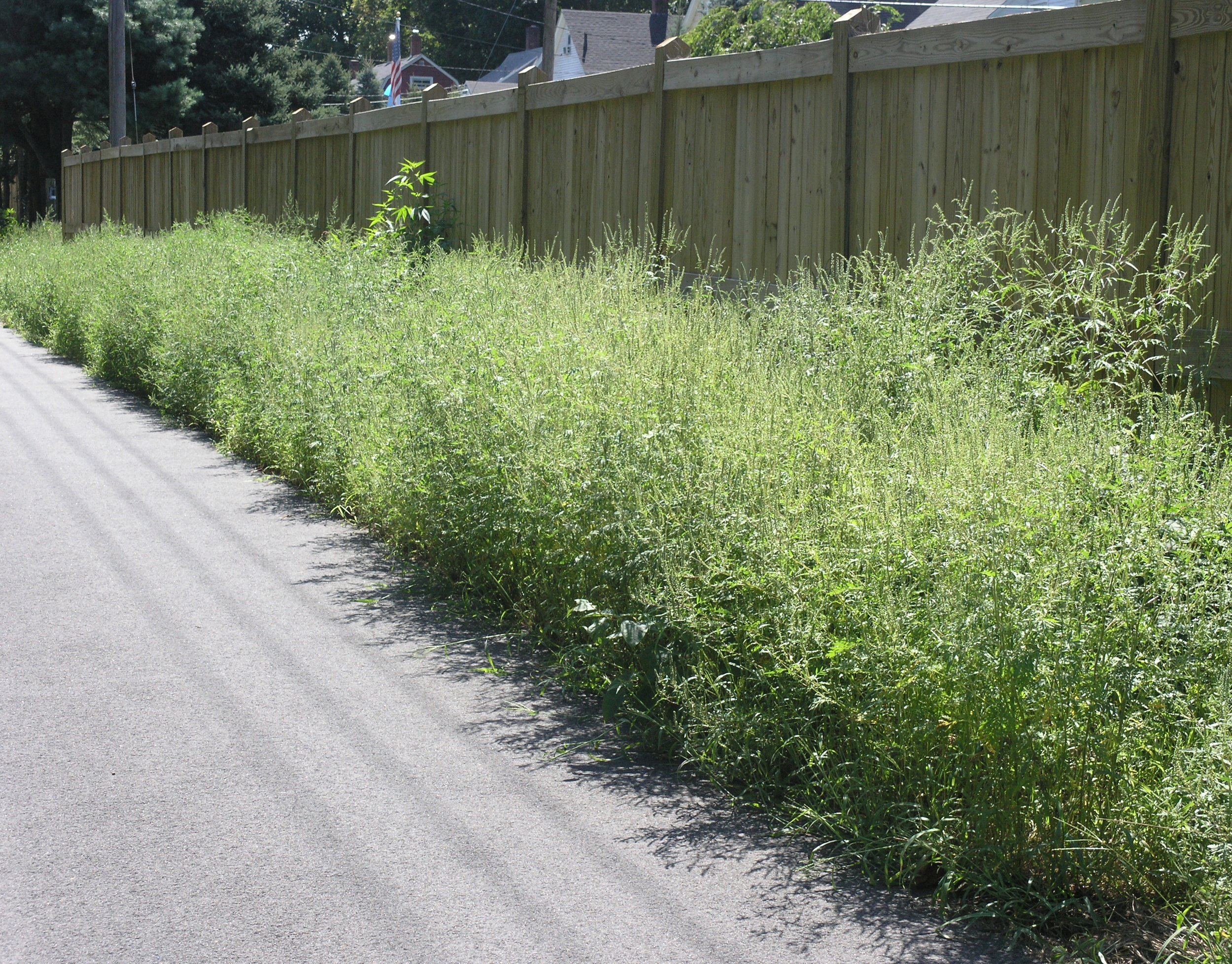
Common ragweed (Ambrosia artemisiifolia), grows along salted roadways in urban habitats. Photo © Peter Del Tredici
The Nature of Weeds and Invasives
Weeds and invasives are broadly problematic in four different types of landscapes: 1) On agricultural land, weeds compete with crops and are removed to promote increased financial income; 2) In gardens, weeds and invasives come up where people are trying to cultivate something else or in paved areas where they don’t want anything at all to grow; 3) In managed woodlands invasives compete with native plants and often displace them by virtue of their prolific regeneration; and 4) In urban areas, In urban landscapes, the distinction between weeds and invasives is not really relevant because no plants are native to those parts of cities that are dominated by housing and infrastructure.
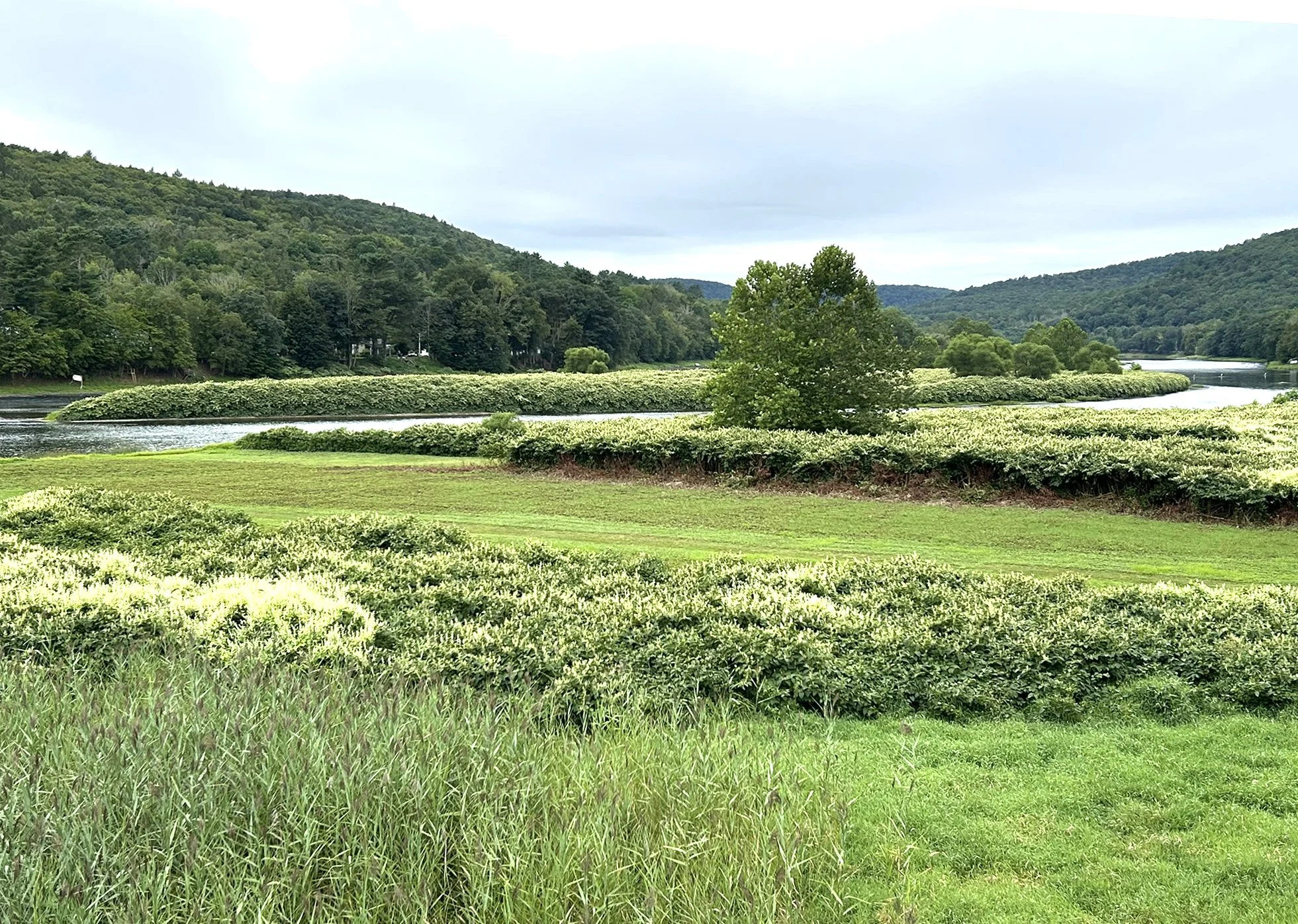
A huge stand of Japanese knotweed (Reynoutria japonica), in bloom along the Delaware River in Callicoon, New York. Photo © Peter Del Tredici
While these four categories of “human nature”—agricultural land, gardens, managed woodlands, and urban areas—overlap, they can be distinguished by the plants they support, the characteristics of their soils, and the types and frequency of the disturbances they experience. Agricultural habitats such as tilled fields combine annual disturbance (plowing and weeding) with high nutrient inputs (fertilizer), promoting the growth of herbaceous weeds that germinate from seed and complete their life cycle within a single season. Garden habitats typically have moderate levels of nutrients and disturbance that promote the growth of annual and perennial weeds and invasives. Forest habitats often have low levels of nutrients, and the scale and rate of the disturbances they experience—weather, pests and diseases, logging, construction projects, and animals such as deer that feed on tree and shrub seedlings—can be unpredictable. Unmaintained urban habitats with abundant paving favor species that grow well in soils that are relatively fertile, dry, sunny, and alkaline.
So Many Weeds
When it comes to gardening, most people operate under the illusion that they are in control of the process, but the truth is that nature abhors a garden and does everything in its power to destroy it through unpredictable weather; hungry animals; insect pests; fungal and bacterial diseases; and a vast array of aggressive weeds carried in by the wind, birds, and other animals. One of the main strategies that weeds rely on for reproduction is the soil “seed bank,” the storehouse of seeds that can survive underground for several years or decades, or even centuries. They germinate in the spring when the soil is turned over and they are exposed to sunlight. In essence, most weeds are “pre-adapted” to flourish under the conditions that people inevitably create in their cities, towns, farms, and gardens.
The botanist Herbert Baker wrote an article on “The Evolution of Weeds” in 1974 that described the life-history characteristics that explain their ecological success, which I have summarized below:
Most annual weeds produce seeds that are capable of germinating under a wide range of conditions, particularly on disturbed ground—qualifying them as “pioneer” or “early successional” species.
They display extreme “phenotypic plasticity” matching their growth to available resources. A stunted weed growing in a sidewalk crack will flower and produce just a few seeds and only reach a few inches in height but the same species growing in a nearby vacant lot with abundant soil will be three feet tall and produce hundreds of seeds.
Annual weeds flower when only a few months old and continue flowering and producing seed as long as conditions are favorable. Their flowers are often self-pollinated or pollinated by wind or generalist animals, resulting in very high levels of seed production.
Weeds are highly adaptable and tolerant of stressful environmental conditions such as too much or too little rain, compacted soil, extreme temperatures, and road salt. In addition, many of them produce toxic chemicals and spines that protect them from herbivores.
Weeds versus Invasives
The distinction between weeds and invasives is not always completely clear. As is true of weeds, invasive species rely on disturbance to become established. Many of them get their start along woodland edges, and from there spread into adjacent natural habitats. For example, the borders of most roads experience high levels of disturbance—including road salt applications; soil compaction; and ongoing maintenance, such as the mowing of herbaceous plants and the pruning of trees—that open them up to invasive species, which then spread readily into adjacent natural habitats. Research has shown that the one factor that best explains the density of invasive species in a given area is its proximity to a road.
“A weed is any plant that grows in human-dominated landscapes where people do not want it, while an invasive is a non-native plant growing spontaneously in natural landscapes and causing ecological harm.”
The fact that the definition of an invasive species does not include native plants or animals raises interesting questions. The case of black locust (Robinia pseudoacacia)—native to the Appalachian region of the United States—is particularly interesting. Following the retreat of the glaciers, this tree was still migrating north and east, reaching central Pennsylvania by the time of European colonization. Nevertheless, the Commonwealth of Massachusetts listed black locust as an invasive species in 2005 because it was not native to the state and because it disrupted the sandy, nutrient-poor habitats on Cape Cod where it had been extensively planted since the early nineteenth century because of its ability to produce dense, rot-resistant wood and to fix nitrogen. The decision to ban the sale of the plant was based on a cultural baseline and the false assumptions that nature is static and that human activity is not natural. But the truth of the matter is that nature is always in flux, and species that fail to adapt to changing environmental conditions—especially those created by people—will inevitably decline.
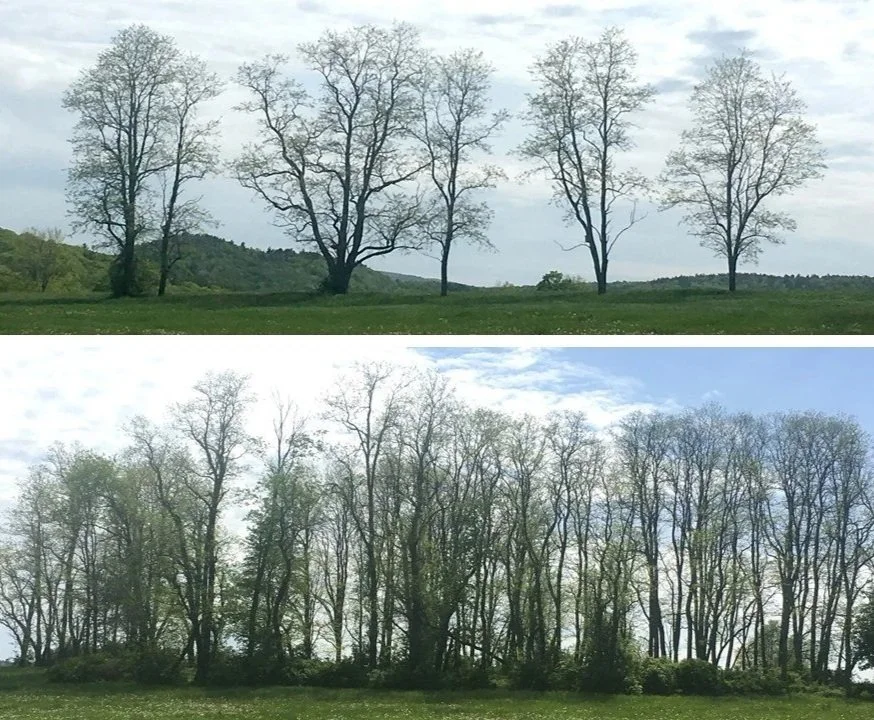
Two adjacent stands of black locust, Robinia pseudoacacia, in Cornwall, Connecticut. The top one is uncut,while the bottom one was cut and has resprouted. Photo © Peter Del Tredici
Indeed, many native species—like their invasive associates—have already adapted to human-induced environmental changes—including urbanization and climate change—by dramatically expanding their ranges. An example of this is the seaside goldenrod (Solidago sempervirens) which, over the past 50 years or so, has migrated some 60 miles inland from the coast along the Massachusetts Turnpike, in response to road salt applications. Southern pine beetle is another native organism that is migrating north into coastal New England, where it is killing native and planted stands of pitch pine.
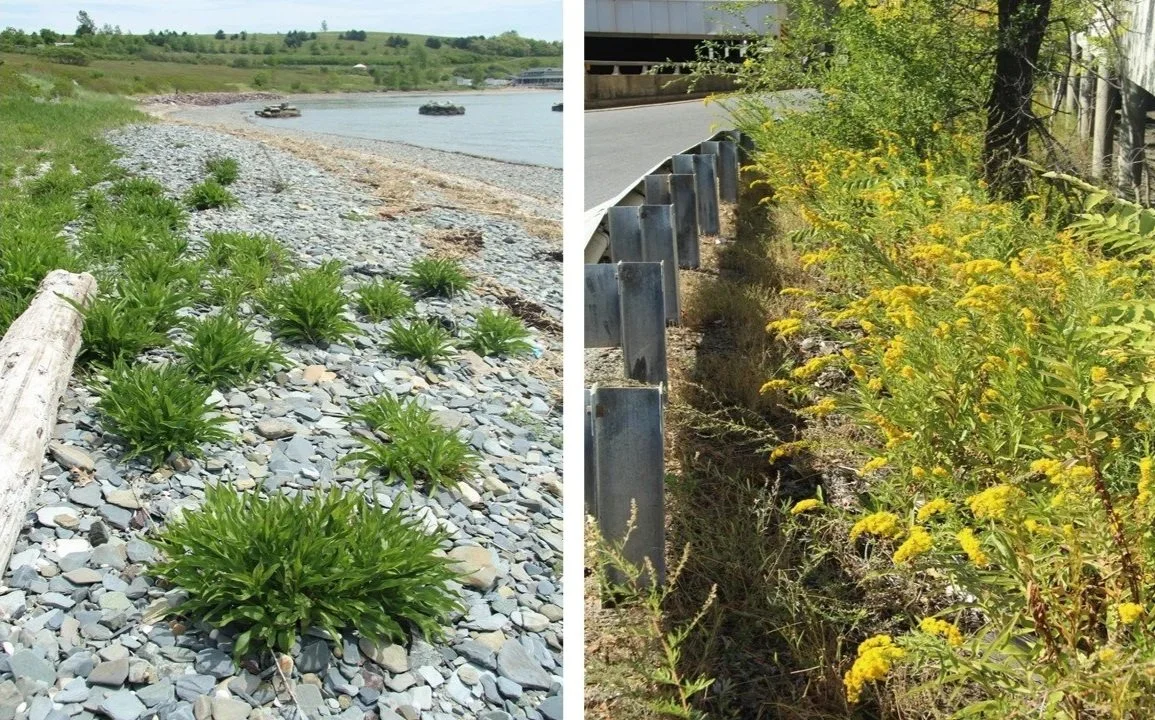
Over the past 50 years, seaside goldenrod (Solidago sempervirens), has spread more than 60 miles from its native habitat on the coast (left) along the heavily salted Massachusetts Turnpike. Photo © Peter Del Tredici
Where Did America’s Non-Native Weeds and Invasives Come From?
The global dispersal of weeds is as much a cultural as a biological phenomenon, and is part of the larger story of human migration. The book, New England’s Rarities Discovered (1672) by John Josselyn documents dozens of European agricultural weeds growing spontaneously in New England 50 years after the Pilgrims first landed. As subsequent groups of migrants arrived in North America, each with their own language and culture, they also brought their favorite crops along with their attached weeds.
The entry of woody invasives into North America occurred much later than that of herbaceous plants associated with agriculture. Beginning in 1861, some seven years after Commodore Perry’s “gunboat diplomacy” forced Japan to begin trading with the United States, plants from that country directly arrived in North America. Before that, most Asian plants arrived via European nurseries. By the late 1880s a wide variety of Asian plants—including three notorious vines, Japanese honeysuckle (Lonicera japonica), Asiatic bittersweet (Celastrus orbiculatus), and Japanese wisteria (Wisteria floribunda)—were commercially available to wealthy estate owners. Over time, as propagation techniques improved, they became more affordable and were planted in the newly emerging suburban landscapes that were expanding rapidly in the late nineteenth and early twentieth centuries.
“Research has shown that the one factor that best explains the density of invasive species in a given area is its proximity to a road.”
While many of these Asian introductions were promoted as residential ornamentals, some of them—including kudzu (Pueraria montana), multiflora rose (Rosa multiflora), autumn olive (Elaeagnus umbellata), burning bush (Euonymus alatus), Siberian elm (Ulmus pumila), and Morrow’s honeysuckle (Lonicera morrowii)—were also extensively planted in the 1930s to help control erosion along roadways and streams in rural landscapes, and along railroad and highway verges. Following the end of World War II, such plantings continued through the early 1970s as a legacy of the Dust Bowl era, when preserving topsoil was considered an ecological priority. The plants selected to do this work were specifically chosen because of their ability to tolerate stressful or highly disturbed environmental conditions, and they were very good at it.
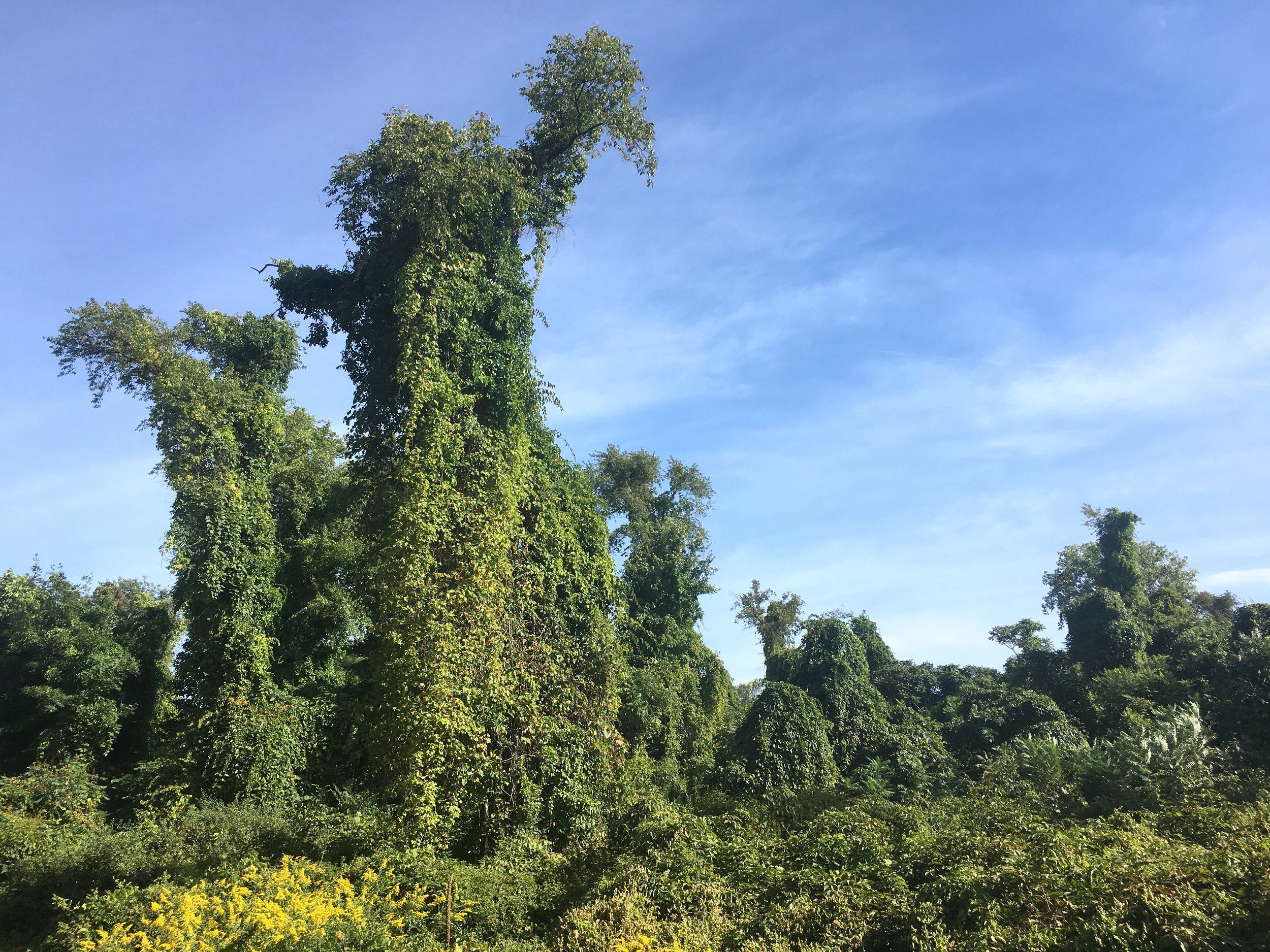
An Asiatic bittersweet (Celastrus orbiculatus) “vinescape” in Copake, New York. Photo © Peter Del Tredici
By the early 1990s, with the help of birds and other dispersal agents, many of these widely planted “erosion control” species had spread into woodland landscapes and the term invasive became their standard descriptor. Their ecological adaptability, coupled with widespread planting, enabled them to overcome the usual ecological bottleneck of getting established from seed. Today, the demise of many of our native forest trees from invasive insects and microbial diseases is creating opportunities for invasive plants to spread into new areas.
What Weeds Are Telling Us
Given their adaptability and resilience, weeds and invasive species are dramatically increasing their ranges in response to the planetary-scale disturbances of urbanization, climate change, and globalization. Remarkably, research has documented the fact that many herbaceous weeds have undergone relatively recent genetic changes that have improved their ability to survive in urban environments and other disturbed landscapes. As mentioned earlier, it’s not just non-native species that are adapting to climate change by expanding their ranges—many native, early-successional species are also genetically adapting to changing environmental conditions. The optimistic take on this is that we will continue to have functional ecosystems, albeit “novel” ones populated by a cosmopolitan mixture of native and non-native species.
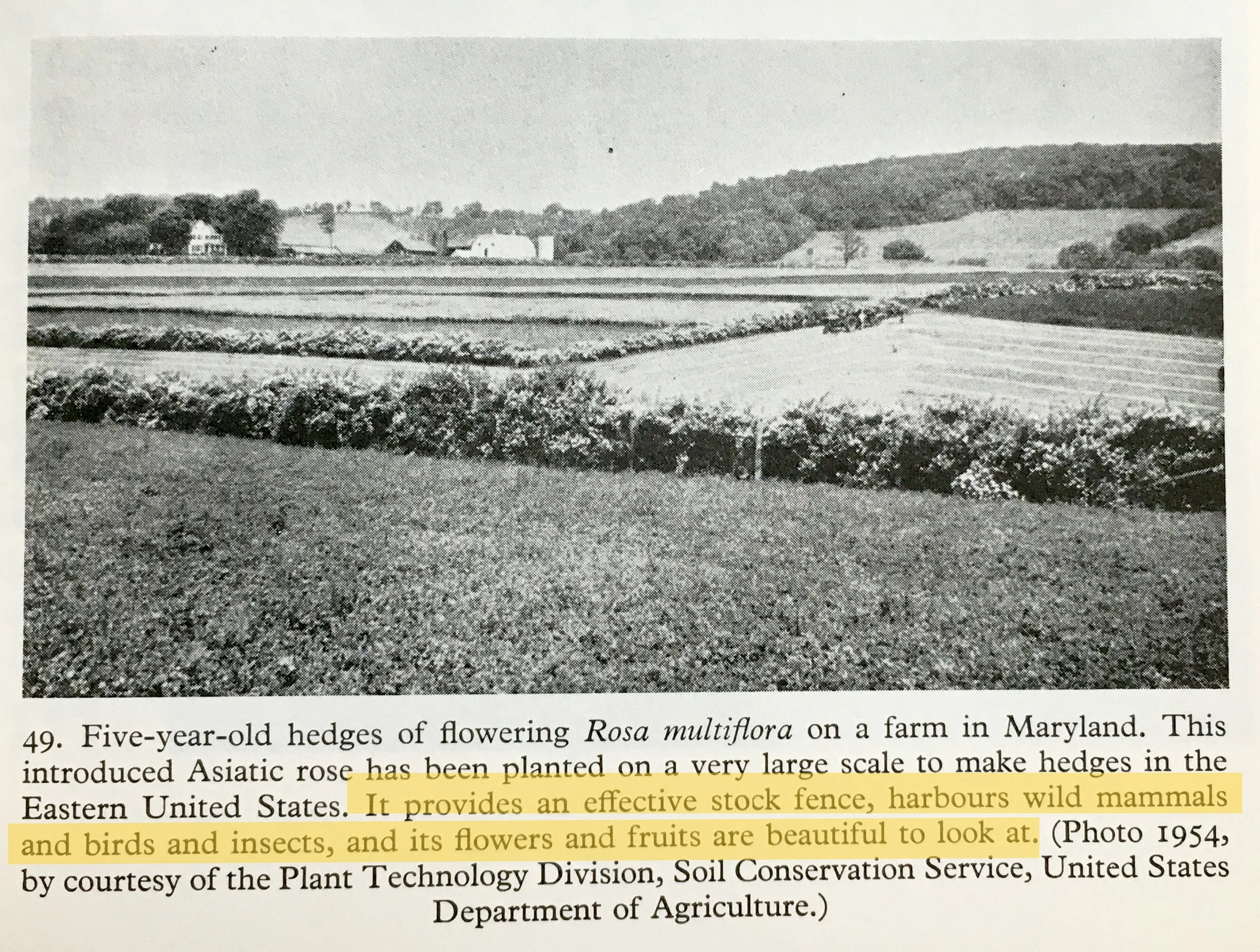
Illustration from the seminal book on invasive species, The Ecology of Invasions by Plants and Animals by Charles Elton (1958). Despite his animosity toward such plants, the author advocated for the planting of the invasive Rosa multiflora to create hedgerows on North American farms. Photo © Peter Del Tredici
While many conservation groups are focused on the admirable goal of restoring native ecosystems, the notion of returning to the way things used to be is an illusory roadmap for navigating the impacts of climate change. The organisms that make up this brave new ecology—particularly in an urban context—are well adapted to dealing with the mess we’re making of the planet, and they can provide ecological and social services that help make cities and suburbs more livable for all of their inhabitants.
From an ecological perspective, weeds and invasive species can be interpreted as plants that are adapted to disturbance and environmental change in all its forms—from the local to the global scale. They are symptomatic of environmental degradation rather than its cause and, as such, they are poised to become the flora of the future. This analysis suggests that we should embrace Ralph Waldo Emerson’s prescient 1879 definition of a weed as “a plant whose virtues have not yet been discovered,” and use less negative terminology to describe them.
Peter Del Tredici is a botanist specializing in the growth and development of trees. He worked at the Arnold Arboretum of Harvard University for 35 years and also taught in the Landscape Architecture Department at the Harvard Graduate School of Design and the Urban Planning Department at MIT. He has published on a wide variety of subjects, including the ecology of hemlock trees, the history of plant introductions from Asia, the ecology of the ginkgo tree, and the morphology of basal sprouting in trees. He has also published a book on urban ecology, Wild Urban Plants of the Northeast: A Field Guide.