
Taking Stock
Fisheries Management and Its Impacts on Biodiversity
Editor’s Note: It is a rite of spring—the annual emergence of state and federal hatchery trucks to deliver loads of fish to neighborhood and rural streams and ponds. Closely attuned to these schedules, kids and fishermen arrive to retrieve these artificially raised fish as trophies and dinner. But increasingly, more people are questioning the practice: What fish are being introduced to our waters, and what are their impacts? Fortunately, Colby Galliher has researched the practice and concerns, as well as alternatives, in time for this issue on biodiversity. – David Foster
Among the assets that set our lush planet apart, an abundance of fresh water is perhaps the most precious. Yet the flora and fauna that inhabit freshwater ecosystems are desperately beleaguered. The World Wildlife Fund’s Living Planet Report 2020 indicates that freshwater biodiversity has declined by 84 percent since 1970—double the already punishing declines on land and in the sea.
An array of factors has brought our waters to this point. We have dammed, drained, diverted, and polluted them the world over. In addition to disrupting natural flows and poisoning waters with chemicals, we have introduced non-native species into sensitive freshwater food webs.
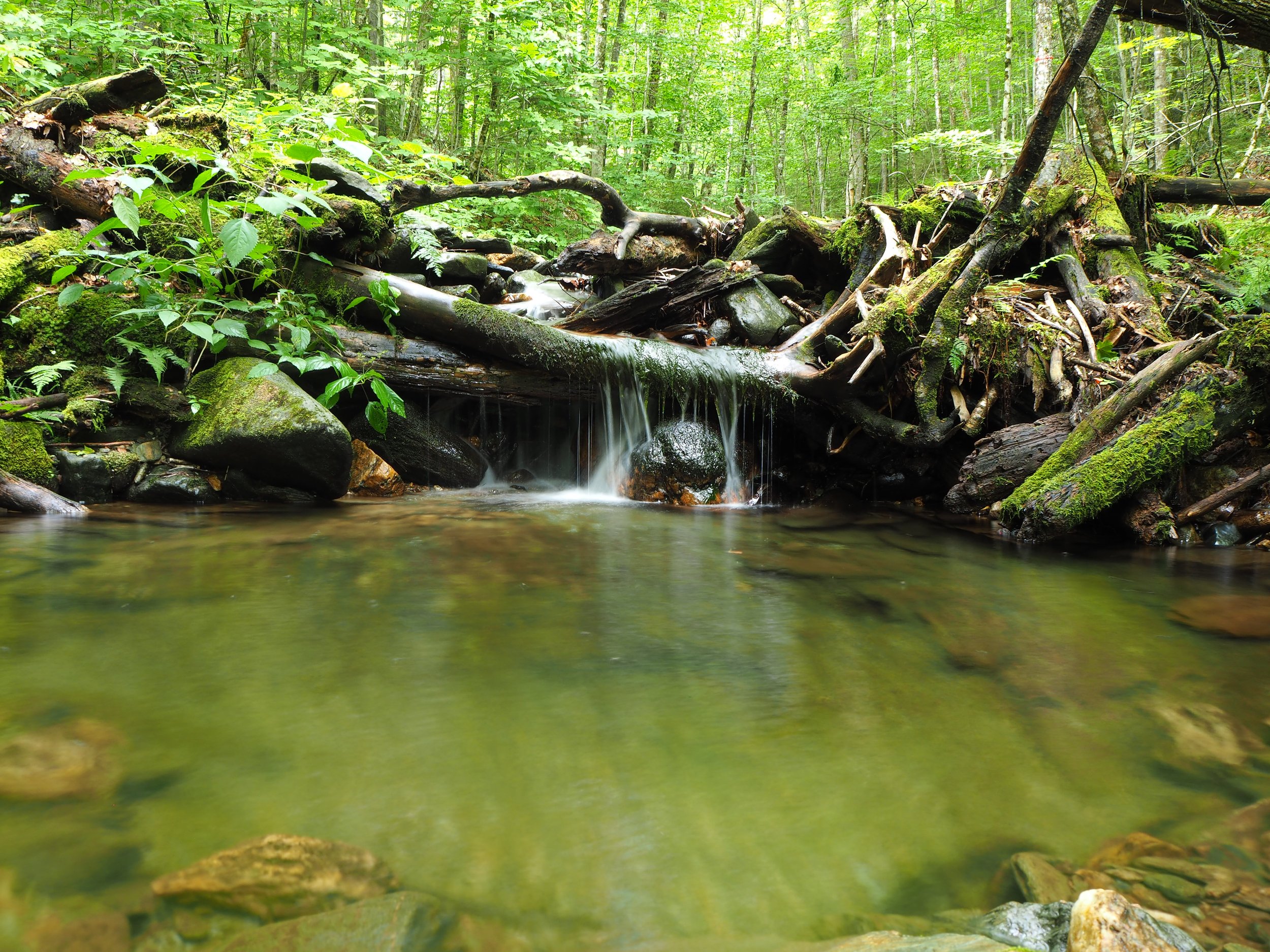
Freshwater habitat at Northeast Wilderness Trust’s Bramhall Wilderness Preserve in Bridgewater, Vermont. Photo © Shelby Perry
These introductions constitute the second-greatest threat to native fish populations in North America, just behind habitat loss and degradation. What is more egregious is that many of them were deliberate. Stocking of non-native fish has been well-funded public policy since the nineteenth century. State and federal agencies began introducing hatchery-raised fish into rivers, lakes, and ponds in the 1860s and 1870s to enhance sportfishing opportunities and, more recently, to replenish stocks reduced by human activities.
The evidence that fish stocking has severely degraded freshwater ecosystems is overwhelming. Yet it continues even in the Northeast, where many state wildlife agencies prioritize biodiversity in wildlife action plans. And, while stocking of native species is increasingly replacing stocking of non-natives, many experts contend that all forms of stocking threaten the region’s remaining freshwater biodiversity.
A Human-Centered Intervention
By the mid-nineteenth century, native fish populations in the United States were diminished in or extirpated from many freshwater habitats. The federal government implemented stocking in 1872 to repopulate these depleted waterways—but largely for the benefit of sportsmen, not ecosystems or their biological communities. Species chosen for stocking were those that appealed to anglers, rather than those that restored ecological integrity.
“In addition to disrupting natural flows and poisoning waters with chemicals, we have introduced non-native species into sensitive freshwater food webs.”
At the time of fish stocking’s inception, little thought was given to how introduced species might affect native flora and fauna. The practice was also indelibly shaped by a funding model that continues to underpin and influence wildlife conservation policy. According to the nonprofit Wildlife for All, state wildlife agencies derive more than half of their revenue from hunting and fishing licenses, a revenue source that is nevertheless declining as support for both activities decreases. This funding model incentivizes agencies to stock fish that anglers find desirable in a never-ending annual cycle, even if these species inflict damage on the ecosystems into which they are deposited. Annually, recreational fisheries contribute around $230 billion to the U.S. economy, providing policymakers with a compelling reason to sustain agency policies and keep waters teeming with catchable fish.
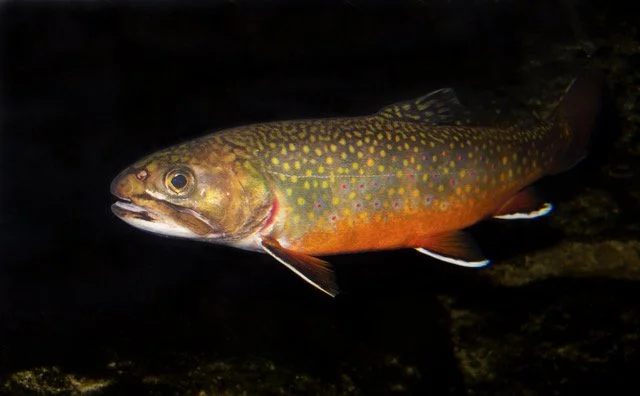
Brook trout. Photo © Larry Master
The economic cost of operating the aging federal and state hatcheries to sustain this activity is enormous. The price tag runs into the billions of dollars for federal hatcheries, which dump over 140 million fish into the nation’s waterways every year. States also allot hundreds of millions of dollars annually for their own programs. Stocking advocates point back to the hefty contributions to federal and state coffers the recreational fishing industry delivers every year to justify these expenditures.
But this calculus leaves out mounting concerns over fish stocking’s ecological impacts.
An Abundance of Alarming Evidence—But Little Change
Many infamous stories of stocking gone wrong come from the American West, where ecological calamity has followed the stocking of remote, fishless alpine waters by plane. But the practice’s almost universally devastating effects on native species and food webs are well established.
Fish stocking jeopardizes native fisheries in a variety of ways. Many of the traits that make stocked fish attractive to anglers make them top predators in their home ranges. Introduced into novel environments, they can trigger trophic cascades, eliminating native predators and altering fine-tuned predator-prey relationships. Stocked fish compete with native species for food resources, hybridize with them, prey on their young, and grow faster and breed rapidly. Stocked fish can also transmit pathogens to native species.
“The evidence that fish stocking has severely degraded freshwater ecosystems is overwhelming. Yet it continues even in the Northeast.”
Native fish are not the only organisms that suffer from these cascading impacts. A study of Kings Canyon National Park in California, for example, demonstrated that when brook and rainbow trout became established through stocking in formerly fishless lakes in the park, everything from finches and snakes to frogs declined. The introduced fish unwound the ecosystem’s fabric by devouring its prey base of invertebrates and small amphibians.
In the Northeast, stocking has worsened the woes of our most iconic fish species: brook trout. Extensive evidence points to stocked rainbow and brown trout, native to the American West and Europe, West Asia, and North Africa, respectively, as principal culprits in the range-wide decline of brook trout. When sharing waterways with introduced rainbow and brown trout, brook trout grow more slowly. They retreat to warmer parts of streams, where they struggle with higher water temperatures. Over time, they can disappear completely, their place in the ecosystem usurped by their stocked relatives.
While brook trout appear to be stable in Vermont and Maine, they are of special concern in New Hampshire and of greatest conservation need in Massachusetts. Connecticut recently instituted new restrictions on brook trout takes in recognition of the species’ statewide contraction.
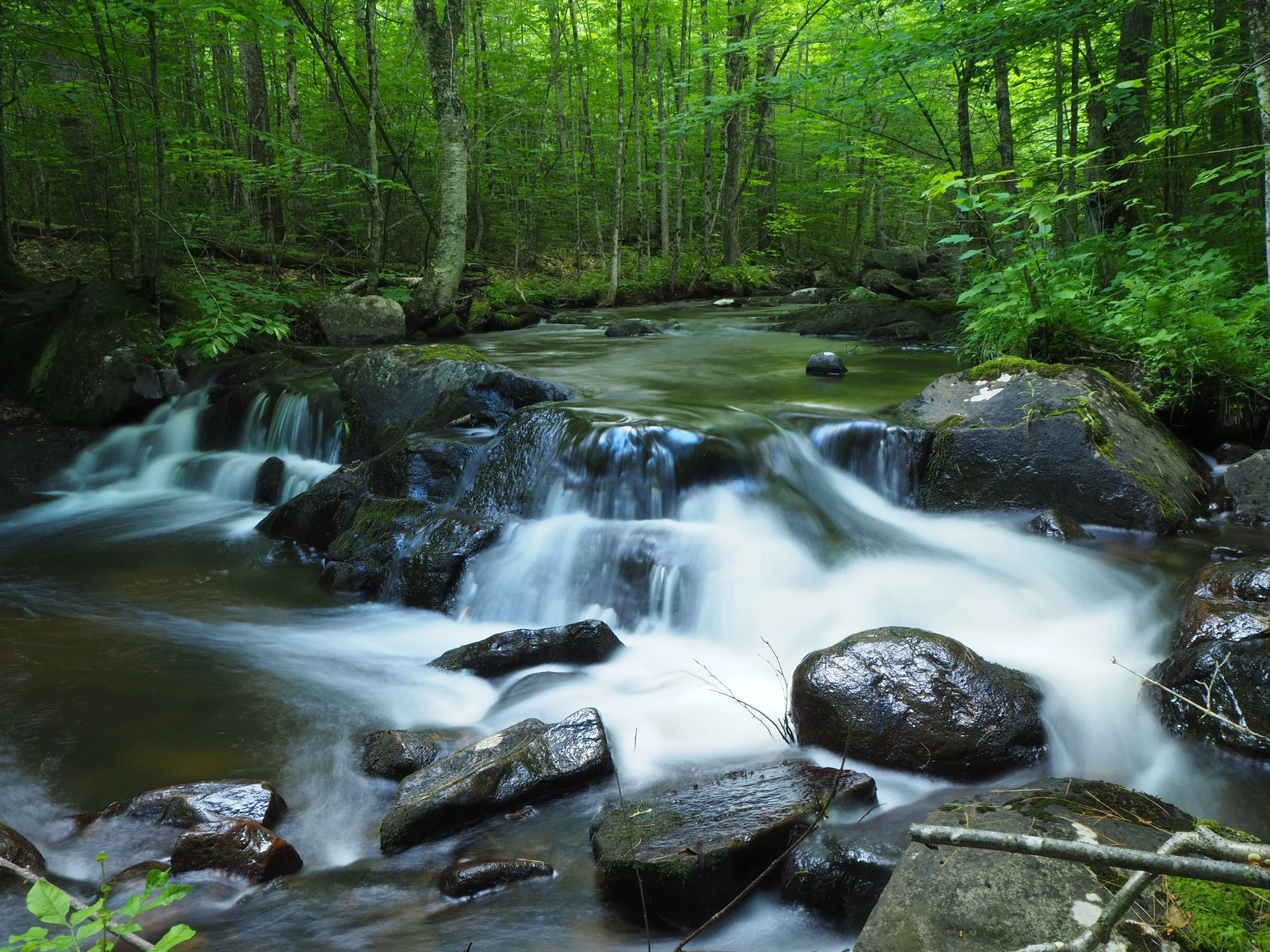
Freshwater habitat at Northeast Wilderness Trust’s Eagle Mountain Wilderness Preserve in Chesterfield, New York. Photo © Shelby Perry
Nonetheless, each of these states continues to stock brown and rainbow trout. The most recent stocking report from New Hampshire Fish and Game documents more than 1,260 instances of brown or rainbow trout introductions in the state’s lakes, ponds, and rivers. Fewer than half of the documented stocking runs included native eastern brook trout or landlocked salmon. Vermont Fish and Wildlife’s most recent stocking report highlighted a similar imbalance. MassWildlife boasts that the more than 400,000 trout stocked this year, the vast majority of which were rainbow or brown trout, “are bigger and better than ever.”
The contradiction is clear. As agencies respond to biodiversity declines by allocating resources to species of conservation concern—and championing their biodiversity goals along the way—they continue a practice inimical to these same goals in order to cater to a shrinking demographic.
A More Complicated Picture
Even as the stocking of non-native fish becomes increasingly difficult to justify, officials often cite stocking of native species as a critical way to rebuild diminished or extirpated fish populations. Absent intervention, the pro-stocking argument goes, some native species are unlikely to ever return to their historical ranges in robust numbers.
Wildlife agencies in the Northeast promote this argument forcefully. “Lake Trout populations, like those of Atlantic Salmon, were severely affected by overfishing and habitat destruction during the 1800s,” according to Vermont Fish and Wildlife. “Populations of Lake Trout from all 25 lakes in Vermont are either augmented or totally sustained by hatchery stockings.” A recent news article cites the Connecticut Department of Energy and Environmental Protection: “Connecticut’s watersheds and fish communities are irreversibly altered by hundreds of years of anthropogenic impacts.” On their own, the state’s waterbodies “can no longer support fisheries for some native fishes, notably Atlantic salmon.”
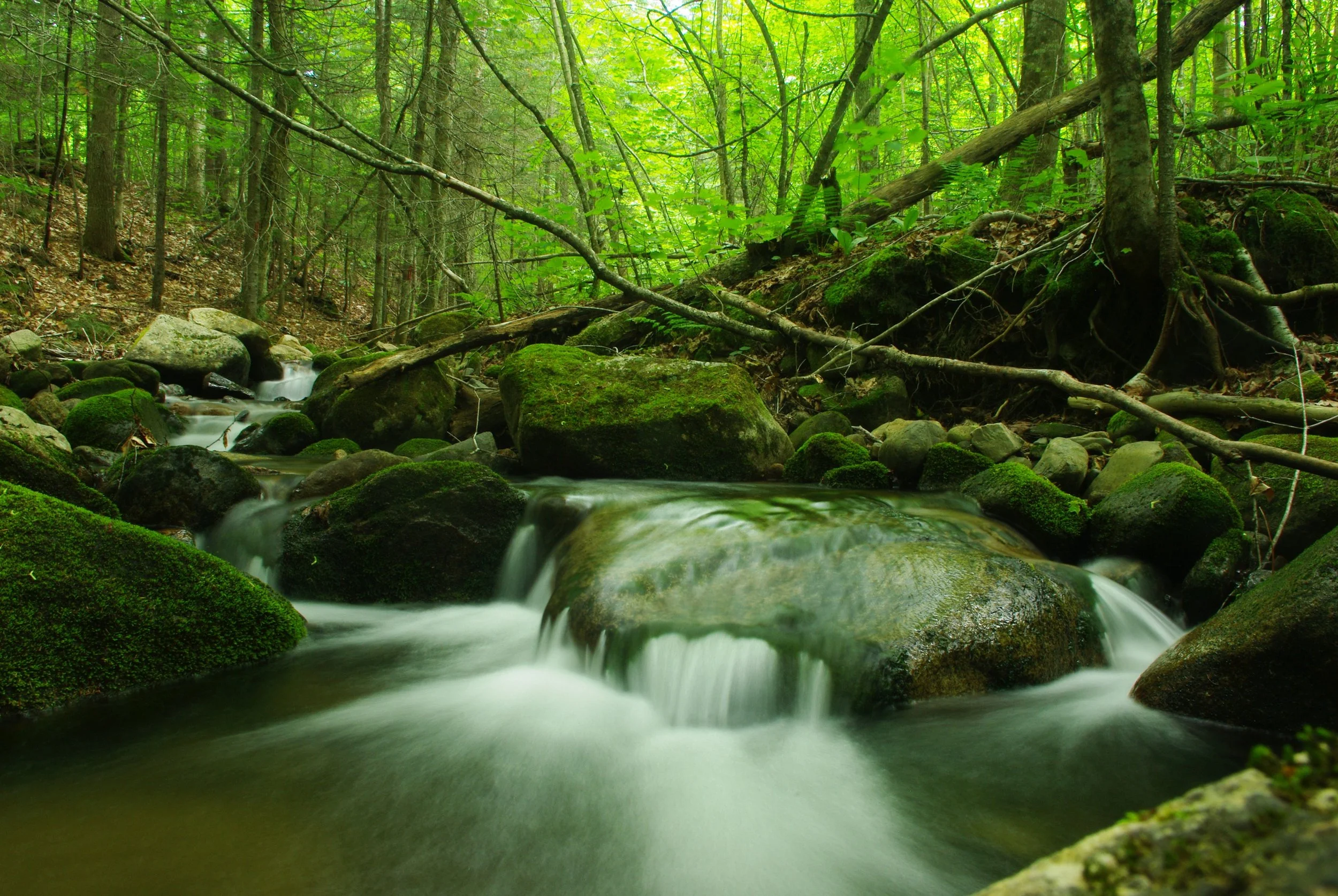
Freshwater habitat at The Nature Conservancy’s Vickie Bunnell Preserve in Columbia and Stratford, New Hampshire. Photo © Shelby Perry
Whether stocking can bring flagging native fish populations back from the brink remains an open question. Studies suggest that stocked fish are less fit to survive in the wild and, in the long term, can weaken a species’ gene pool. That said, examples of native stocking jumpstarting a species’ comeback do exist: 35 years after federal and state officials began stocking Lake Champlain with native lake trout, the fish were found to be reproducing at levels that could sustain the population, leading to the discontinuation of the stocking program.
Such stories create a nuanced picture of stocking. Where wild fisheries are depleted, stocking of native species could be one part of a holistic strategy along with rewilding measures like dam removal, water quality improvements, and reforestation. This logic suffuses many federal and state descriptions—and defenses—of fish stocking, even as high-profile examples of the strategy’s failure call its efficacy into question.
“The economic cost of operating the aging federal and state hatcheries to sustain this activity is enormous.”
For critics, reliance on stocking perpetuates an old, utilitarian approach to conservation. They contend that if stocking remains an option, federal and state wildlife agencies may slow-walk ecosystem restoration and a meaningful shift away from their long-standing focus on commerce and recreation to one that centers on biodiversity. After all, why should state legislators or wildlife agencies tread the politically sensitive terrain of strict pollution control or dam removal if more brook trout can be bred in a hatchery?
Toward Wilder Waters and Fisheries
The mixed evidence on the ecosystem impacts of native stocking has led conservation organizations to train their efforts on halting non-native stocking and promoting habitat restoration.
For example, The Nature Conservancy in Maine is working with local communities on the lower Kennebec River to remove four large dams to boost freshwater connectivity for Atlantic salmon, alewife, eel, and other species. Conservation-focused angling groups, like Trout Unlimited and the Native Fish Coalition, also undertake habitat improvements such as floodplain reconnections, wood additions to streams, and dam removals, while marshaling public support to stop non-native stocking. The Berkshire Environmental Action Team recently rallied supporters to end stocking in the upper Deerfield River in Massachusetts as part of a wider campaign against the practice. Wilderness conservation organizations like Northeast Wilderness Trust are preserving core habitat and ensuring that waterways stay wild, unpolluted, and cooled by adjoining forests.
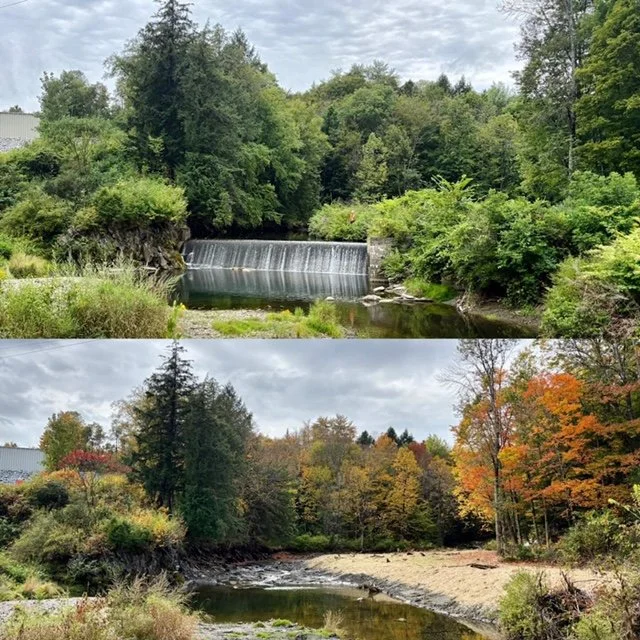
Before (top) and after (bottom) of a dam removal project, led by the nonprofit organization Friends of the Winooski River, on the Winooski River in Barre, Vermont. Photo courtesy of Friends of the Winooski River.
States are exploring new, ecosystem-centered approaches to fish conservation that reinforce a turn away from fish stocking. Pond reclamation, a practice once championed by wildlife agencies that transforms fish populations by poisoning existing species and replacing them with preferred ones, is much less common today.
Meanwhile, as the number of hunters and fishermen declines, policymakers in Oregon have passed legislation to derive wildlife conservation funds from a state lodging tax increase. In other jurisdictions, proposals such as Nature for Massachusetts call for a tax on the sale of outdoor gear to support conservation. These novel models are likely to attract increasing attention as revenues from license sales continue to fall.
“The mixed evidence on the ecosystem impacts of native stocking has led conservation organizations to train their efforts on halting non-native stocking and promoting habitat restoration.”
Federal and state wildlife agencies are unlikely to stop stocking the Northeast’s waterbodies anytime soon. But as the biodiversity crisis deepens, these agencies must reckon with the widening gulf between stated policy and action. A biodiversity-centered approach offers the tantalizing possibility of a future of connected, self-sustaining, and wild waters and fisheries—one where all can connect with these places and creatures on the basis of reverence and wonder, rather than extraction.
Colby Galliher writes about conservation, wildlife, and environmental policy. He was previously a researcher and analyst at a public policy think tank in Washington, D.C. In that role and others, he has written a book chapter, scholarly reports, and articles for local, regional, and national publications. His short fiction has also been published in a variety of literary journals. He is the Editorial Communications Specialist at Northeast Wilderness Trust. The views and opinions expressed in this piece are the author’s alone and do not represent the position of Northeast Wilderness Trust or any other organization.