
A Climb to the Sky
Discovering Biodiversity on a Maine Mountain
Editor’s Note: Maine is a big place, and there is much to discover in its north woods and its mountains. I was entranced by this story of adventure and discovery of new occurrences of some very rare species and natural communities. I can imagine myself hiking up that mountain, feeling the transition from hardwoods to softwoods to krummholz and tundra-like conditions. May it inspire young naturalists to keep hiking, keep looking, and keep caring. – Liz Thompson
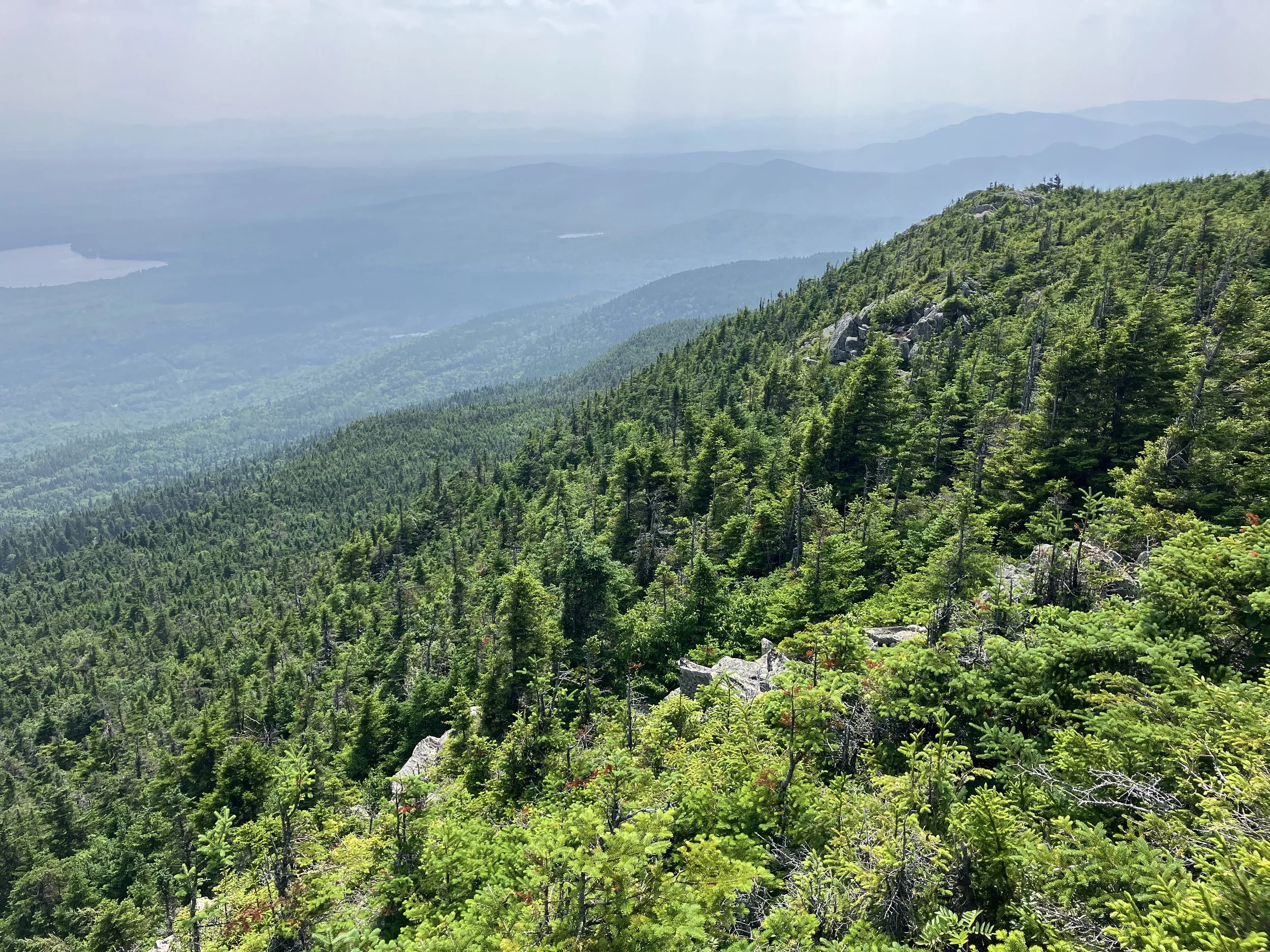
After traveling several miles on one of Maine’s countless gravel roads, we parked at a log landing just growing up to raspberries. The surrounding northern hardwood forest had been recently harvested. This land had recently been acquired by a conservation organization ensuring a balance of sustainable forestry and protection of sensitive habitats in perpetuity. Two weeks into my new Ecologist position with the Maine Natural Areas Program, I accompanied our Chief Ecologist, Kristen Puryear, and her Field Assistant, Emily Carty, to assess rare natural communities and plants on the mountain looming above. Grabbing our backpacks, we started into the woods accompanied by the songs of chestnut-sided warblers flitting about the early successional habitat created by the timber harvest.
A mile beyond the landing, we intersected a footpath that would lead us to the summit 1,000 feet higher. As the path steepened, the hardwoods yielded to red spruce and balsam fir. Wild sarsaparilla, Canada mayflower, and twinflower lined the trail. The occasional “beer-beer-bee?” of a black-throated blue warbler was discernible from the abundant black-throated green warblers, both denizens of more mature forests.
As we approached 2,800 feet, we came to a hillside seep supporting tall meadow rue and cow parsnip. The saturated conditions caused by groundwater running through shallow soils over bedrock prevented trees from getting a foothold. A spring peeper surprised us and a Nashville warbler delighted us in this tiny, high-elevation wetland. In the surrounding forest, American mountain ash and heart-leaved paper birch joined the spruce and fir rising above spinulose wood fern, and feather and broom mosses on the forest floor. This was now subalpine fir forest, a rare natural community in Maine. After another 700 feet of climbing, we entered the alpine zone.
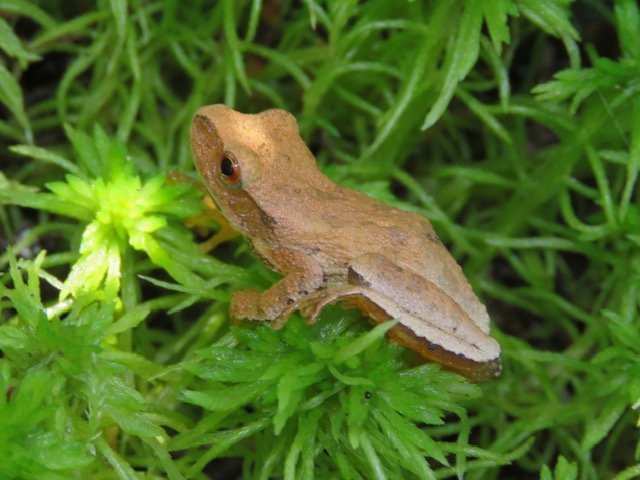
Spring peeper (Pseudacris crucifer). Photo © Chris Reidy
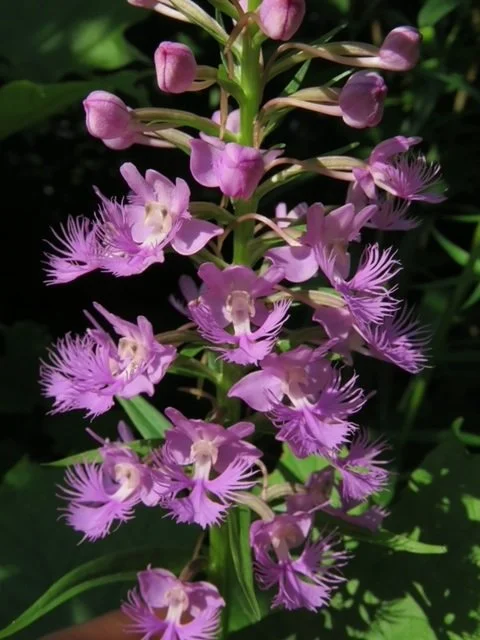
Greater purple fringed orchid (Planthera grandiflora)occurs in seeps and is always a pleasure to find. Photo © Chris Reidy
The harsh conditions of the exposed summit now relegated the trees to a dwarf, flagging stature. In no time, we encountered two of our target plants: alpine rattlesnake root and Bigelow’s sedge. Before we even got out our notebooks, an American marten appeared out of the firs, paused, and just as quickly disappeared. On the top of a ledge, we found the rare bearberry willow, a dwarf, mat-forming shrub less than four inches tall, an adaptation to the harsh alpine environment.
Alpine rattlesnake root (Nabalus boottii). Photo © Kristen Puryear
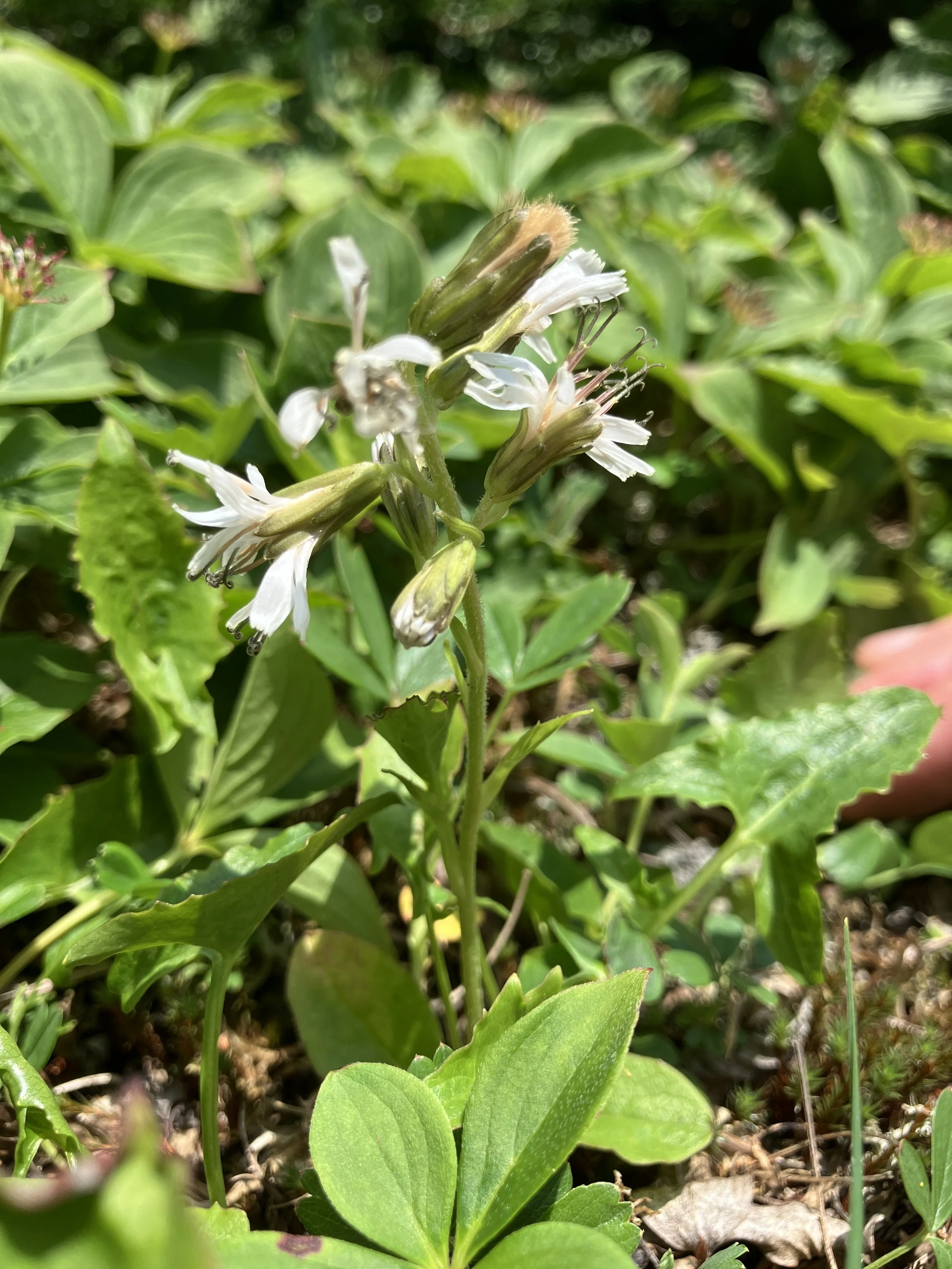
Alpine rattlesnake root (Nabalus boottii) is a globally rare species restricted to the high mountains of northern New England and New York. Photo © Emily Carty
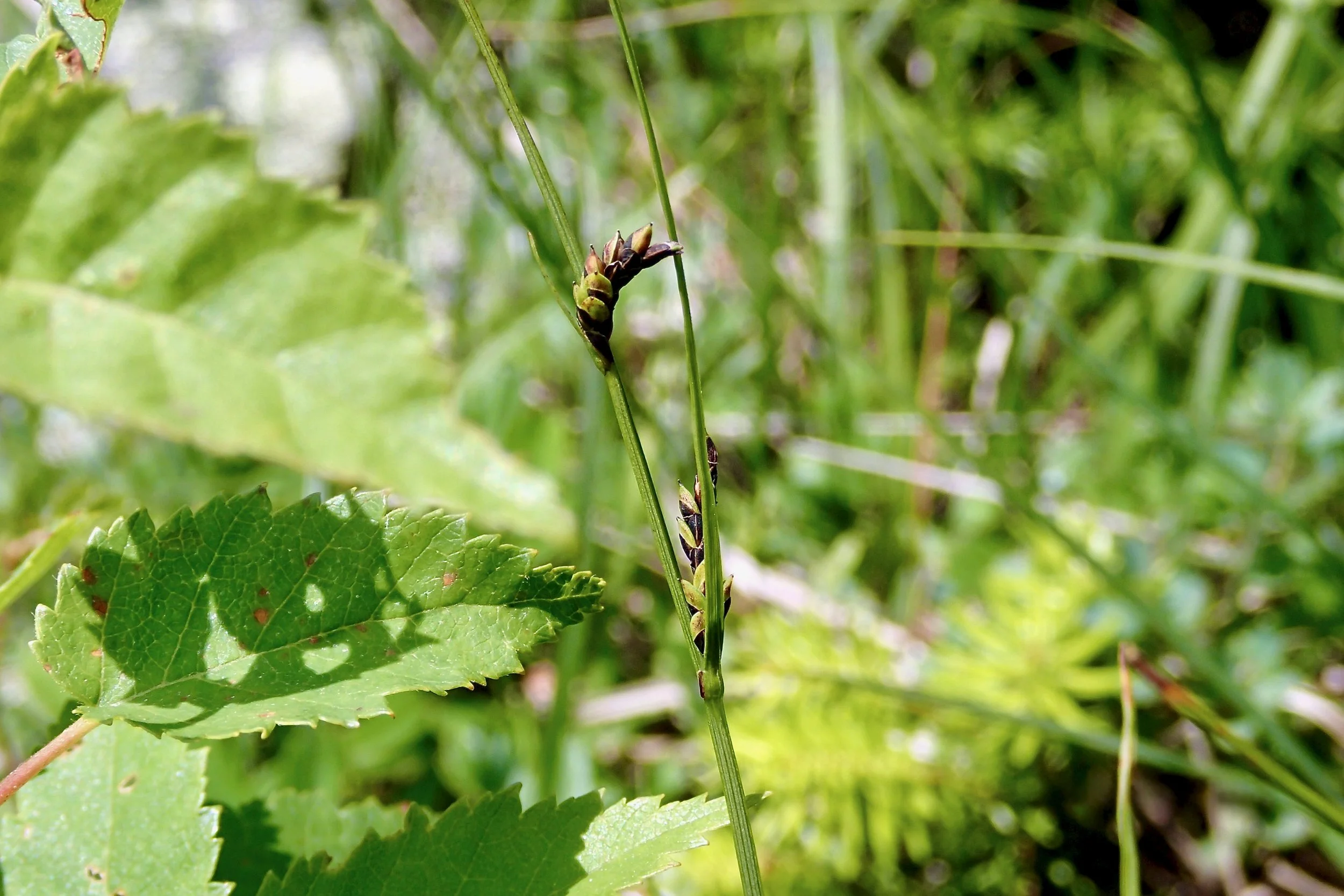
Bigelow’s sedge (Carex bigelowii)is widely distributed in high boreal regions worldwide, but is rare in Maine and the other New England states where it occurs, as we are at its southern range limit here. Heart-leaved paper birch is in view to the left of the sedge. Photo © Emily Carty
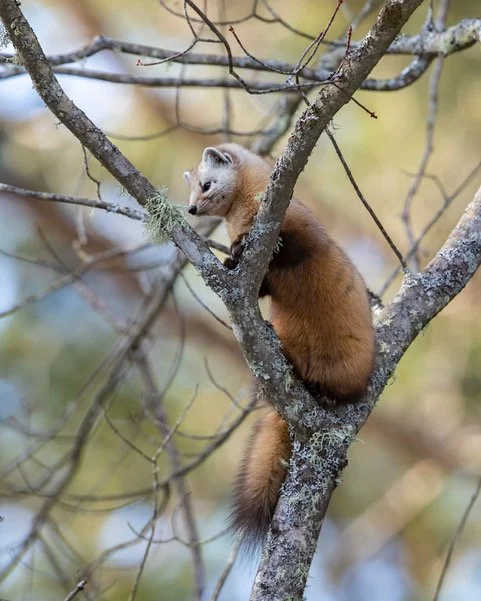
American marten (Martes americana) is widespread in northern North America, but is uncommon in the northern tier of the United States. Photo © Larry Master
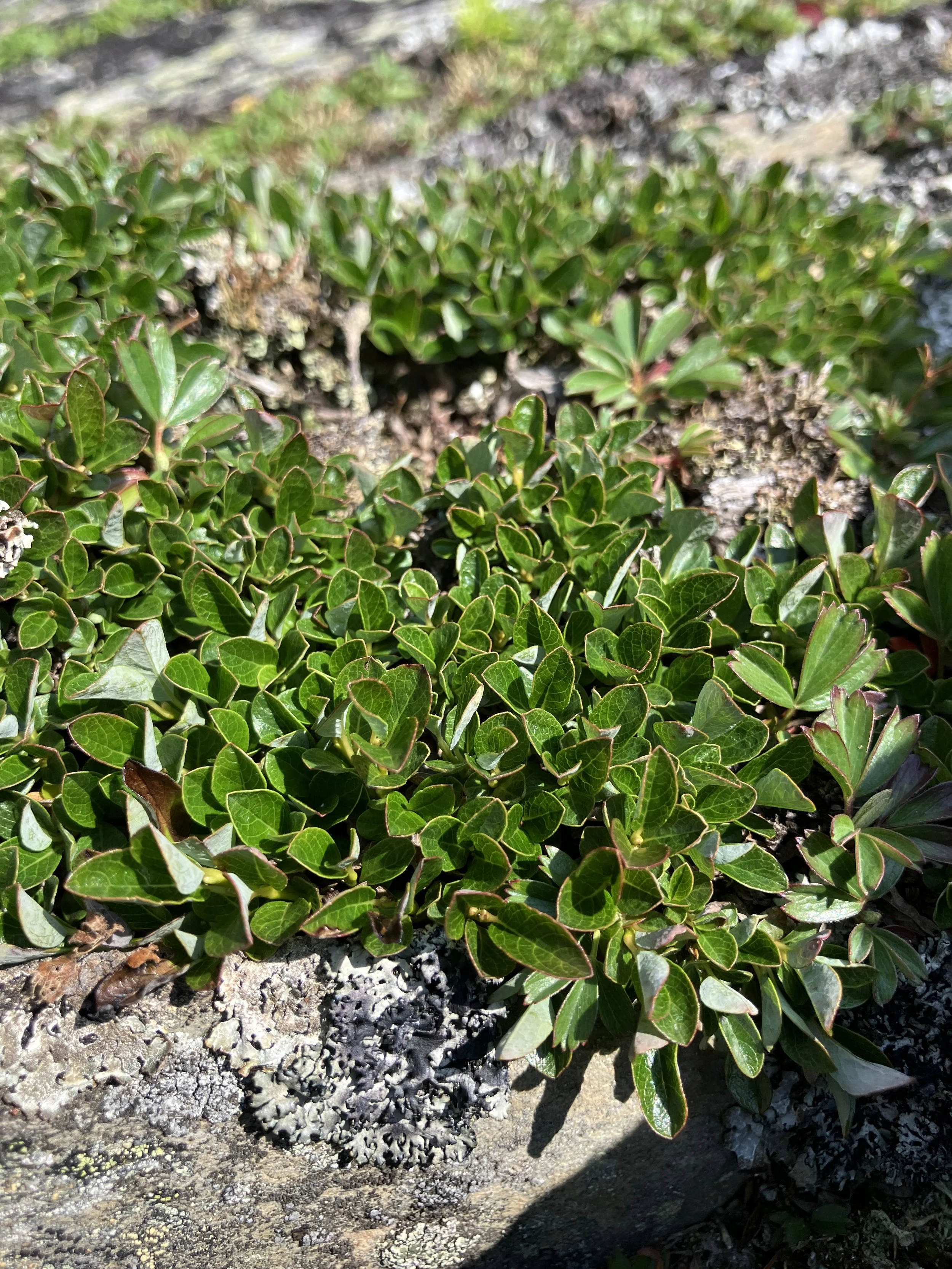
Bearberry willow (Salix uva-ursi)is common in tundra regions of Canada to our north, but rare in the four states where it occurs, only on mountaintops. Photo © Emily Carty
To complete our “de novo” survey, we dropped into a saddle of dense krummholz serenaded by the ethereal song of a Bicknell’s thrush, a species restricted to subalpine conifer forests, which made the bushwhacking and bloodletting more tolerable. In another 500 yards, we entered a small, boggy clearing within the spruce-fir forest, dominated by sheep laurel, Labrador tea, and black crowberry, and interspersed with sphagnum moss—a previously undocumented subalpine hanging bog, one of Maine’s rarest natural communities!
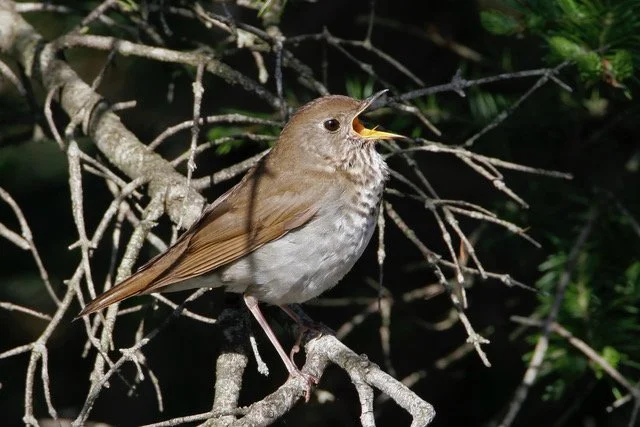
Bicknell’s thrush (Catharus bicknellii) breeds in the mountains of the northeastern United States, and winters in the Dominican Republic. Photo © Larry Master
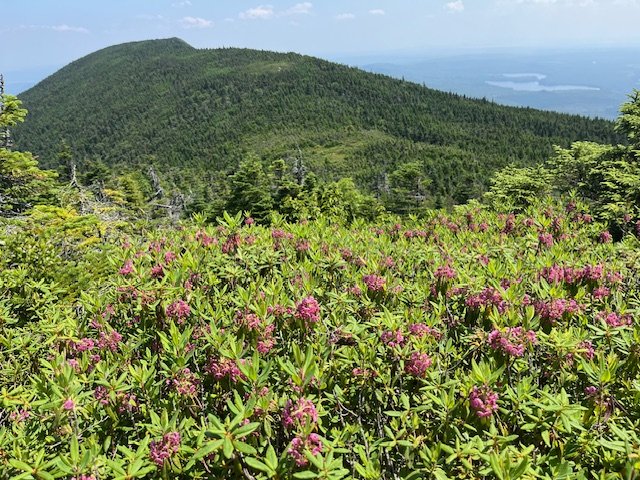
A meadow of sheep laurel (Kalmia angustifolia) in bloom. Photo © Emily Carty
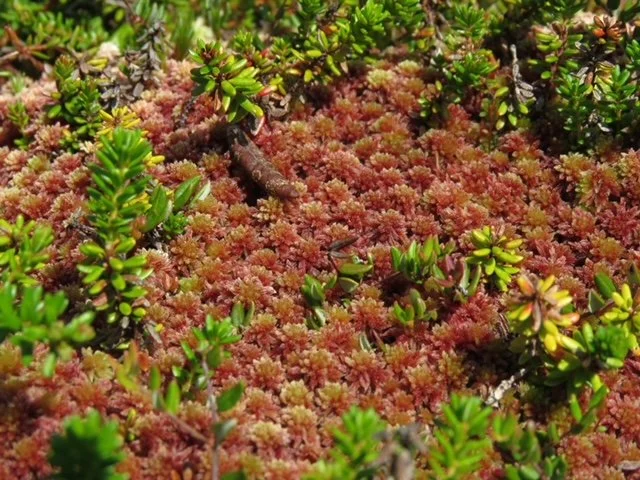
Sphagnum moss in a subalpine hanging bog, an extremely rare natural community in Maine. Photo © Chris Reidy
This one day of surveying across 1,200 feet in elevation gain was a reminder of the breadth of biodiversity that Maine’s diverse landscape supports, from niche specialists to more adaptable generalists. These observations also demonstrated the value of conservation across an elevation continuum, and at a “landscape” scale, where natural communities are interspersed, providing for species now and into the future.
Christopher Reidy is a Forest Ecologist with the Maine Natural Areas Program (MNAP). He assists with the collection of botanical and ecological information to help document the occurrence and condition of rare plant populations and natural communities with a focus in northern Maine. He works closely with the Maine Bureau of Parks and Lands and is responsible for coordinating the collection and management of monitoring data on state-owned Ecological Reserves to evaluate their condition and long-term trends in forest composition and structure. Before joining MNAP, he spent more than 29 years as a biologist with the USDA Natural Resources Conservation Service, serving in Maine, Oregon, Michigan, New York, Indiana, and Alaska.