
Wildlands and Exemplary Forestry Together
Our Big Chance to Improve Biodiversity in New England
Editor’s Note: Bob Perschel, the former Executive Director of New England Forestry Foundation, has written several times for From the Ground Up, including a poem in this issue from his new collection. Here, he makes the case that improved climate forestry in the commercial forests of northern Maine could not only store more carbon but also enhance biodiversity. This added benefit, he argues, could increase the price that buyers in the voluntary carbon market are willing to pay for credits, helping to incentivize landowners to take up these practices. The both-and, integrated approach to conservation Bob shares in this article exemplifies the Wildlands, Woodlands, Farmlands & Communities vision. – Brian Donahue
Which approach to our forests harbors a greater richness and abundance of species? Well-managed forest or wilderness?
Wait.
Do not answer that question.
It is framed in a way that perpetuates our Western, Eurocentric pattern of reducing things to their parts rather than seeing the whole. I touched upon this in one of my poems, “Long Division”: “How can you make something whole by breaking it in half?”
A better question would be: How do we embed a system of ecological reserves in a landscape-scale matrix of forests managed for timber and ecological values to achieve an optimum mix of species richness and abundance? This question ensures we stay focused on the interconnectedness of both forest approaches, rather than evaluating each one separately.
We need them both, ecological reserves and well-managed forests, wildlands and woodlands, as species, energy, and materials move throughout, sometimes rapidly like eagles, sometimes slowly like fungi.
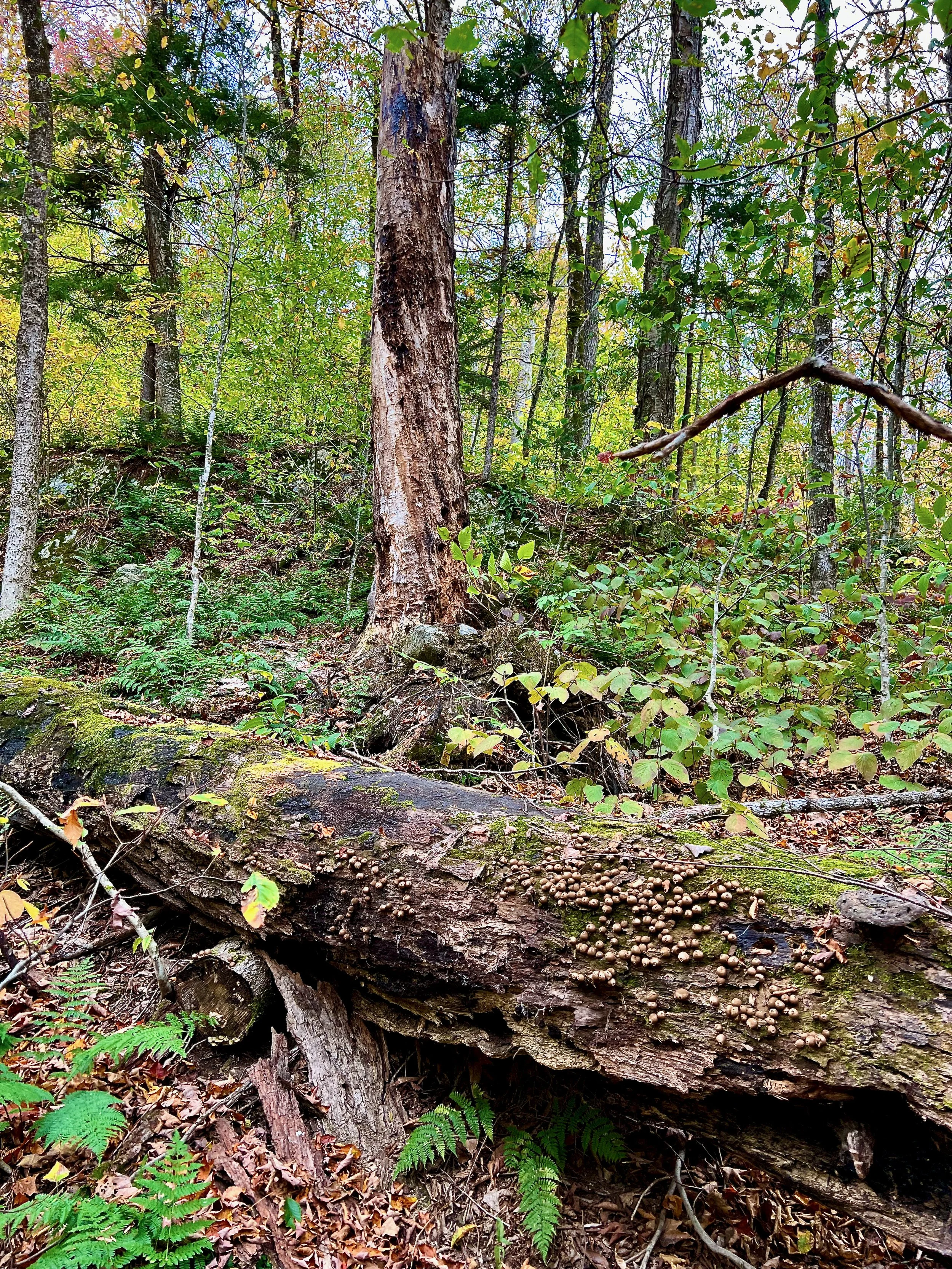
Old forests provide complex structure and habitat for many species. Photo © Liz Thompson
Undisturbed old-growth forests provide habitat for many species, especially less visible ones like mosses, lichens, liverworts, fungi, protists, sponges, hydras, flatworms, nematodes, and bacteria that struggle to survive in managed forests. On the other hand, well-managed forests with a diversity of tree species, ages, and structures perform extremely well for the overwhelming majority of other species of mammals, birds, reptiles, and amphibians. When we marry the two approaches together, we have a real winner and achieve species richness and abundance.
Unfortunately, only 3.3 percent of the New England forest landscape is under a wild designation and on a secure path to developing the habitats necessary for the astounding diversity of our smaller life-forms and old-growth habitat specialists. Sometimes it takes centuries to fully develop these specialized ecological niches. As we pursue our goal of increasing wildlands to encompass 10 percent of the forest landscape, we will designate certain areas for wilderness protection. These lands may take many decades to reach their full ecological potential. In the interim, we have an immediate, outstanding opportunity to improve the ecological health of our current forest by enhancing our forest management over the other 90 percent of the forest landscape.
Here is the good news: We’re about to make a major shift in regional forest management by connecting wildlife-friendly practices with carbon storage. Modeling has shown that transitioning to new silvicultural systems such as New England Forestry Foundation’s Exemplary Forestry Standards could store an added 488 million metric tons of carbon in New England, fully 30 percent of what the region needs to meet its carbon goals. This transition would raise the average stocking in Maine’s northern forest lands from 18 to 24 cords. Such a transition would assuredly be beneficial to biodiversity, since stocking is directly correlated with improved biodiversity. The remarkably high stocking within old-growth forests supports elevated levels of biodiversity; moving to higher stocking on the managed lands that cover over 90 percent of the landscape would support higher levels of biodiversity on those managed lands as well.
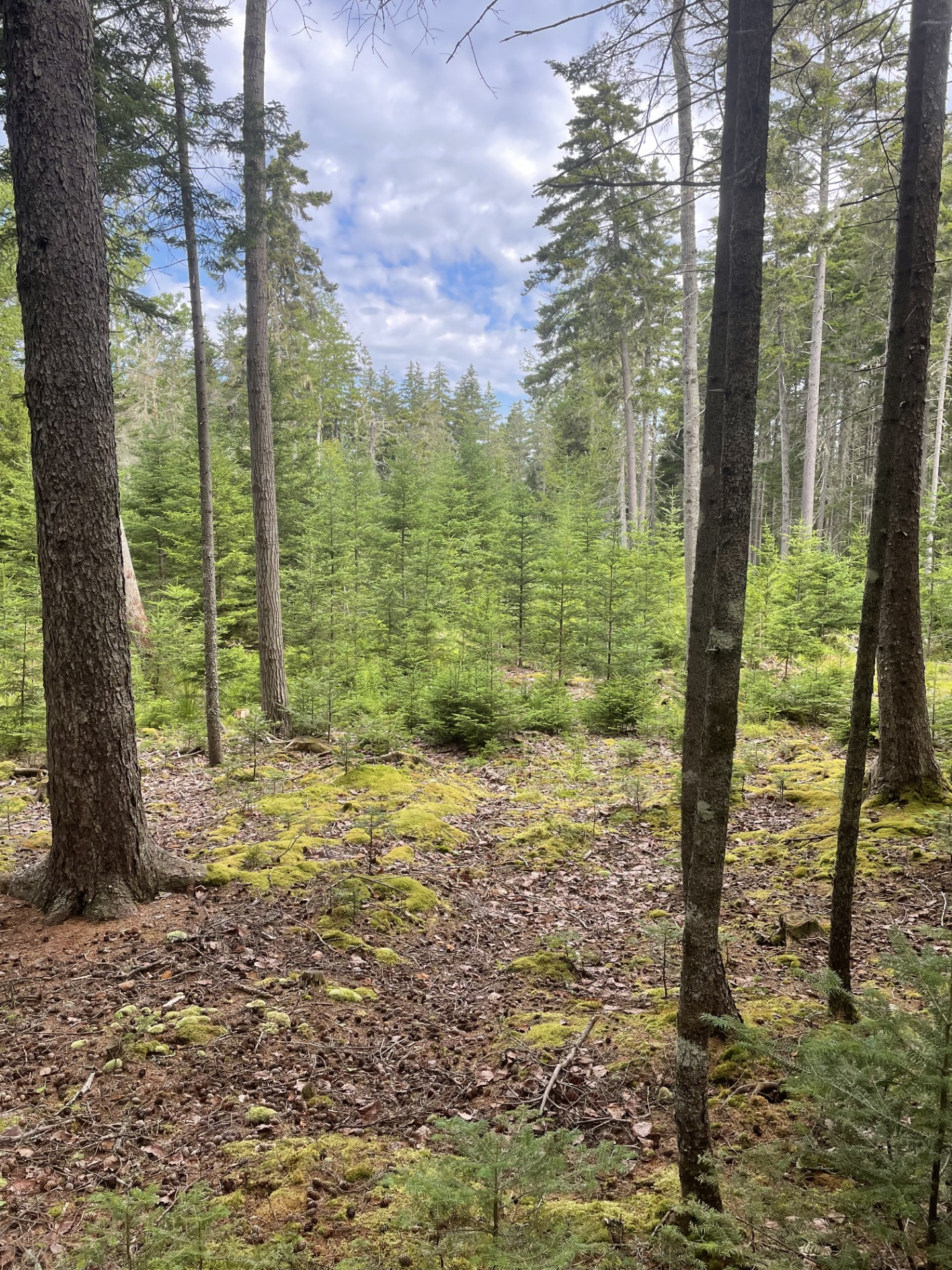
Harvests can be conducted to mimic natural disturbance. Photo © Alec Giffen
Imagine the impact if we can accomplish this over millions of acres. But what is especially encouraging is that Exemplary Forestry standards and practices, in addition to the benefits that come with additional stocking, can deliver targeted wildlife benefits because they were developed based on landscape-level strategies for enhancing wildlife, ideas that originated more than three decades ago.
Malcolm Hunter’s influential textbook on forests and wildlife management set the stage by explaining how a wide diversity of habitats and ecosystems will automatically provide for most (but not all) wildlife species. Others have carried this flag by introducing these concepts on the ground, most notably Robert Seymour’s work on his Wicopy Woods property. In the intervening years the US Forest Service’s wildlife management technical series explained in detail how to implement this diverse landscape approach for both southern and northern forest types in New England. As recently as 2023, the Society of American Foresters referenced these foundational perspectives in a position paper that emphasized managing forests for spatial and temporal diversity at the landscape scale.
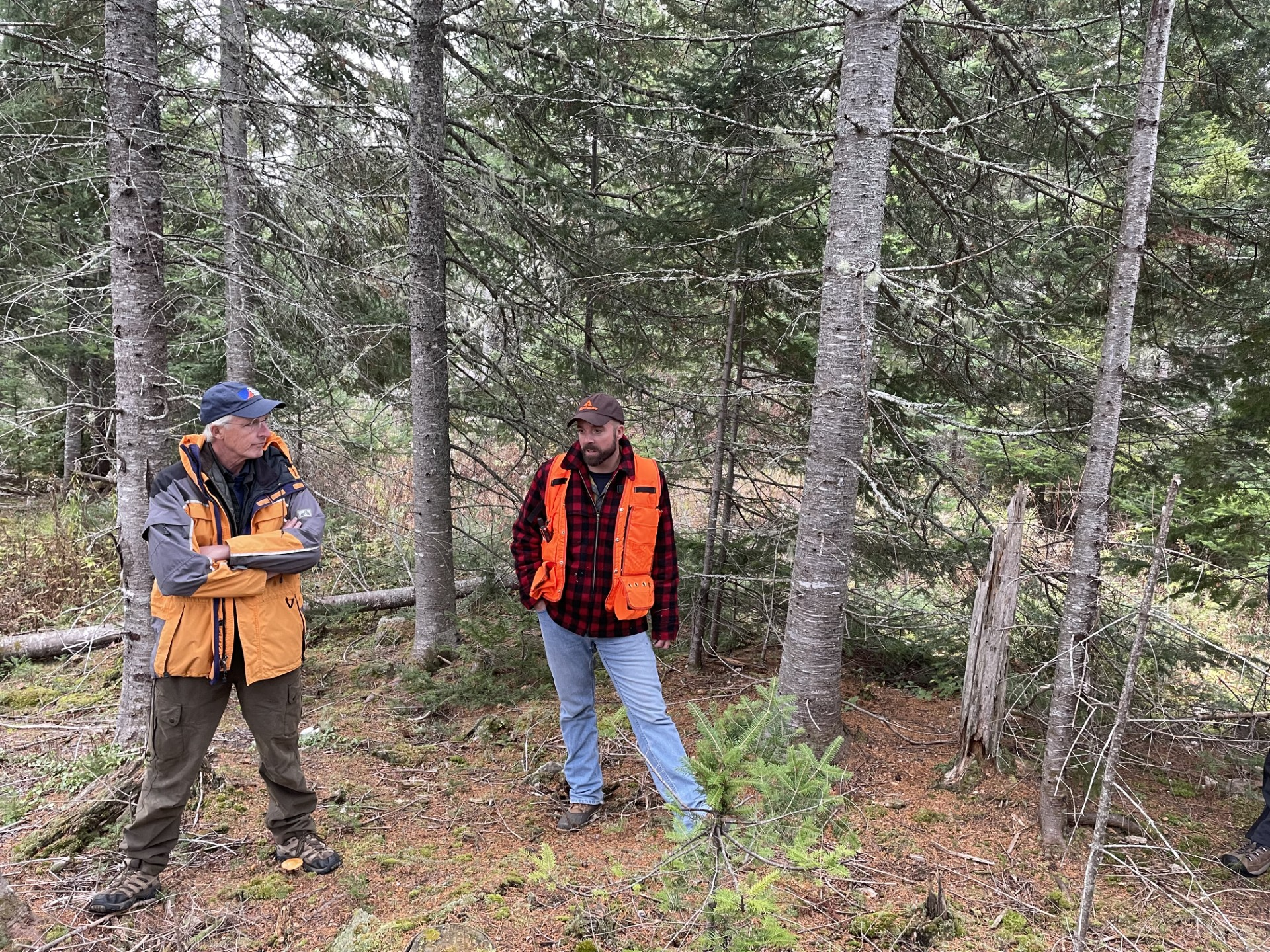
Stands can be thinned to favor the most productive species at the right density. Photo © John Hagan
The bottom line is that foresters—and landowners—know how to manage for more diversity on individual properties and across the landscape, and many would like to do so. But these new practices come with a cost to landowners, and we have never had a financial vehicle to enable them to adopt these practices at scale. Now we may have it.
New modeling coming out of the Forest Carbon for Commercial Landowners (FCCL) project in Maine is pinpointing the silvicultural practices that work best to store more carbon and improve wildlife habitat at the same time. The initial results showed promise, and the expanded FCCL project is now enhancing its models to identify the most effective silvicultural methods, the best locations and timing for their use to maximize climate benefits, ways to reduce impacts on wood supply, and the potential amount of carbon that can be stored. Actual carbon sales and discussions with carbon buyers, brokers, and landowners indicate that a higher price could be commanded in the voluntary market for a carbon credit based on climate-smart forestry that is transparent, additional, and does not create leakage—a reduction in timber harvest that prompts additional harvests elsewhere to make up for the lost volume.
An Exemplary Forestry-type credit is based on a transition to silvicultural practices that are more productive per acre, thus allowing harvest to continue while storing more carbon. If the payment for this credit is high enough, it will enable any landowner to adopt climate smart forestry and receive adequate payments to make the transition. By applying this method on a large scale—across millions of acres—it could transform forestry, and by storing more carbon to mitigate climate change it will also lead to significant enhancements in wildlife habitats and overall biodiversity. Pair that with a growing reserve system, and the future for our New England forests looks bright.
“How do we embed a system of ecological reserves in a landscape-scale matrix of forests managed for timber and ecological values to achieve an optimum mix of species richness and abundance?”
There is no guarantee that the price for the credit will be high enough, and that is the key. The ultimate price will move according to the extended narrative that supports the carbon credit. This narrative is what the voluntary carbon purchaser can claim as proof of their environmental responsibility and as mitigation for causing climate change through the operation of their business. The carbon stored is only the foundational element of the story. If it also includes enhancing wildlife and biodiversity, expanding timber production and profitability, and improving local economies, and if it is supported by wildlands and wilderness advocates who see it as part of a long-term restoration of the region’s forests—then the price will go up.
Here are three things we can do collaboratively within our own region to secure the highest price for our credit. First, we are on our way to proving that these practices store a lot of carbon, but we need to refine our modeling and have our conclusions endorsed by multiple trustworthy third parties. Next, we need a pilot project to prove the concept before we go to scale. NEFF reports it has a 100,000-acre project lined up with an interested landowner. Third, we need to nail down the wildlife benefits this landscape project would yield and show broad-based support from both wilderness and forest management advocates and landowners.
The FCCL project has commissioned a study comparing wildlife improvements under Exemplary Forestry with business-as-usual, including how improved forestry can integrate with reserve areas. That report should be available in 2027. Although they are primarily buying carbon, large international corporations who are taking part in the voluntary carbon market should relish the chance to wash themselves in the greenness of a larger effort to also improve wildlife and biodiversity. If we can prove those improvements as part of a regional approach to achieving a balanced landscape of wildlands and well-managed woodlands, it just may provide the financial margin to obtain a price high enough to bring this to scale.
Robert (Bob) Perschel joined the New England Forestry Foundation in April 2012 and retired in 2024. In his 40 years as an environmental professional, he has worked on forestry, large landscape conservation, and wilderness issues. Bob worked for the forest industry before establishing his own forestry consulting business and founding the Land Ethic Institute. He then worked in leadership positions for The Wilderness Society and Forest Stewards Guild. Bob has a master’s degree in forestry from the Yale School of Forestry and Environmental Studies and a psychology degree from Yale College.