
Effects of Forest Management on the Conservation of Bird Communities
Editor’s Note: This is the first in a series of regular contributions from Jonathan Thompson and Lucy Lee of Harvard Forest. The series will highlight recent research relevant to the Wildlands, Woodlands, Farmlands & Communities mission and to the theme of the latest issue of From the Ground Up. The research featured here by Akresh and colleagues is a good companion to Jeff Ritterson’s article about managing forests for songbirds. – Liz Thompson
Birds are among the most beloved and well documented victims of the biodiversity crisis. Since 1970, the population of North American birds has dropped by nearly three billion, including 170 million Eastern forest birds. As climate change and biodiversity loss reinforce each other, those who steward forestland increasingly ask what role they can play to help.
Akresh and colleagues offer timely guidance. Through a meta-analysis of 33 studies, they synthesize how retaining canopy trees after harvest affects bird densities across eastern North America. The authors then model the densities of 22 mature-forest nesting bird species in relation to the percentage of trees left standing after harvest and evaluate broader bird communities, including both mature-forest and shrubland (“young forest”) species, using conservation scores within Bird Conservation Regions (BCRs), two of which cover New England.
Relationships between mature-forest birds and canopy tree retention is complex and variable. Most mature-forest bird species occur at their lowest densities when few trees are left standing (0–40% tree retention) and at their highest densities in moderately harvested stands with 40–70% of trees remaining. But species differed in their response. Ovenbird densities increased linearly with tree retention and were greatest in unharvested stands. Meanwhile, the scarlet tanager had a positive but more complex relationship with tree retention. In contrast, the veery appeared unaffected by tree retention, suggesting that for some species, understory structure or other forest characteristics matter more than the canopy itself.
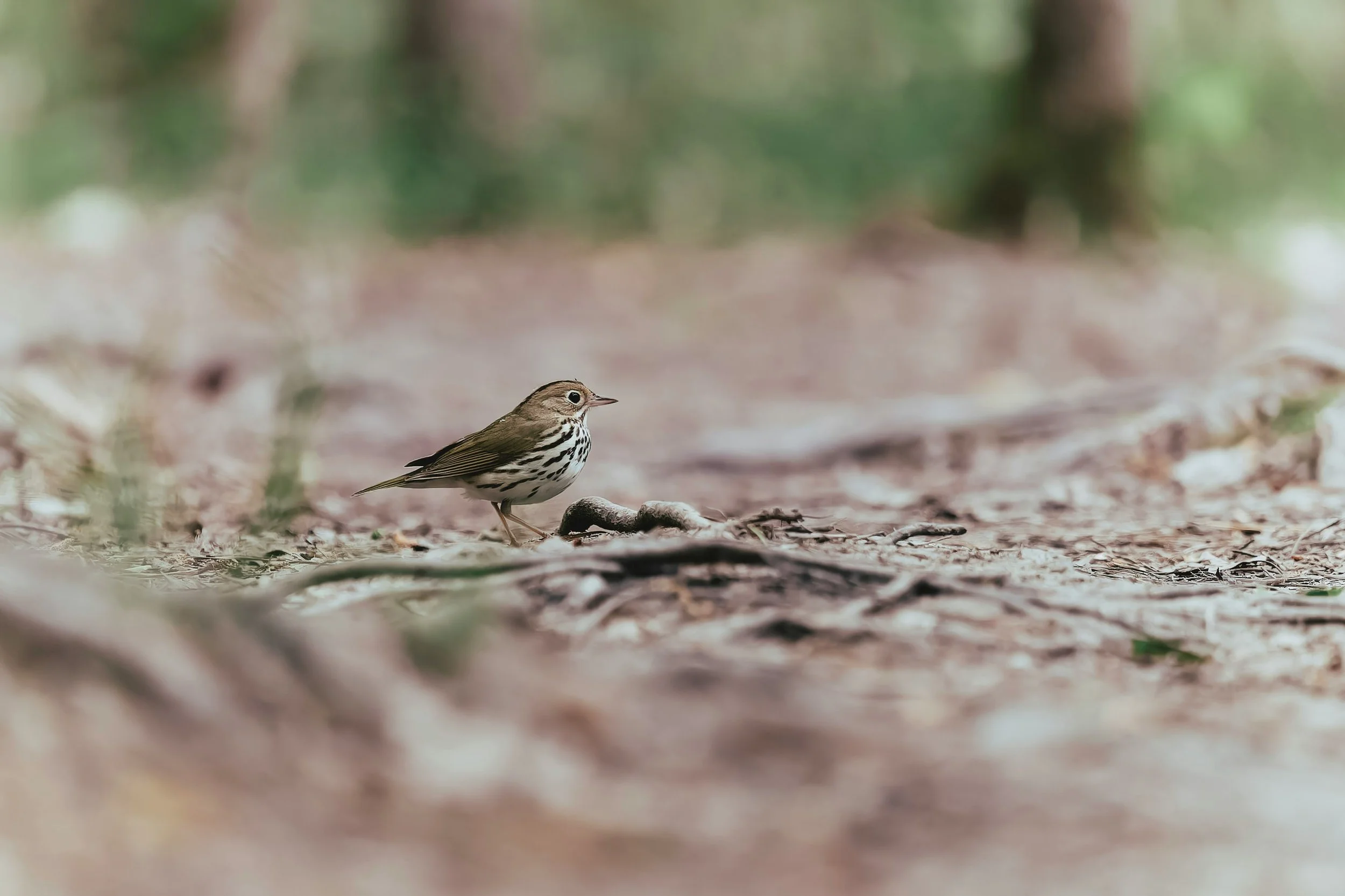
Ovenbird. Photo © Jordan Ryskamp
At the community level, conservation scores peaked twice: in stands with low tree retention (0–10%) and in those with moderate retention (40–70%). The two New England BCRs display interesting differences: In northern New England, higher community conservation scores occurred with moderate tree retention. In southern New England and some northern coastal areas, the low tree retention treatments were associated with community conservation scores similar to and somewhat higher than the moderate retention range. These differences may be due to differing habitats and relative abundances of shrubland birds compared to mature-forest birds in the two regions. Across nearly all BCRs in eastern North America, stands with the most remaining trees were associated with the lowest community conservation scores.
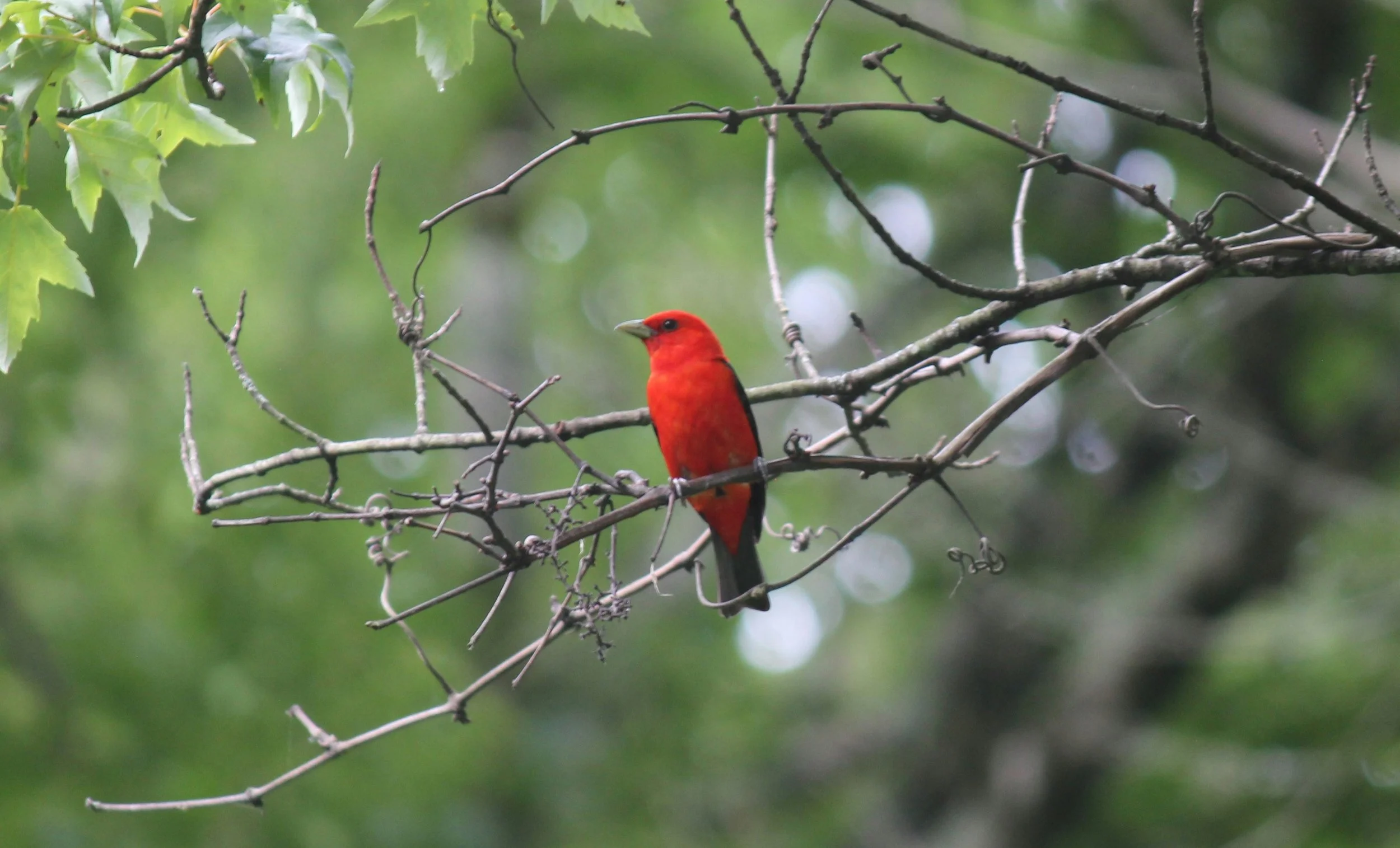
Scarlet tanager. Photo © Annish Lakkapragada
What should a forest steward take from this? A few things. First, moderate- to high-intensity harvesting can support songbird conservation in New England. Most of the region’s forests are mature but relatively young and even-aged. Harvesting introduces habitat diversity that many species need. Second, species matters: Every management decision will benefit some species at the expense of others, even among mature-forest birds. Third, older forests are the rarest age-class of forests across the region, so passive management with little intervention provides great benefit to many species, from ovenbirds to woodland amphibians, that depend on intact closed-canopy conditions.
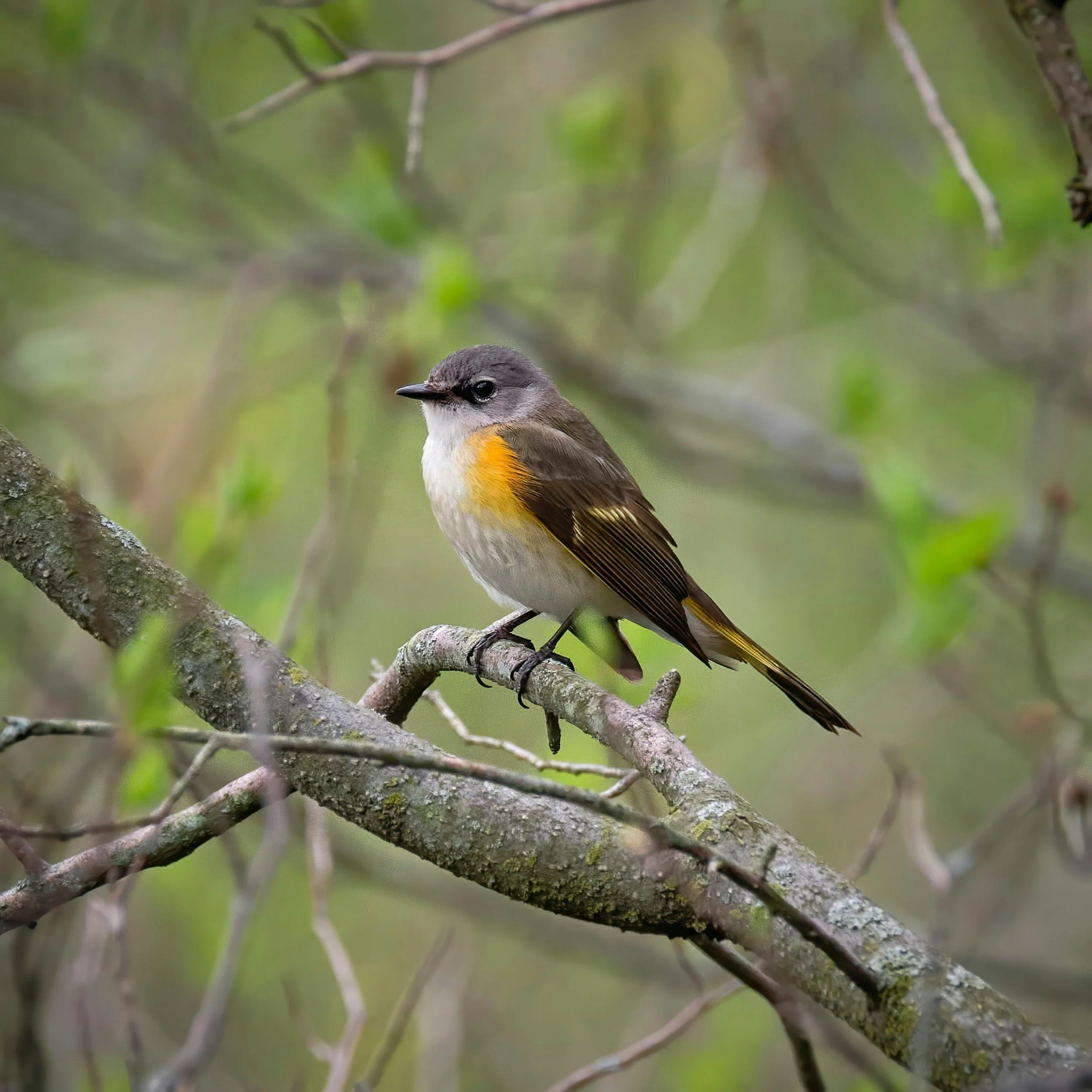
American redstart. Photo © Howard Walsh
Overall, Akrash and colleagues add important nuance to questions about forest management and conservation. Tree removal is affirmed as a legitimate and valuable tool for bird conservation, but one that demands careful, context-dependent use.
Citation: Akresh, M. E., King, D. I., McInvale, S. L., Larkin, J. L., & D’Amato, A. W. (2023). Effects of forest management on the conservation of bird communities in eastern North America: A meta-analysis. Ecosphere, 14(1), e4315. https://doi.org/10.1002/ecs2.4315
Jonathan Thompson is the Director of the Harvard Forest, a research center of Harvard University. He is a forest ecologist whose research focuses on long-term and broad-scale changes in forest ecosystems, with an emphasis on quantifying how land use and land protections affect forest ecosystem processes and services.
Lucy Lee is a research assistant and GIS analyst in the Thompson Lab at the Harvard Forest. Her work has particularly focused on analyzing the distribution, trends, and impacts of land protection in New England, for which she manages the New England Protected Open Space dataset.