
Editor’s Note: I met Josh Stoll a few years ago when we were working together on the New England Feeding New England project. I learned of our shared admiration for Robin Alden and Ted Ames at the Maine Center for Coastal Fisheries, and Niaz Dorry and the North American Marine Alliance—longtime leaders in the struggle to restore fisheries by restoring people’s connections to them. Josh joins in that work through his research at the University of Maine, and by helping to organize the Local Catch Network. Who better to open our marine issue? – Brian Donahue
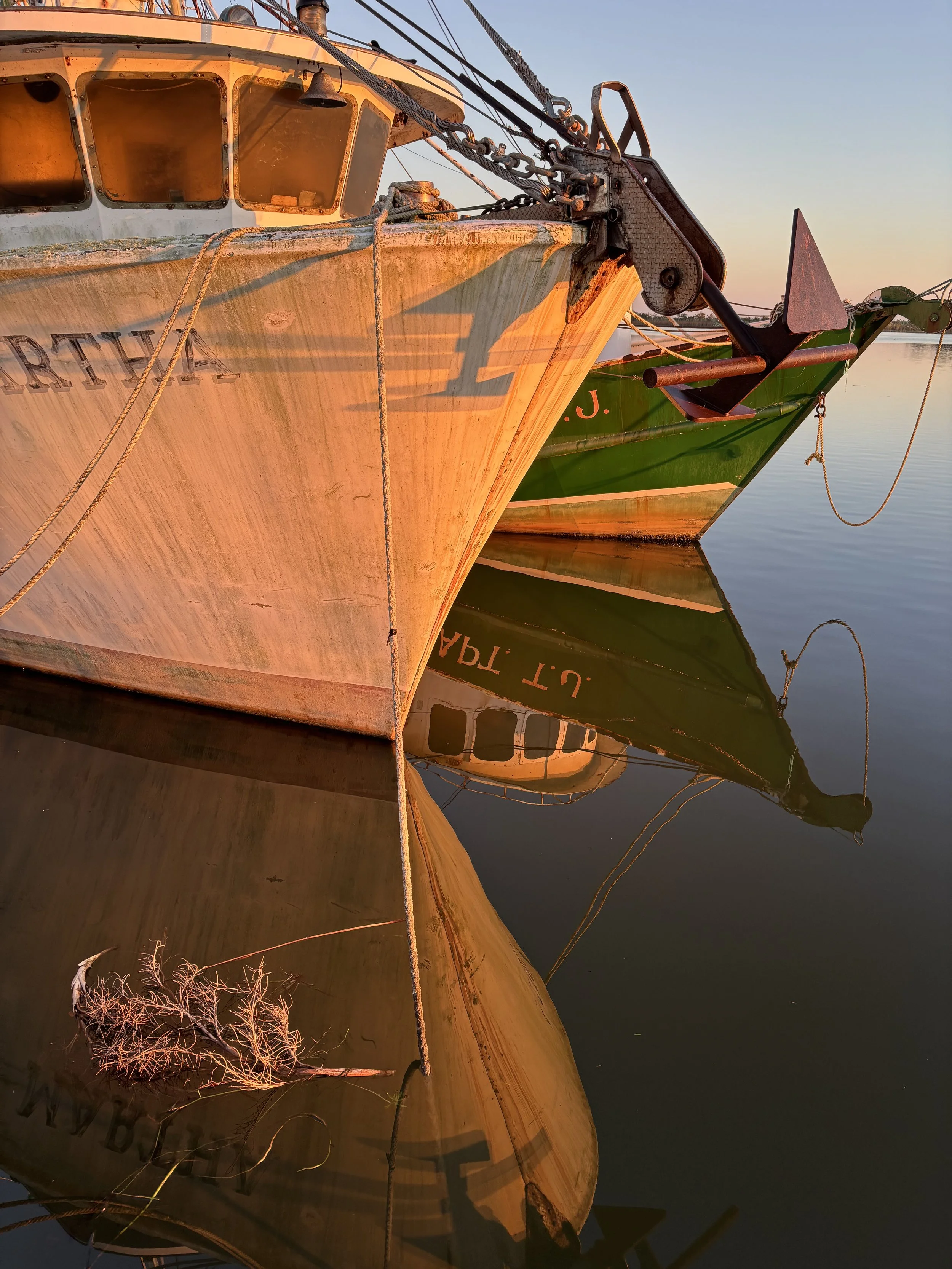
Florida shrimp boats. Photo © Joshua Stoll
Like toast, the old pier I am standing on is saturated in a marmalade glow from the fading afternoon sun. Except for a person hosing down the stern of their boat at the west end of the harbor, it is quiet until a flock of grackles flies overhead, noisily recapping their day. From the rust-colored patina on the shrimp boats and the way their big wooden hulls sit low in the water, it looks like it has been a while since the harbor was as busy as the birds.
In that moment, I am reminded that sometimes seeing a new place makes you see a familiar place more clearly.
According to the Google Maps app on my iPhone, I am standing 1,680 miles from the rural coast of eastern Maine. This is my first time visiting Apalachicola, but being on the Gulf Coast of Florida feels as familiar as having a chance encounter with an old friend. The trip has me thinking about the unique connections that rural coastal communities often forge with their surrounding environments, and how these relationships are so critical to reimagining our approach to sustainable fisheries.
A core axiom that has guided the way we have governed fisheries since the early 1970s is that people are inherently self-interested, and that this will lead to the destruction of our fisheries and the marine environment if left unchecked. Rooted in the logic of market capitalism, this conceptualization of fisheries has led to the promulgation of regulatory tactics that restrict, and in many cases eliminate most people’s access to marine resources in the name of conservation and stewardship.
Five decades into this era of regulation, many coastal communities are much less connected to their local fisheries than they ever have been. The decline in participation in New England’s Northeast Multispecies Fishery, which includes Atlantic cod and twelve other groundfish species, offers an illustrative case in point. Just two decades ago, there were still more than 700 commercial fishing vessels operating in that fishery throughout the Gulf of Maine. Today, there are fewer than 175 boats, and the majority of the harvest quota is allocated to an even smaller number of them. This is because the “Catch Share” system not only sets the annual allowable harvest, it allows participation in the fishery to be bought and sold. Over time, a small number of corporations have bought up most of the rights to fish, and most small and mid-sized fishermen have been squeezed out.
Such concentration has not consistently translated into conservation success. As coastal communities’ access to local fisheries has been increasingly fractured, evidence is mixed on whether or not our regulatory approaches have achieved their intended objectives. The cod fishery offers a well-documented case in point. Since the passage of the Magnuson-Stevens Conservation and Management Act in 1972—the core federal legislation that guides fisheries management—the cod fishery has declined to the point of near-commercial extinction. While there are success stories too, the cod fishery is not the only one that is a remnant of what it was in the past. Based on landings across New England by decade since 1970, roughly 70 percent of our fisheries are on track to produce less than half of their peak volume by 2030.
“As coastal communities’ access to local fisheries has been increasingly fractured, evidence is mixed on whether or not our regulatory approaches have achieved their intended objectives. ”
These declines warrant critical reflection. Tethering our approach to the notion that conservation and sustainability require strictly limiting people’s connections to fisheries and the marine environment is ironic. Today, some of the healthiest fisheries, clearest examples of species recovery, and places with the most intact environments are where more people still have strong, albeit diminished, connections to them. This is not coincidental.
Part of what feels so familiar to me about Apalachicola is its rurality. There are very few stretches of the United States’ 12,000-mile coastline that have not been urbanized. According to data from the U.S. Department of Agriculture’s Economic Research Service, only four percent of coastal counties in America are categorized as non-urban, as evidenced by the megalopolis that stretches down most of the Eastern Seaboard.
These rural places are not merely sites awaiting development; they are places that have demonstrated enduring stewardship and conservation in the face of immense pressure. Importantly, this stewardship is not born out of people being separated from the environment; it comes from their physical, economic, nutritional, cultural, and spiritual connections to it. This connection is exemplified by the people who have lived in these places since time immemorial. The Indigenous people of Apalachicola consider the river that feeds their region’s verdant bay a human being. The English translation for the word Passamaquoddy, the name of the original Indigenous people of eastern Maine, is “people of the pollock-spearing place.” This human-environment connection remains an important part of rural experience today.
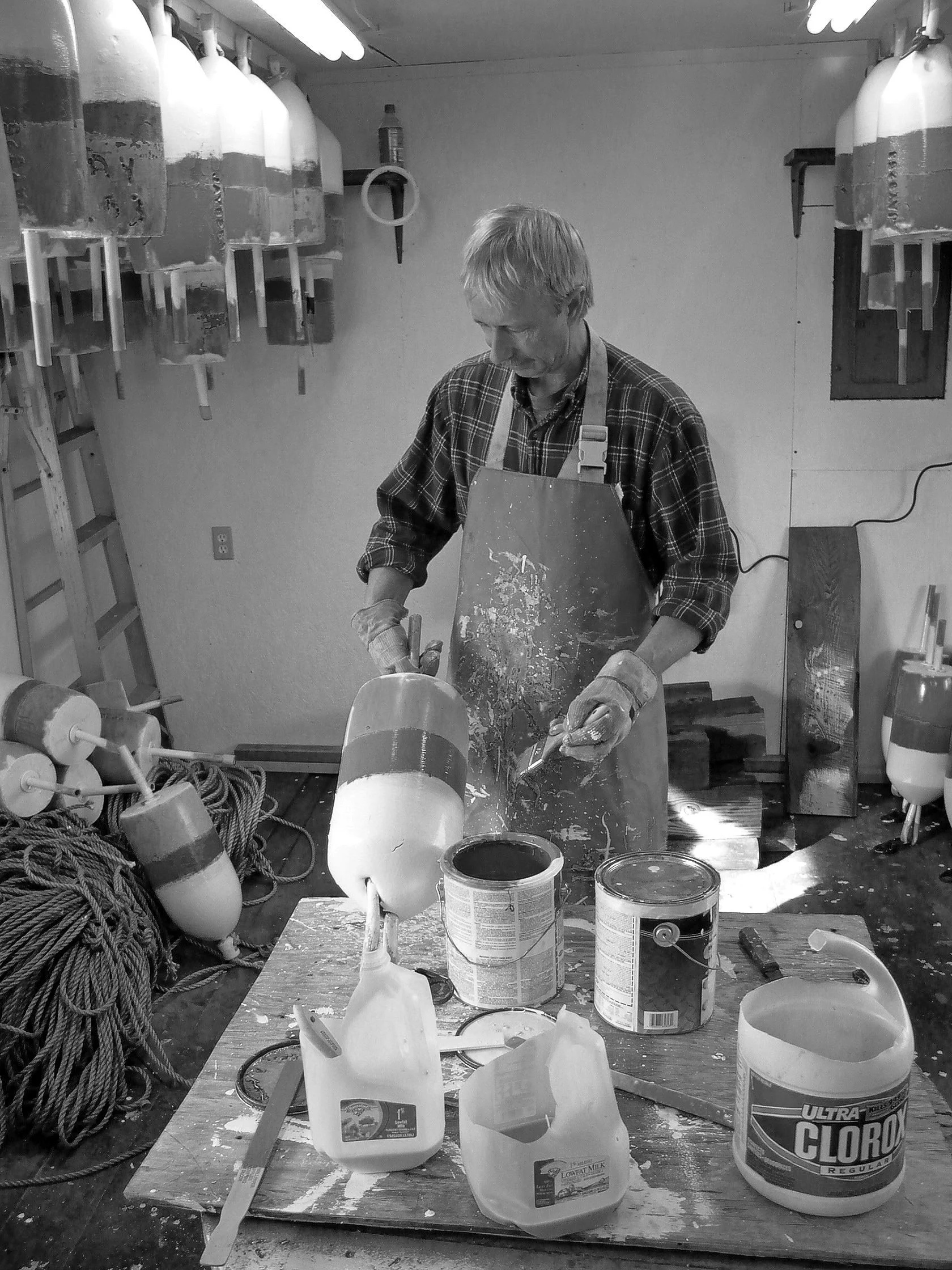
Joe Young painting lobster floats, Corea, Maine. Photo © Paul Breeden
A common thread that continues to define rural, coastal places is that the human-environment boundary is blurred. The American lobster fishery provides an illustration. The fishery supports thousands of harvesters, from teens to septuagenarians, many of them based in eastern Maine. With annual landings of roughly 100 million pounds in Maine alone, the health of the fishery has defied expectations for decades. The success of the fishery, in part, has been linked to harvesters’ active participation in the management process through its unique co-management system. While this process can be slow, and is often messy, it creates a feedback loop where harvesters are able to inform management and help shape many of the regulations that have sustained the fishery.
The recovery of alewives in Maine offers a complementary example of stewardship. Over the last decade, the number of these small, silvery fish returning to Maine’s rivers during the spring migration has increased from a few thousand to several million. To see these fish migrating into Maine’s swollen rivers in May is like being transported back in time, but it is more than an illusion. Part of what makes this recovery story so thrilling is that it did not happen on its own or in a vacuum devoid of people. Rather, it has been, and continues to be, an all-hands-on-deck effort, involving everyone from Tribes to harvesters to noisy classrooms of kids.
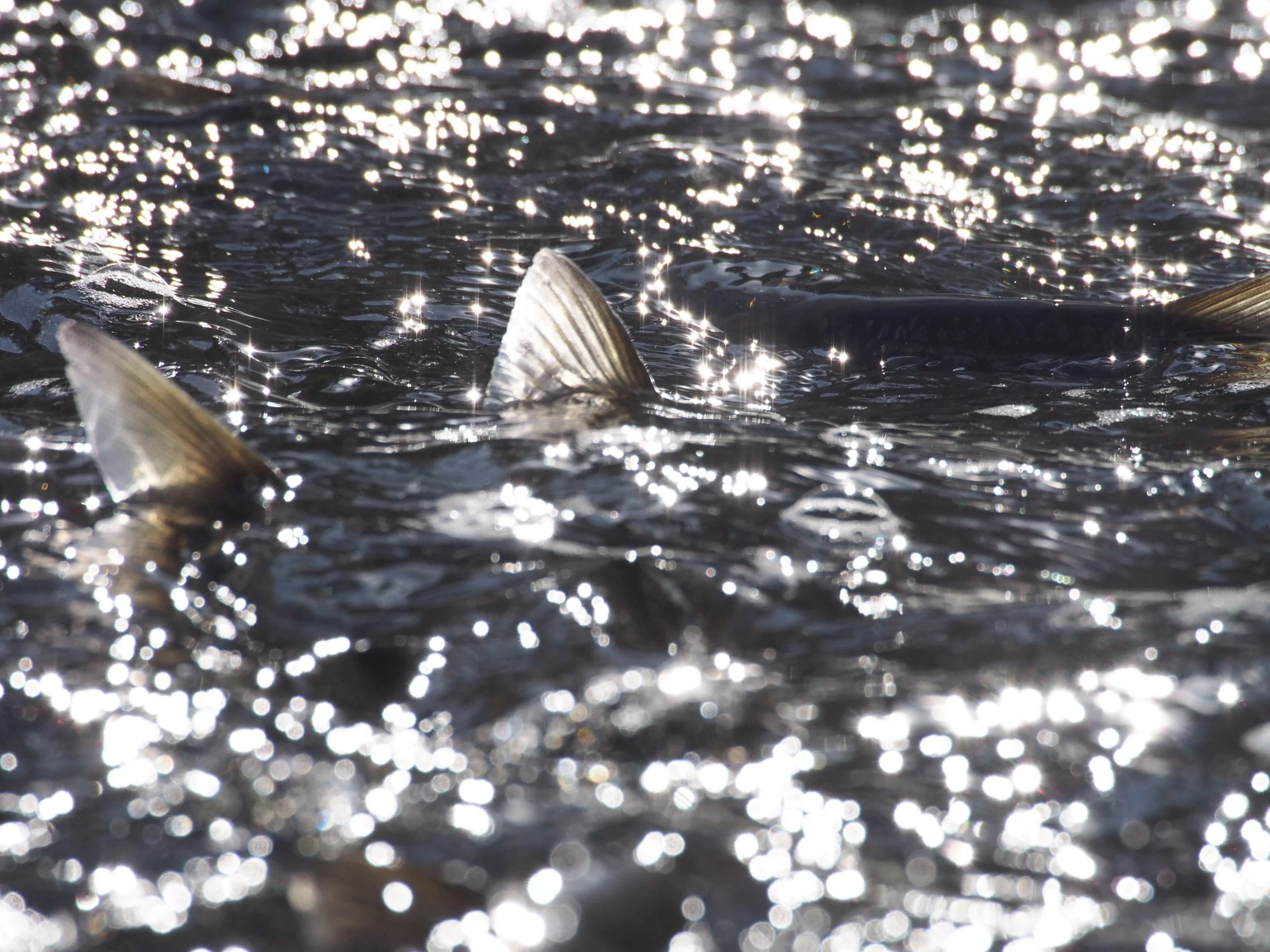
Maine alewife run. Photo © Joshua Stoll
These examples—which center people as part of the solution—stand in contrast to the prevalent approach to fisheries management, which has consistently acted to sever the connection between people and the environment. This approach, which has often resulted in consolidation and the outmigration of fishing permits from rural communities, undermines our collective potential to sustain and steward our ocean and coastal resources. Therefore, if we care about our fisheries, we also need to work to repair people’s connections to their environments and build regulatory approaches that enable, rather than disable them. These connections are vital to cultivating our knowledge of, reverence for, and capacity to advance stewardship.
From my vantage point, there are at least three areas to focus on to reimagine our approach to fisheries, not as one that pits people against the environment, but where people and the environment are coupled.
To start, there is a critical need to create opportunities for people in coastal communities to participate in fisheries. Doing so is not as simple as granting everyone access to fish, since many fisheries are a remnant of what they once were. Rather, we need to focus on allocation and address access issues so that more people can participate in fisheries, including aquaculture. By reconnecting people with the fisheries that have historically been such an important component of lives and livelihoods, we stand to rebuild the bank of local ecological knowledge that is vital to improving stewardship. We cannot expect researchers, like myself, to be able to model our way to technical answers without doing so in direct collaboration with those who have local knowledge about our fisheries.
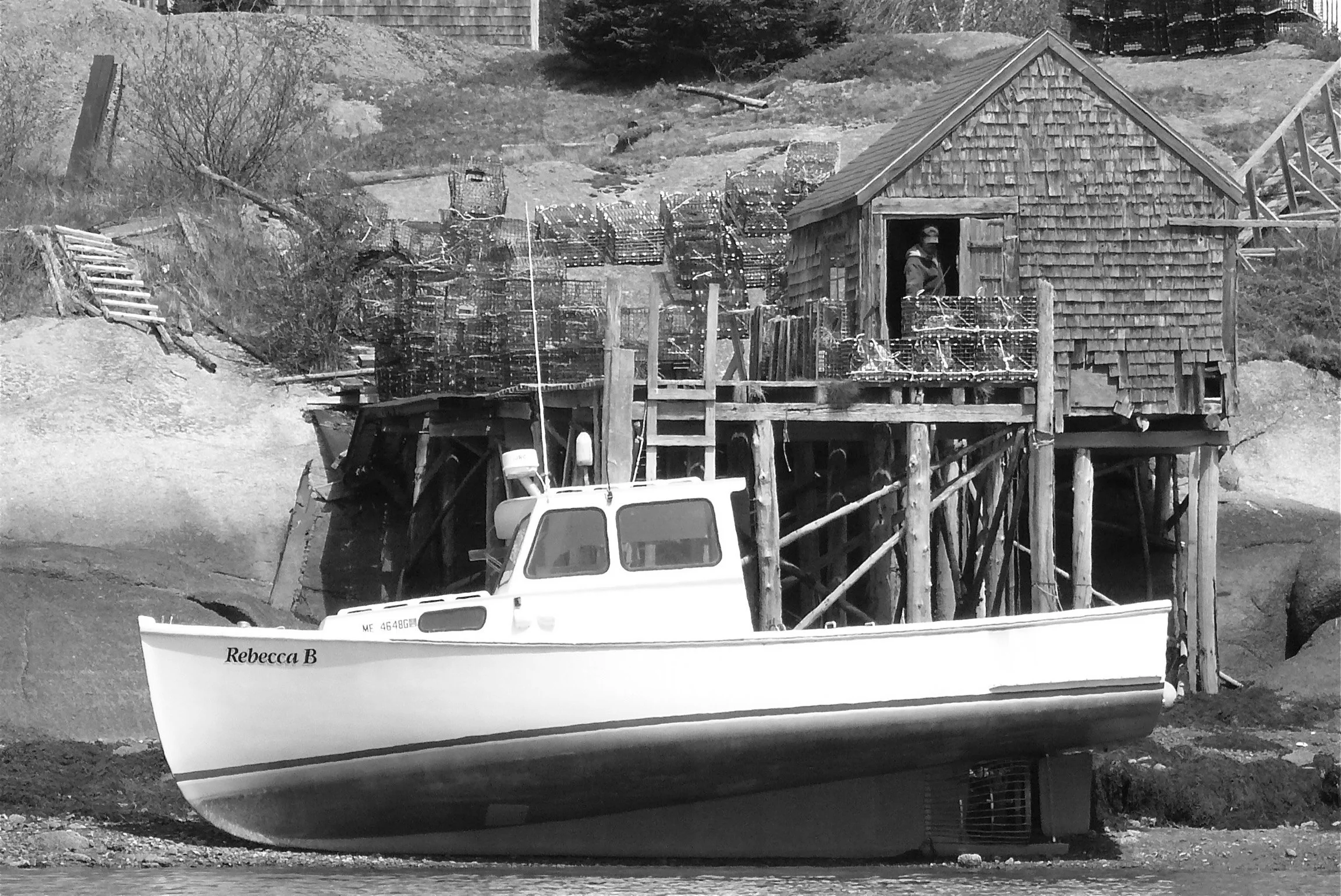
Mending traps, Corea, Maine. Photo © Paul Breeden
Second, we need to recognize that fisheries do not exist in a vacuum and that there are other pressures dislocating people’s connections to place. One of the most pressing in rural coastal communities is in-migration of urban people seeking a rural lifestyle, and the housing crisis that it leaves in its wake. Coastal villages are desirable places to live. With the proliferation of short-term housing and vacation rentals, it is increasingly hard for working-class people and young families to live on or even near the coast. It is simply too expensive. If people cannot live in coastal communities and are forced to commute to their jobs at sea, it is hard to imagine how we can rekindle meaningful connections to place. Part of building that connection comes from being thickly enmeshed in it, not just being there during work hours.
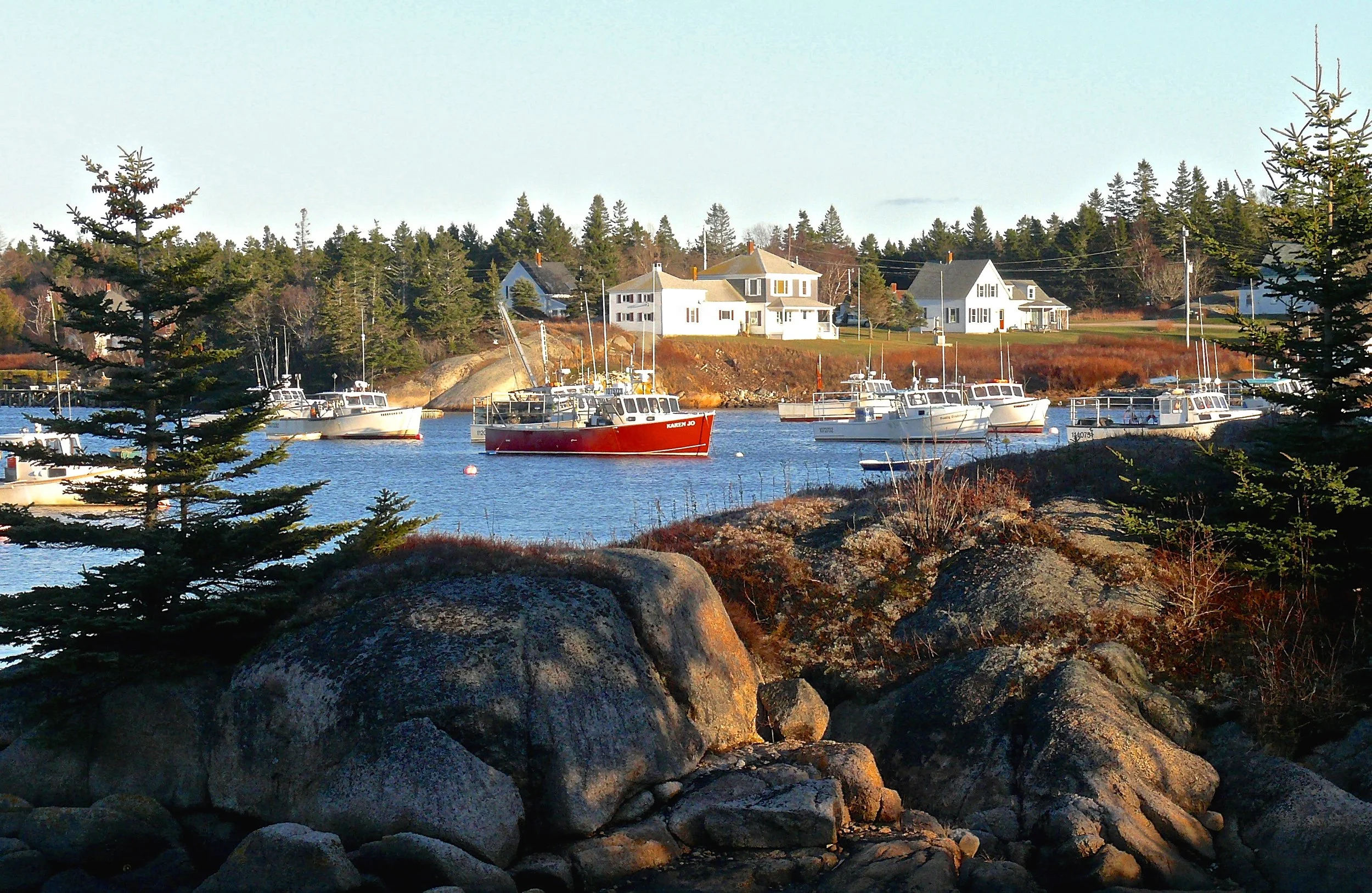
Coastal communities like Corea, Maine, are very attractive to urban refugees. Photo © Paul Breeden
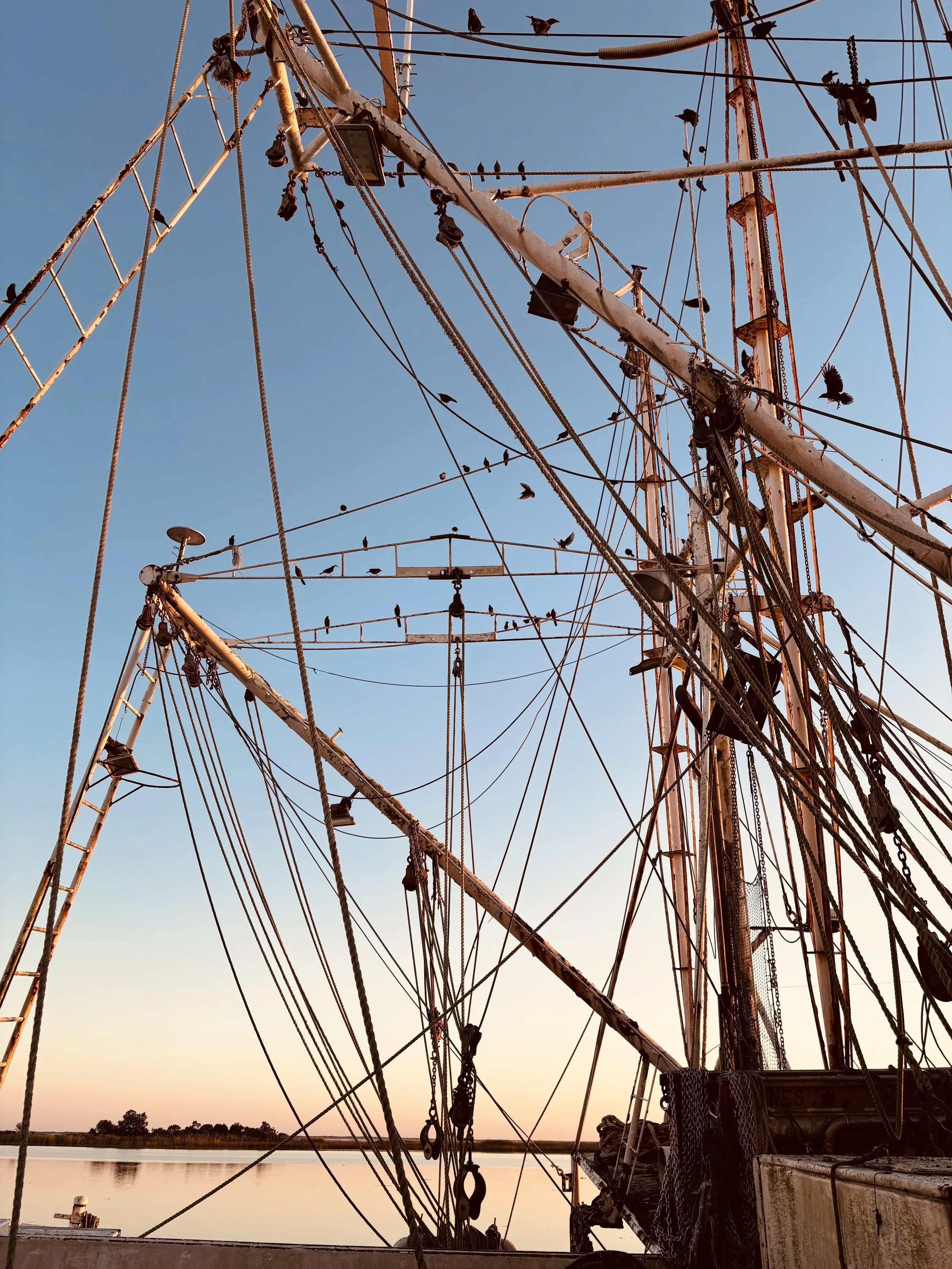
Apalachicola sunset. Photo © Joshua Stoll
Lastly, we need to start treating seafood more like what it actually is: food. Food is the ultimate connector, and fisheries and aquaculture provide an important source of nutritious protein. Yet our policies incentivize approaches to marketing and distribution that treat seafood as a commodity and push it into global markets while families, friends, and neighbors are nutritionally insecure. Reversing this trend, even a little, has the potential to connect more people to fish, thereby sparking support for and engagement in our region’s fisheries.
Acting on these three challenges is no small task, and many people have long been trying. Yet, as we look towards the next 50 years of fisheries management, I am grateful that there are communities like those in Apalachicola and eastern Maine that have sustained meaningful connections to their marine environments. Their experiences are critically needed to guide our path forward.
Joshua Stoll is an Associate Professor in the School of Marine Sciences at the University of Maine. Born and raised on the coast of Maine, his research focuses on questions about coastal community resilience, ocean governance, fisheries policy, and food systems. Joshua is the Co-Founder of the Local Catch Network and has been working to elevate the role of seafood in local and regional food systems for more than a decade. He holds a BA in environmental studies from Bates College, a master’s in coastal environmental management from Duke University, and a PhD in ecology and environmental sciences from the University of Maine. Prior to returning to Maine, he was an early career research fellow in the Global Economic Dynamics and the Biosphere Program at the Royal Swedish Academy of Sciences in Sweden.