
Gentrification, Home Rule, and the Working Waterfront
Editor’s Note: The realities of climate migration, wealth inequality, and an insufficient housing stock are collectively reshaping both the physical and social nature of Maine’s fishing communities. Monique Coombs shares how these changes are now running up against the way in which small towns have historically made decisions about the waterfront and access to a shrinking commons. – Alex Redfield
In recent years, Maine’s iconic coastal towns have become emblematic of both the promise and the peril of rural American revitalization. From Kennebunkport to Eastport, towns once sustained by lobster boats, fish houses, and fishing families are now grappling with rising property values, demographic churn, shrinking municipal capacity, and growing uncertainty about whether local governance structures are equipped to manage the pace and scale of change. What should be a story of economic renewal increasingly looks like one of cultural displacement, civic strain, and administrative overload.
Gentrification in Maine’s coastal communities is not simply about affluence moving in. It reflects multiple pressures reshaping the social and economic fabric of towns historically anchored in commercial fishing and working-class family life. That “reshaping” is not all bad—new families with new resources are joining communities that have been aging and shrinking over time. Yet, the impact of gentrifying communities has a specific impact on the viability of the cultural identity and economic integrity of the working waterfront.
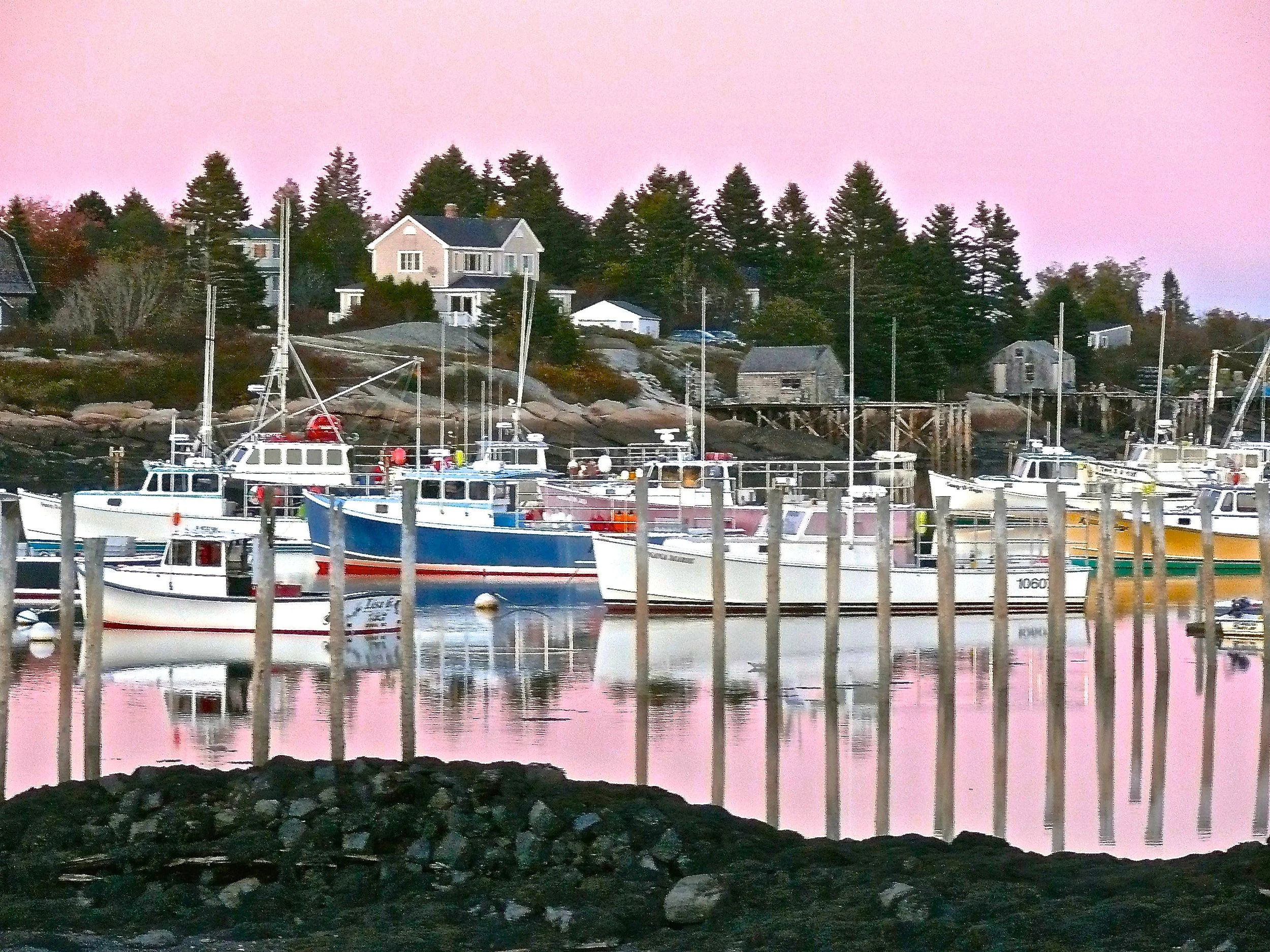
A stately home overlooks the working waterfront in Corea, Maine. Photo © Paul Breeden
Coastal Maine is not alone in experiencing these pressures. Trends in population migration in Maine are certainly driven by factors like affordability, the quality of schools, and options for employment, but those factors apply almost anywhere. However, New England’s coastal villages are also seeing in-migration pressure rooted in climate-related displacement as lower-risk or higher-elevation areas become more desirable. These overlapping forces driving demographic changes unfolding in Maine’s coastal towns are part of a broader puzzle, rooted more in local, regional, and global forces than community-level conditions or policy.
The core of these challenges can be seen most clearly in how rising property values are affecting historically industrial or working waterfront towns, like Belfast and Bucksport, where total valuations have soared in the past five years. The COVID-19 pandemic and the resulting exodus from high-density cities saw a wave of out-of-state buyers enter competitive markets with higher-wage jobs or remote salaries, pushing market prices out of reach for many longtime Mainers.
As housing becomes more expensive, the working people who once sustained these towns’ economies—including fishermen, hospitality workers, teachers, and tradespeople—struggle to find suitable housing. In places like Stonington, home to one of Maine’s largest lobster fleets, rising rents and the expansion of short-term rentals have displaced full-time workers and tilted housing markets toward seasonal investment properties. For fishing families, housing instability undermines working waterfronts by making it harder to find crew members and to share knowledge with the next generation of fishermen.
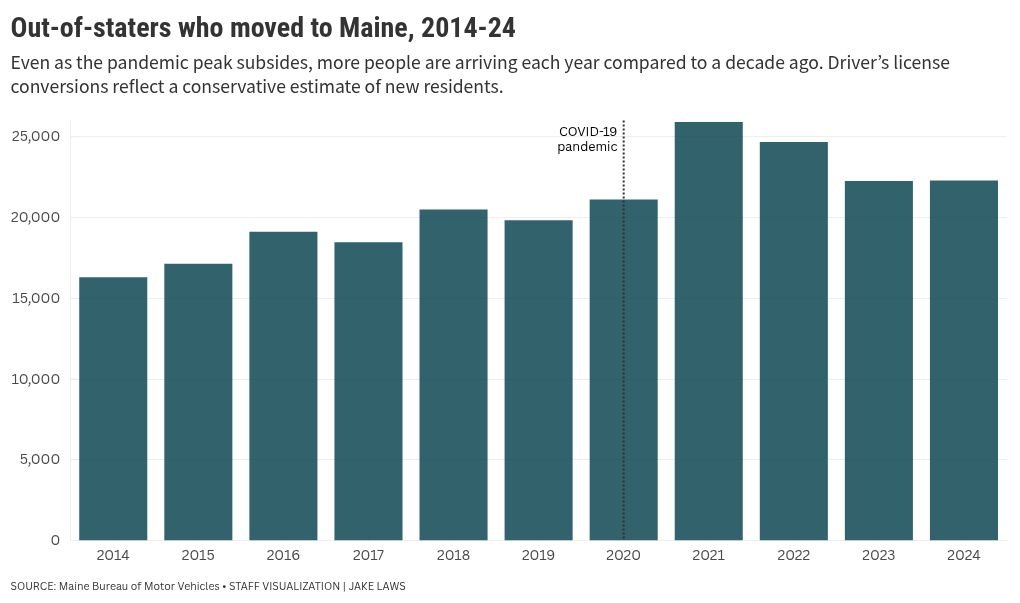
The trend of in-migration to Maine’s waterfront villages continues today, though statewide rates have begun to slow. Figure courtesy of Jake Laws, Maine Trust for Local News
The changes affecting Maine’s coastal communities also carry a psychological dimension. Many fishermen and fishing families experience a form of solastalgia, a sense of distress and loss caused by transformations in the environment and community they depend on. The factors reshaping coastal communities do more than disrupt livelihoods; they affect identity, intergenerational continuity, and connection to place. For fishermen, whose work is intimately tied to the rhythms of tides, weather, and fish stocks, these changes can amplify stress and feelings of displacement, even when they continue to live and work in the towns they have long called home. Addressing true coastal resilience, therefore, requires attention not only to housing and governance, but also to the mental and emotional well-being of the people whose labor sustains these communities. Even when newcomers bring energy and investment, the character of these towns can shift in ways residents often describe as alienating. There are fewer children in schools, fewer longstanding relationships between community members, and growing tension over local priorities, particularly when decisions about land use and waterfront access no longer reflect the needs of people who work on the water.
Maine’s tradition of home rule, similar across much of New England, gives significant deference to towns in their authority to govern local affairs. This local authority recognizes that, while rural communities often have much in common with each other, they also differ in important ways that require locally tailored ordinances and zoning. Delegating authority to local communities requires those communities to have stable populations, deep local knowledge, and sufficient capacity to manage themselves. Yet today, many coastal municipalities are lacking the human capital that actually makes home rule function. This raises a difficult but necessary question: Can Maine’s home rule framework still function effectively under conditions of rapid demographic change? Are small towns up to the job?
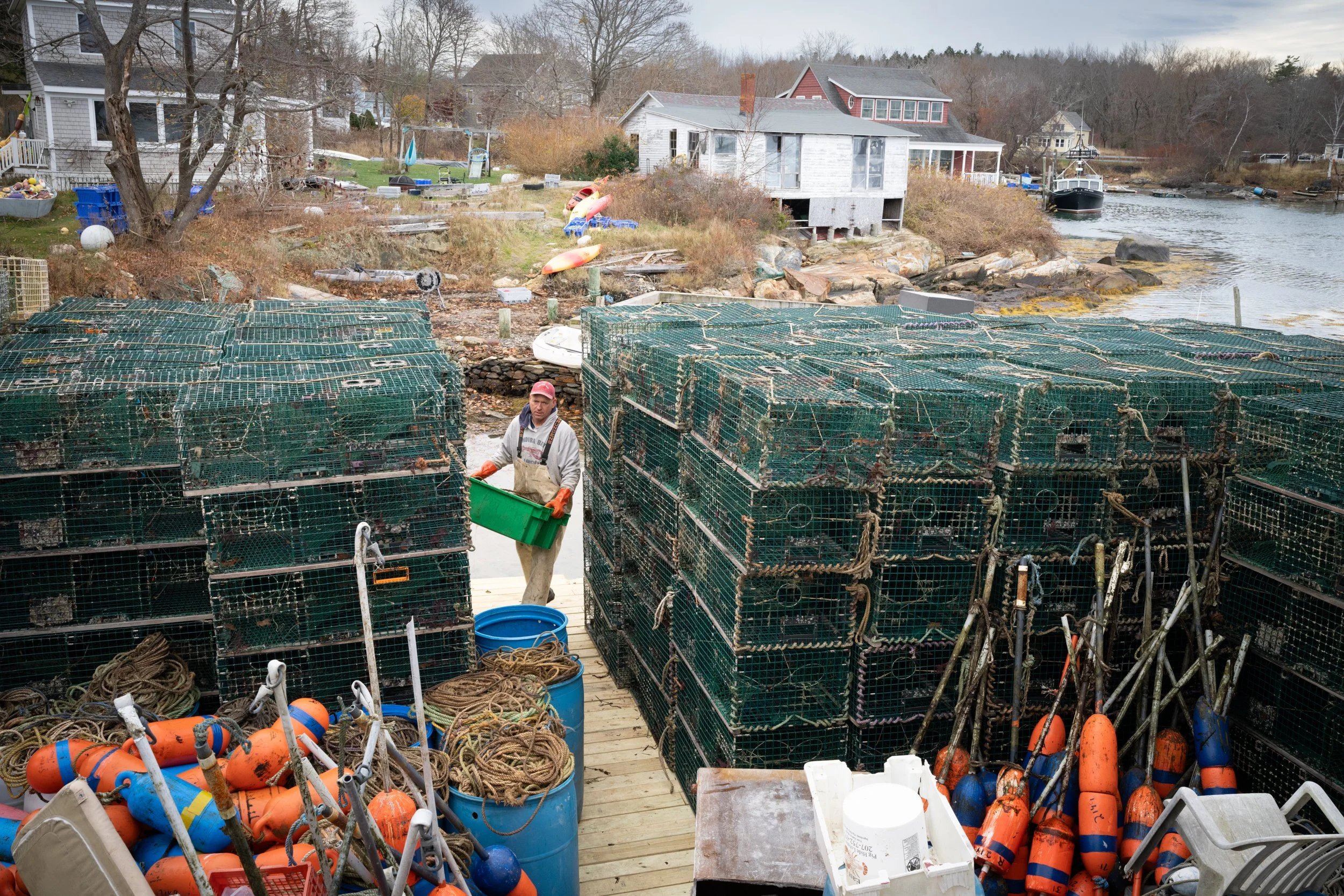
Storing gear is an essential part of any commercial fishing enterprise. If fishermen don’t own property in town for storage, conflicts with neighbors become more common. Photo © David McClain for the Maine Coast Fishermen’s Association
For fishermen and fishing families, participation in local governance has become increasingly difficult. Commercial fishing is physically demanding, time-intensive work that often extends well beyond a standard 40-hour work week. Many fishermen are on the water early in the morning; return late in the day; and spend off-hours maintaining gear and boats, and completing mandatory reporting. After caring for children and attending to household chores, there is little time or energy left for committee meetings.
As communities grow and governance becomes more complex, towns often respond by expanding boards, committees, and subcommittees—essentially bringing in more residents to help with management and planning. One result of this expansion is a civic imbalance, where those with flexible schedules or fewer caregiving responsibilities are overrepresented in decision-making, while fishermen, working-class residents, and young families often struggle to participate. Though young and working families have long been underrepresented in civic life, it was not long ago that local working people comprised much of Maine’s municipal governance structure. The outsized role that villages and towns have in controlling access to the waterfront makes the impact of this civic imbalance on the fishing and aquaculture industries especially prominent.
“Addressing true coastal resilience, therefore, requires attention not only to housing and governance, but also to the mental and emotional well-being of the people whose labor sustains these communities.”
The impact of rising property values, decreasing opportunities for working people to shape local policy, and more frequent and visible impacts of climate change will be borne out over time, but communities are now starting to recognize the challenges that these shifts have introduced.
One example of a new challenge born from gentrification is the difficulty many communities have in hiring and retaining harbormasters. These officials are responsible for managing moorings, docks, and waterfront access, and often provide emergency maritime response support. In many towns, the harbormaster also serves as a repository of institutional knowledge about local fisheries, tides, and community rhythms shaped by generations of fishing activity. Many seasoned harbormasters are nearing retirement, and their departure frequently leaves a gap in knowledge that is not easily filled. The position is often part-time and underpaid, despite requiring specialized skills and deep local expertise. Without intentional succession planning, critical knowledge held by fishing communities risks being lost, just as our waterfronts are adapting to the new pace and intensity of impacts from climate change.
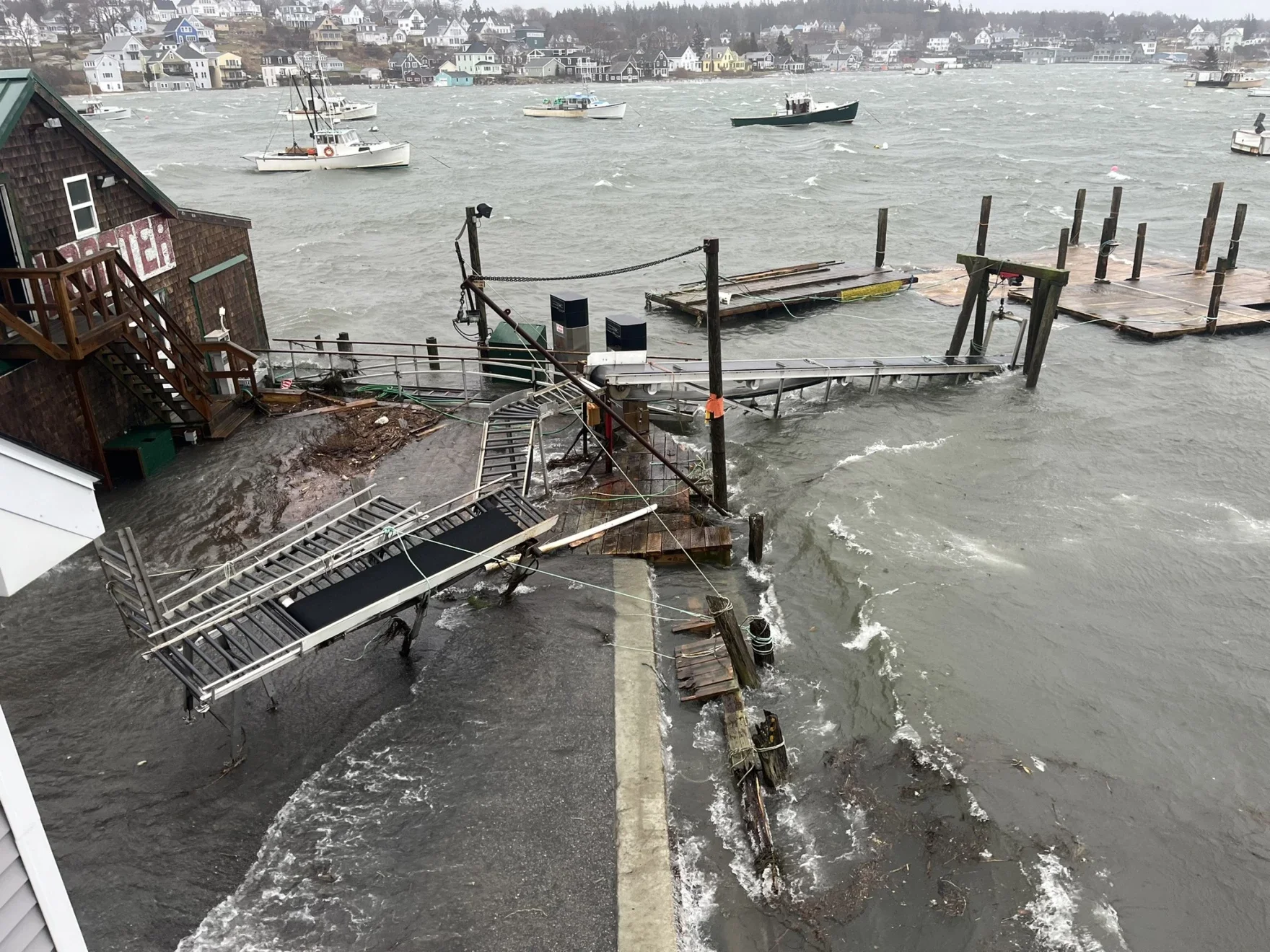
Back-to-back storms in January of 2024 caused damage up and down Maine’s coastline. With two “100-year floods” occurring in a span of three days, these storms were largely acknowledged as indicative of what bad weather in a warming climate might look like more frequently in the future. The damage to this wharf in Stonington—Maine’s top lobster port—is emblematic of the new challenges that climate change presents for coastal communities. Photo © Greenhead Lobster Company
Beyond economics and administration, gentrification reshapes social geography. Longtime residents report the erosion of relationships and shared norms as neighbors are replaced with short-term renters or part-time residents with different expectations. As new owners arrive with different conceptions of what should be “private” on their private property, access to beaches and tidal zones and cherished shared spaces for both fishing families and non-fishing community members has become another flashpoint in coastal debates over property rights and public access. These dynamics also strain civic engagement. Planning boards and select boards are increasingly tasked with high-stakes decisions that pit growth against preservation, often without adequate staffing, training, or inclusive participation. The result is burnout, polarization, and governance processes that struggle to reflect the lived realities of working waterfront communities.
There are solutions being tested. Some municipalities are experimenting with zoning reforms, accessory dwelling unit allowances, tax strategies, and limits on short-term rentals to mitigate speculation and encourage long-term residency, all designed to reduce barriers to housing access. Others are exploring regional cooperation around planning for new housing development, sharing municipal services, and building administrative capacity. These approaches may offer economies of scale for small towns that are otherwise stretched thin, and help reduce the civic burden placed on a small pool of volunteers. Beyond policy tools, we should also remember the importance of meaningful engagement between longtime residents and newcomers. Intentionally building relationships can offer a pathway toward shared stewardship of community values, making it easier for divergent perspectives to find alignment.
Maine’s coastal communities sit at the intersection of amenity and vulnerability, opportunity and upheaval. As gentrification reshapes who lives in these towns and who has the capacity to govern them, it is becoming increasingly clear that local governments must adapt. Without such adaptation, the voices of those who have sustained Maine’s coastal communities for generations risk being sidelined at the very moment they are needed most.
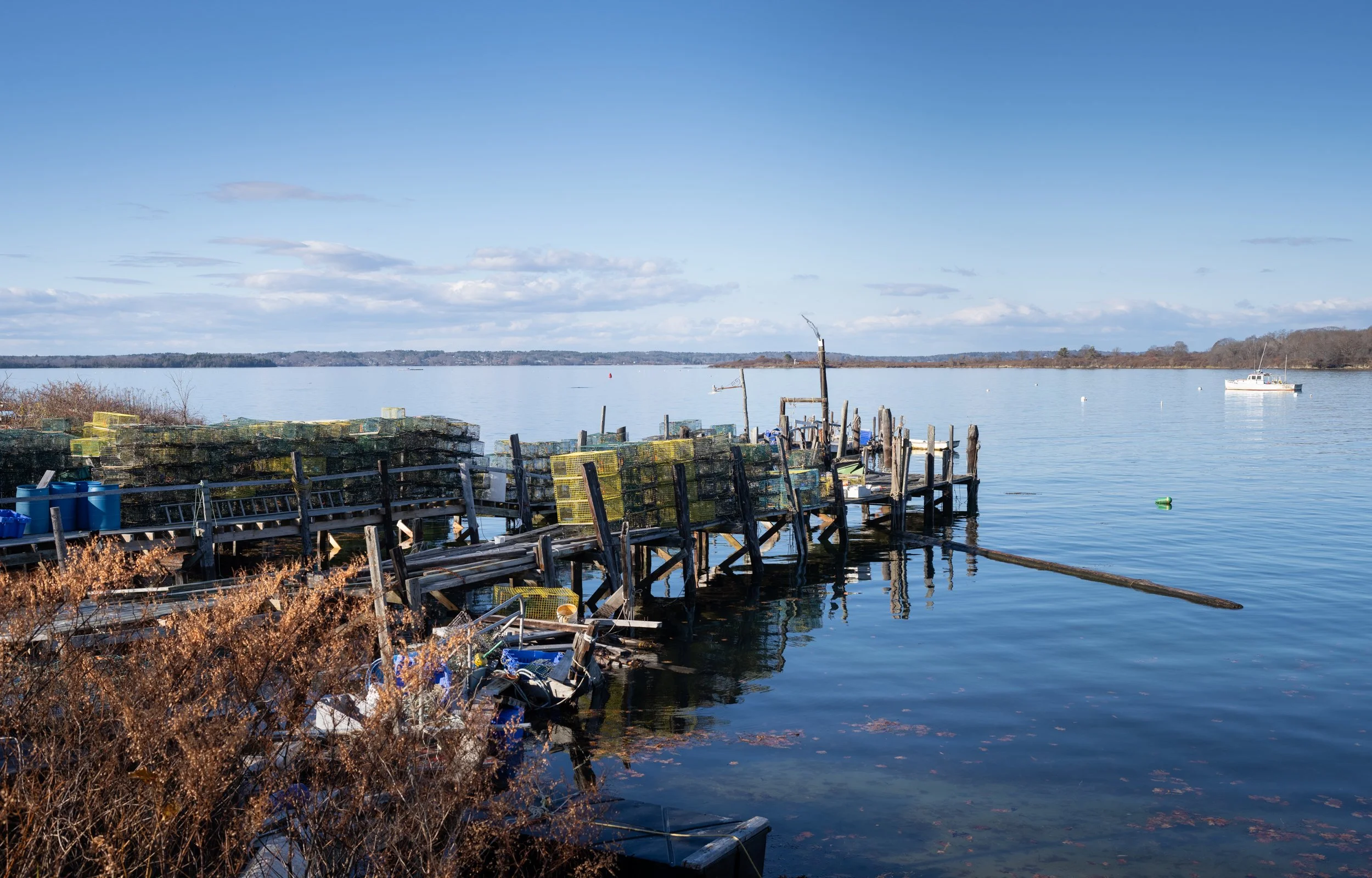
Small discreet wharves like this that dot the coastline are essential for gear storage and maintenance, but difficult to value because of their often ambiguous ownership and lack of landings. Wharves like this one, on Long Island in Casco Bay, Maine, are especially vulnerable to storms and ownership transitions. Photo © David McClain for the Maine Coast Fishermen’s Association
Monique Coombs is the Director of Community Programs for the Maine Coast Fishermen’s Association, where she leads the Fishermen Wellness and Working Waterfront programs. With nearly 20 years of experience in the fishing industry, Monique is dedicated to supporting the mental and physical well-being of fishermen and advocating for the sustainability of Maine’s working waterfronts. Monique is married to a commercial fisherman; has two kids who fish; and lives on Orr’s Island, Maine.