
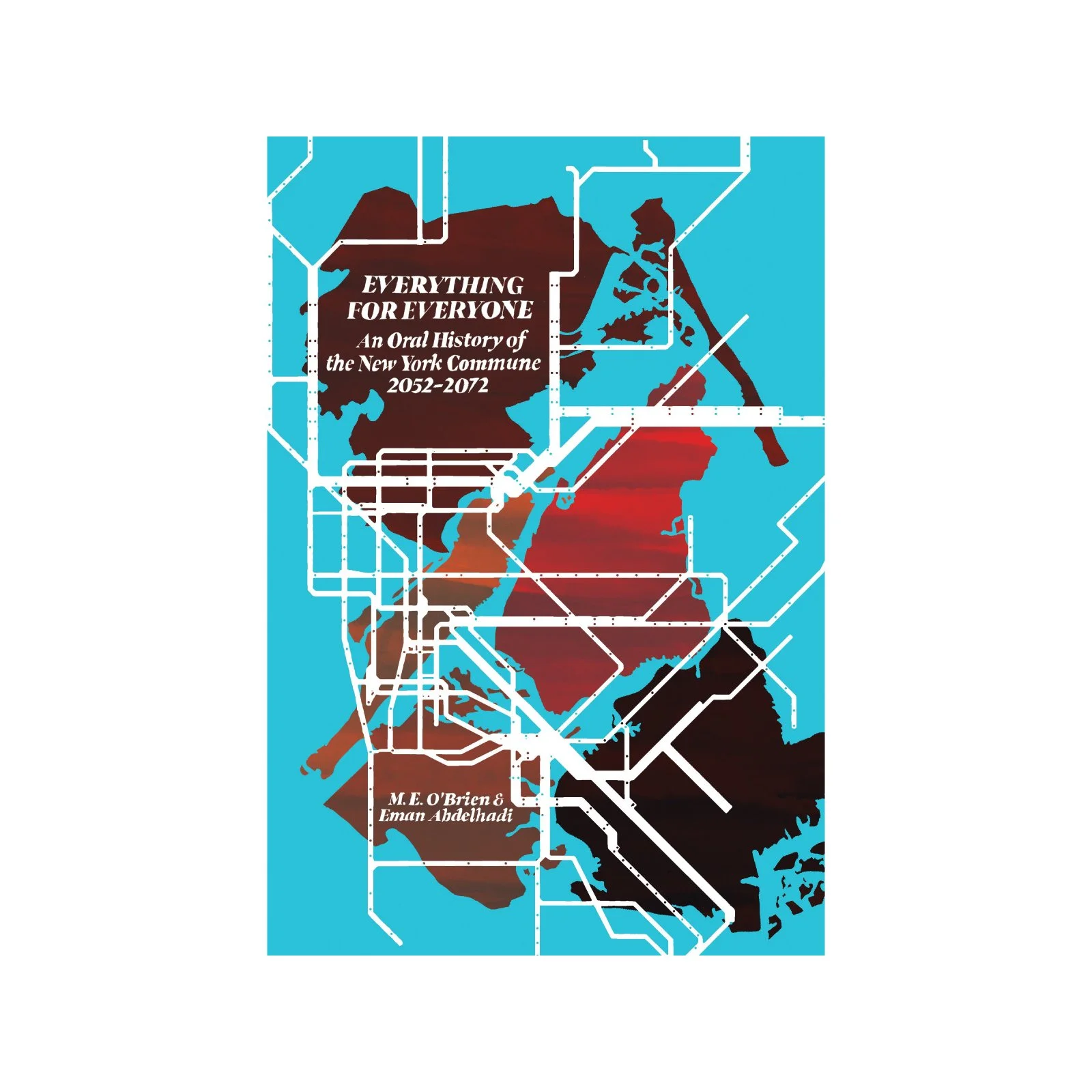
I don’t typically take book recommendations based solely on the endorsement of a conference panelist. But, when Molly Anderson, a longstanding voice of clarity in New England food and agriculture research and policy, leads a panel on “what’s next for our food system” and shares that she was inspired to reimagine our own local food futures after reading a particular book—I read the book.
Everything for Everyone: An Oral History of the New York Commune, 2052–2072 is structured as a set of fictional interview transcripts conducted at the end of the twenty-first century. These conversations, with nurses, ecologists, and revolutionaries of all types, explore the collapse of the modern imperial order at the hands of climate change and predatory capitalism, and the subsequent reconstruction as a world organized by communal politics. The interviews articulate a world where things are very different, but not necessarily easier: Air travel and other carbon-intensive industries have been abandoned; all people spend a portion of their time contributing to the ongoing maintenance of shared infrastructure and production, but also contemporary social constructs like gender and single-family parenting are radically reimagined to collective benefit; society develops new ways to care for each other and the earth; and we proceed anew.
I share the review here in From the Ground Up because of the series of interviews that map out a tragic (and inspiring) vision for our ecosystem. In this alternative future, where famine, war, and climate catastrophe have wreaked havoc on the forests, fisheries, and farms we know today, the goal is no longer protecting habitats from destruction; rather, the goal becomes finding ways to create biodiversity out of whole cloth and best utilize the enduring knowledge collected over the past millennia to start again. What can we do right now to preserve that wisdom, even if the work to preserve the places falls short? I appreciated how the entirety of the book pushed me to think about, first, “What would it look like if we did things differently?” Then, “What would it look like to get from here to there?” And finally, “Am I ready for that?” Appropriate questions for challenging times.
Read more and purchase the book at Common Notions. More on Molly Anderson’s session on
“Food Imaginaries” can be found in this proceedings report from the University of Vermont’s Institute for Agroecology.
Recommended by Alex Redfield