
Wilderness Comes Home, 25 Years Later
Editor’s Note: I’ve known of Chris Klyza’s work since 1999, when the first edition of The Story of Vermont, co-authored by Klyza and Stephen Trombulak, came out. I was delighted to have this book just in the moment that Trombulak and I were deeply engaged in the Vermont Biodiversity Project. The book added immensely to my knowledge of the state of Vermont. Then, two years later, Klyza published Wilderness Comes Home, and my eyes were opened further to the possibilities for conservation in the region. I was delighted when Chris agreed to speak at the recent Northeastern Old Growth Conference about his recent reflections on wilderness protections. This piece draws from his remarks at the conference. – Liz Thompson
The protection of old growth and Wildlands go hand in hand. Old-growth forests are places where natural forces predominate, and most of these places are legally protected landscapes. The connections between these natural entities (old trees and forests) and cultural entities (protected landscapes) were stressed throughout the recent Northeastern Old Growth Conference in Vermont.
The 1990s were a time of vibrant thought and action regarding wilderness in the United States. The Society for Conservation Biology, and its journal Conservation Biology, were founded in the late 1980s. A few years later, Wild Earth and the Wildlands Project (now Wildlands Network) launched, consciously bringing wilderness advocates and conservation biologists together in efforts to protect more wilderness to help conserve and recover biological diversity, including old growth, throughout North America. Thoughts about this in our region led to a volume of essays that I solicited and edited, Wilderness Comes Home: Rewilding the Northeast (University Press of New England, 2001).
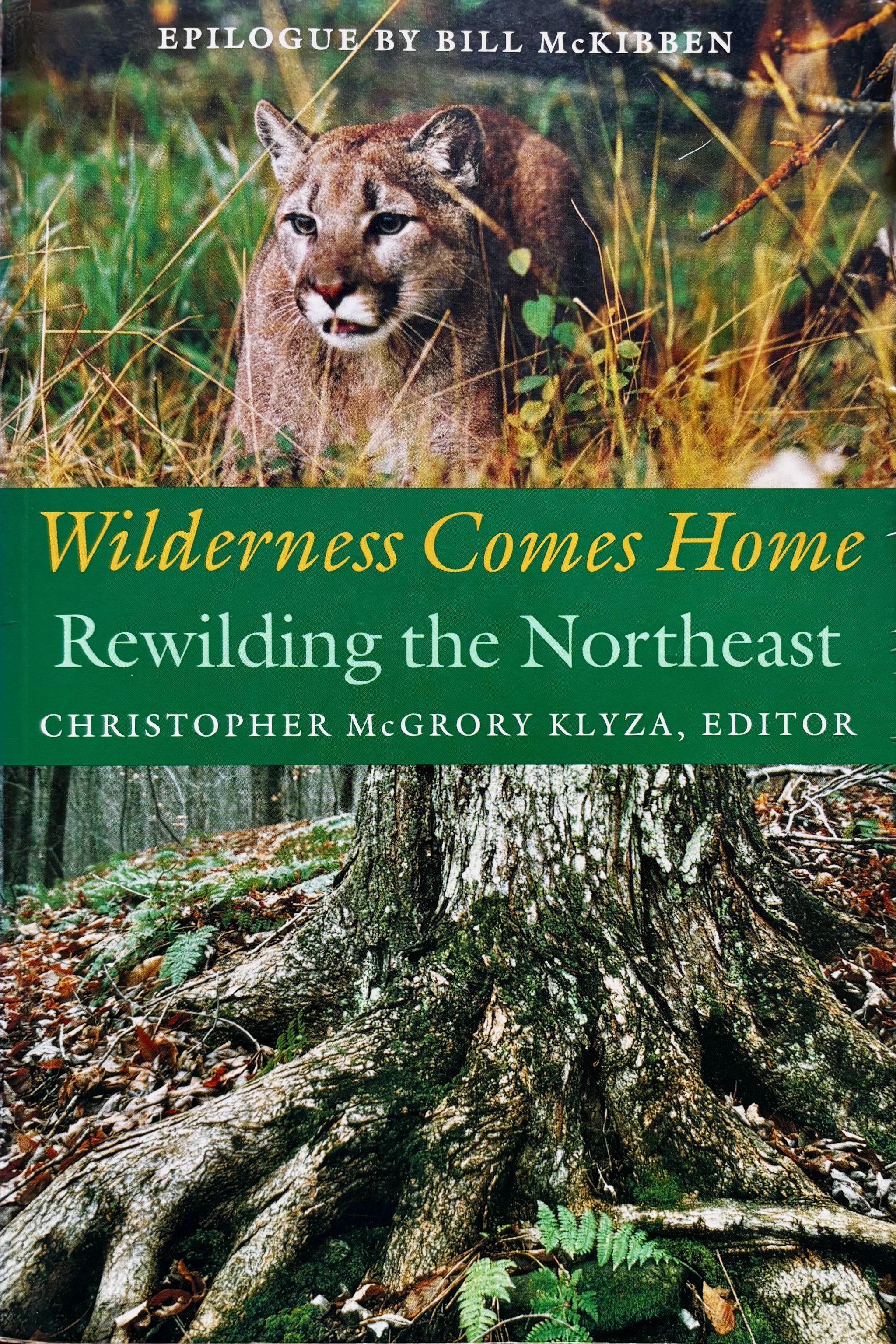
The book focused on wilderness and Wildlands in the Northeast and sought to 1) survey the state of Wildlands in the region; 2) provide an eastern voice in the wilderness conversation, which until then was centered in the West; and 3) present a model for developing a wilderness and Wildlands system in the Northeast. In terms of thinking about Wildlands in the Northeast, three characteristics are central: 1) the lands will be recovered and restored rather than pristine; 2) the lands will be both public and private; and 3) Wildlands will be situated in a landscape of sustainably-managed farmland and forestland.
What has happened in the 25 years since the book was published?
Progress
Wildlands protection, ecological reserves, and biodiversity conservation have become a central part of conservation discussions in the Northeast. Significant progress has been made in the areas of:
Conservation land purchases and Wildlands protection, specifically:
Federal wilderness: The New England Wilderness Act of 2006 designated an additional 35,000 acres of wilderness in New Hampshire and 41,000 acres in Vermont.
Federal conservation lands: Since 2000, nearly 290,000 acres of additional federal conservation lands have been added in the Northeast, primarily in northern New England. These lands have been added in the Green Mountain and White Mountain National Forests, the Katahdin Woods and Waters National Monument, and the Conte and Umbagog National Wildlife Refuges.
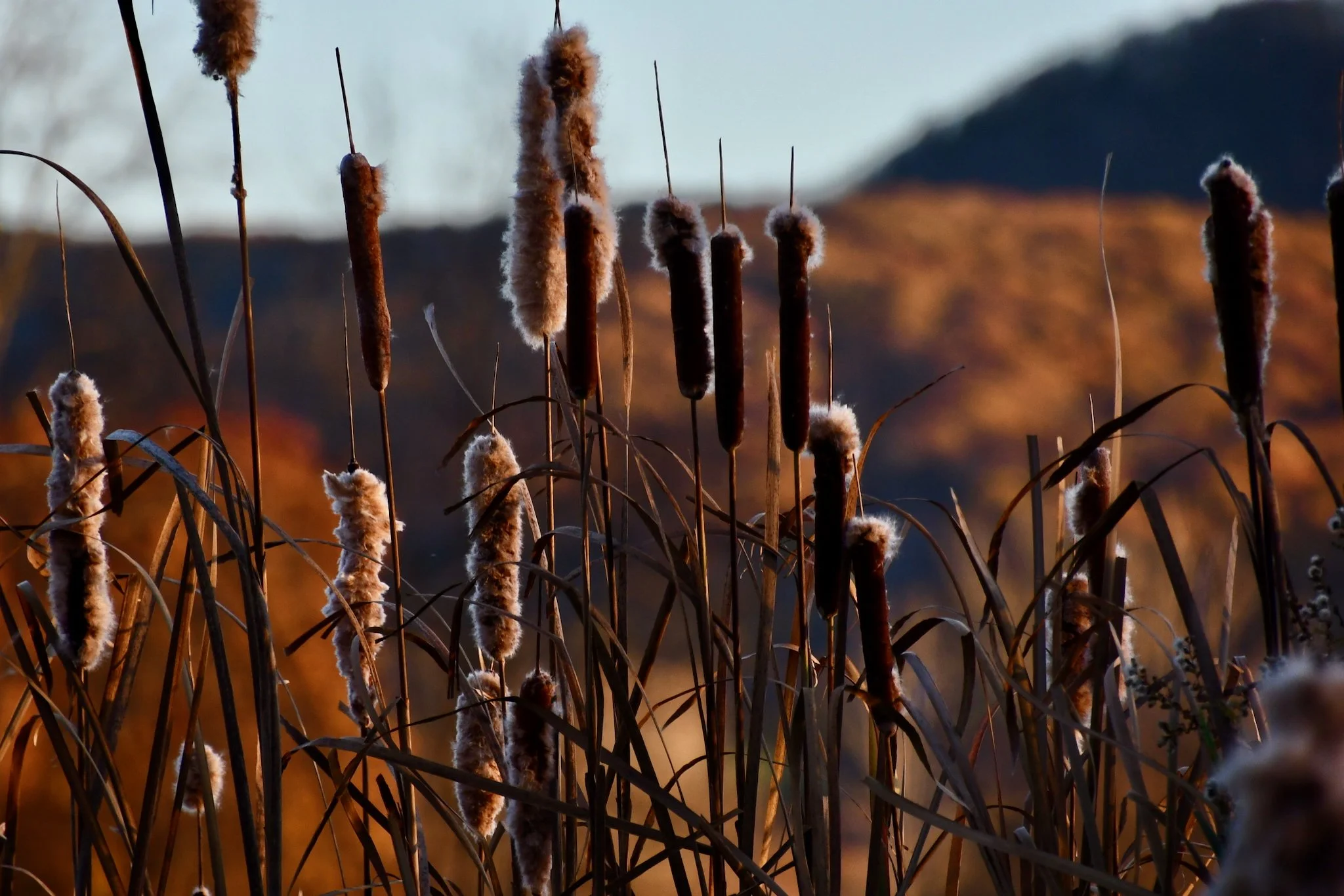
Conte National Fish and Wildlife Refuge, Massachusetts. Photo © Liz Thompson
Wildlands inventory: The Wildlands, Woodlands, Farmlands, and Communities (WWF&C) initiative partnered with Northeast Wildlands Trust (NEWT) to undertake a New England-wide inventory of Wildlands in 2023. This careful, systematic study, resulting in the report Wildlands in New England, found 1.3 million acres of Wildlands in the region, comprising 3.3 percent of the land area. Wildland percentages are highest in northern New England, and ownership is broadly distributed among state government (39 percent), federal government (36 percent), and conservation organizations (24 percent). Beyond the expansions of federal wilderness, the largest wildland reserves established in New England since 2000 are the Katahdin Woods and Waters National Monument and three Nature Conservancy reserves: Upper St. John River, Debsconeag Lakes, and the Spring River-Narraguagus Forest. I encourage readers to consult the full Wildlands report for more detailed information.
State conservation lands and Wildlands: While New York was outside the range of the report’s inventory, approximately nine percent of the state is protected as state Wildlands in the Adirondacks and Catskills. 1.4 million acres of this is designated wilderness and 1.4 million acres is designated as wild forests. There has been a gain of over 120,000 acres of wilderness in New York since 2000. Looking at the larger region, and comparing state conservation lands based on data compiled by Steven Davis (The Other Public Lands, 2025) with those I compiled in 2000, there are over 1 million acres more of such land today in the nine northeastern states, with the largest increases in Maine (311,000 acres), Pennsylvania (246,000 acres), and New Jersey (236,000 acres). Given the challenging nature of defining state Wildlands, it is difficult, beyond New York, to compare the data from 2000 and 2025. The only other significant growth has been in Maine, where the legislature established an ecological reserve program in 2000. There are 18 such reserves in Maine, covering 100,000 acres.
Private Wildlands: Private Wildlands conservation has grown in the last 25 years, led by existing groups such as The Nature Conservancy, Appalachian Mountain Club, and new groups, most significantly Northeast Wilderness Trust (NEWT), founded in 2002 and dedicated to protecting Wildlands in New England and New York. NEWT has, as of this writing, protected over 100,000 acres of forever-wild land, through a mix of ownership and easements.
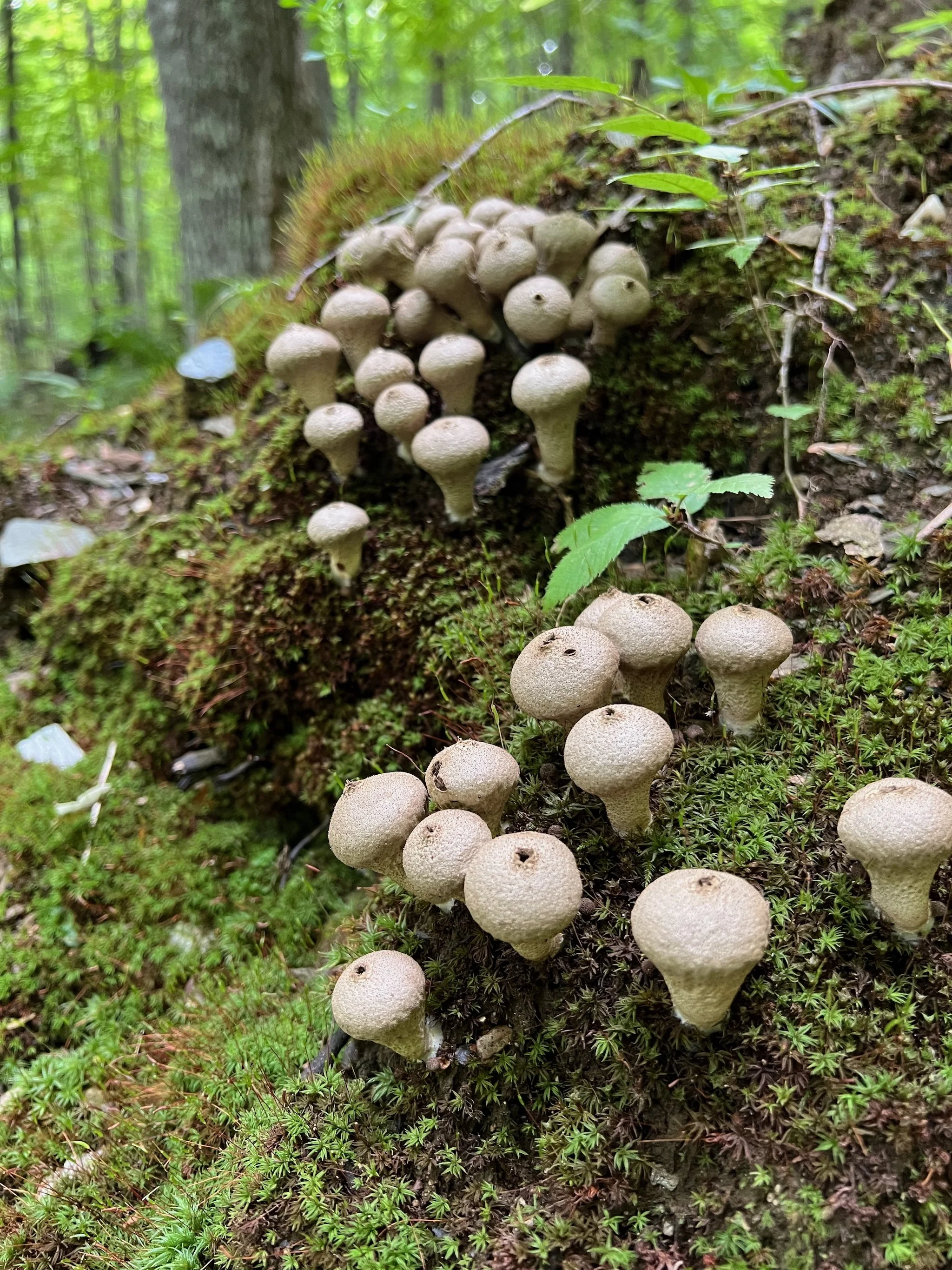
Old forest in Woodbury Mountain Wilderness Reserve, Northeast Wilderness Trust. Photo © Liz Thompson
Thinking about Wildlands in the context of sustainably managed farms and forests. Leading the way is the Wildlands, Woodlands, Farmlands, and Communities (WWF&C) initiative, launched in 2010 to focus on a New England-wide, landscape-level conservation vision, featuring a mix of Wildlands (at least 10 percent), managed woodlands (60 percent), and farmland (7 percent). This vision makes clear that the choice is not between Wildlands and managed forests and farmlands. It is a call for an integrated, balanced approach. WWF&C has also launched From the Ground Up to further conversations about this vision. Other groups continue their work in sustainable agriculture (NOFA and the New Perennials Project), and ecological forestry (Vermont Family Forests as one example).
Embracing connectivity on the landscape. Dozens of NGOs; academic institutions; and state, provincial, and national agencies have partnered with the Staying Connected Initiative, working on connectivity across the Northeast, Quebec, and the Canadian Maritimes, leading to a major connectivity summit in Montreal in 2024. Prior to that, Two Countries One Forest led this work.
State programs centered on biodiversity protection. Vermont Conservation Design sets protection goals for a number of biodiversity features, including old forests, large forest blocks, and connecting lands. These can overlap with Wildlands. Vermont also recently enacted the Community Resilience and Biodiversity Act to protect 30 percent of the landscape by 2030 and 50 percent by 2050. What that protection will look like is still unclear, although there are categories for ecological reserves and biodiversity conservation. As mentioned earlier, Maine has also established an ecological reserve system.
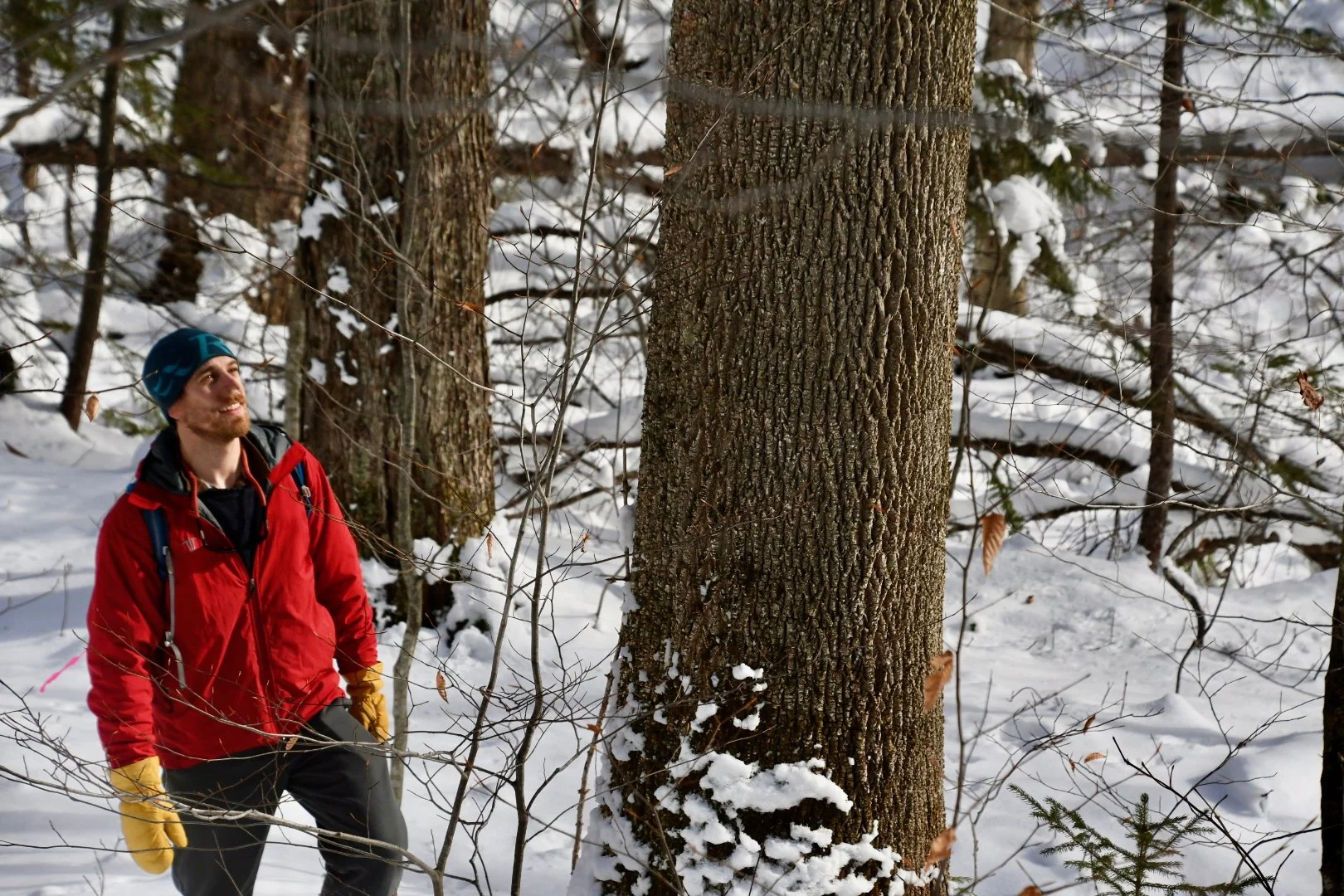
Bob Zaino, a leader of Vermont Conservation Design, in protected old forest on Vermont state land. Photo © Liz Thompson
Recovery of significant wildlife populations, including beavers, turkeys, peregrine falcons, ospreys, bald eagles, and loons.
Increased removal of dams, improving aquatic habitat and connectivity. In the last five years, over 150 dams have been removed in the nine northeastern states.
Increased Threats
The most monumental change since 2001 has been the increased significance of climate change in the Northeast, bringing warming temperatures and changing precipitation patterns. This is affecting biodiversity in a host of ways. Species are moving across the landscape in new patterns, contributing to the spread of invasives. The timing of flower emergence and pollinator activity is mismatched in some cases. More extreme flooding and drought are threatening aquatic systems and uplands alike (not to mention human communities). All of these changes underscore the need for ecological reserves/Wildlands and connectivity.
More invasive pests are affecting the Northeast, most notably the emerald ash borer. The hemlock woolly adelgid has continued to spread. Beech leaf disease is devastating whole forests. Increased flooding has contributed to the spreading of Japanese knotweed in riparian zones. The list goes on.
After years of increasing forest cover, states in the Northeast are seeing a decline of forest land. New England is losing over 20,000 acres per year, as is New York.
“The protection of old growth and Wildlands go hand in hand.”
Missed Opportunities
Since 2001, we have missed out on two major opportunities.
During the 1990s, the Northern Forest Lands Council was an official regional body bringing together northern New England states and New York on forest issues. Continuing such a regional council would have provided a useful governmental framework for forest policy and planning, including Wildlands and old growth.
In Wilderness Comes Home and in The Northern Forest Forum, Jamie Sayen made the case, as have others, for a new 8-million-acre wilderness system in the Northeast. Although more lands have been protected, including as wilderness, no big wilderness areas have been created.
Conclusion
Moving forward, in the face of climate change, Wildlands are more important than ever; Wildlands are places where natural processes dominate and are important for many reasons:
for protecting old growth, existing and future;
for protecting water quality and advancing flood resilience;
for sequestering and storing carbon;
for improving air quality;
for protecting biodiversity;
for recreation and scenery; and
for solitude.
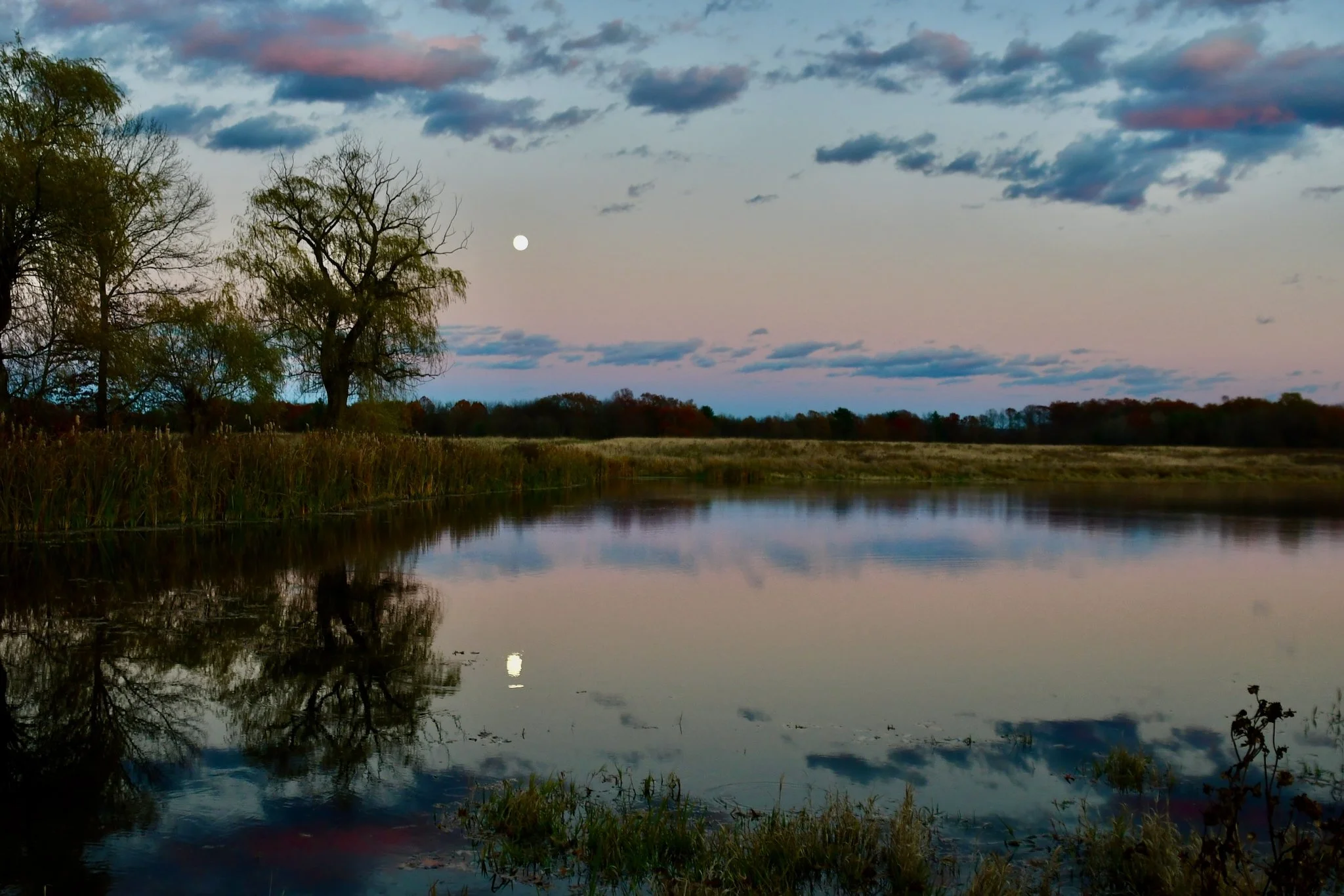
Beaver Moon, Conte National Fish and Wildlife Refuge. Photo © Liz Thompson
As fellow New Englander Henry David Thoreau wrote over 150 years ago: “In wildness is the preservation of the world.” I look forward to what the next 25 years will bring.
Presentation from the Northeastern Old Growth Conference 2025
September 17-21, 2025 | Middlebury College - Bread Loaf campus | Ripton, Vermont
View all recorded presentations from the conference.
Christopher McGrory Klyza is Stafford Professor of Public Policy, Political Science, and Environmental Studies at Middlebury College. He is the author or editor of five books on conservation and environmental policy including Wilderness Comes Home, The Story of Vermont, The Future of the Northern Forest, and Who Controls Public Lands?